
Plants
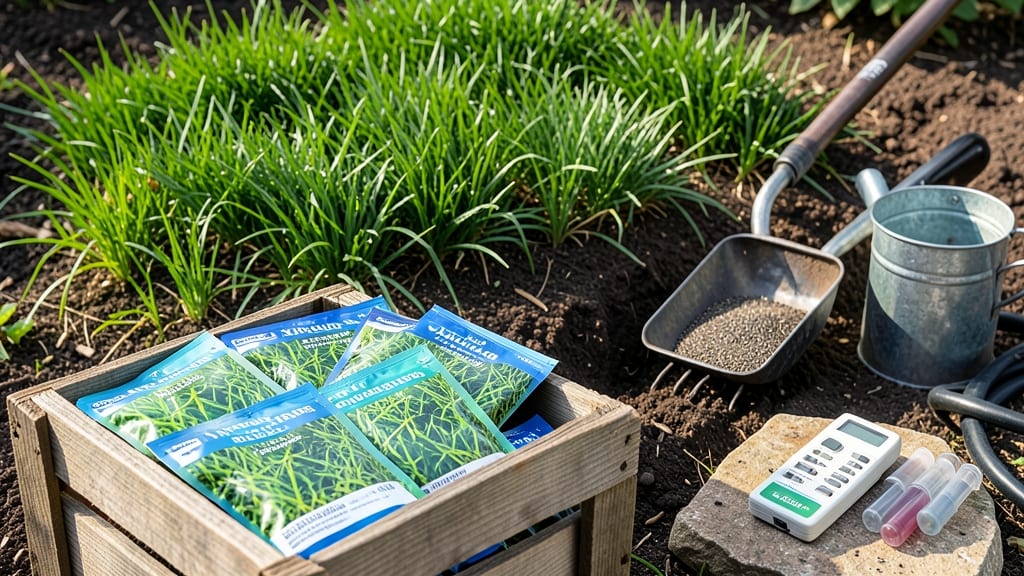
Planting grass seed in Utah at the right time means the difference between a lush, drought-resistant lawn and a failed investment.
Utah’s dramatic elevation shifts and microclimates can turn grass seeding into a high-stakes guessing game—plant too early and frost kills your seedlings, too late and summer heat bakes them before they root.
For most of the state, the ideal window is late summer to early fall (August–September) or early spring (March–April), but USDA zones 5a–8a demand regional adjustments.
Below, I break down the exact timing by microclimate, soil prep secrets, and how to outsmart Utah’s unpredictable spring weather for a lawn that thrives year-round.
Utah’s 3 microclimate zones & their exact grass-seeding windows
Utah’s geography creates three distinct microclimates that dictate the perfect grass-seeding window. From the scorching lowlands of St. George to the cool mountain valleys of Park City, each zone has unique last frost dates and soil temperature thresholds.
Getting this right means the difference between thick, green turf and a failed investment.
I’ve broken down the ideal planting windows for each zone based on USDA hardiness zones 4–9, average frost dates, and soil temperature ranges that trigger germination. These timelines align with when cool-season grasses (like Kentucky Bluegrass) and warm-season grasses (like Bermuda) perform best.
Lowland Zone (USDA 8a–9a): Includes St. George, Cedar City, and southern Utah. Here, winters are mild, and summers are intense. The best window is late summer to early fall (August–September) to avoid summer heat stress. Spring planting is risky due to early heatwaves.
Mid-Elevation Zone (USDA 6a–7b): Covers Salt Lake City, Provo, and Ogden. This zone has cooler nights and warmer days, making early spring (March–April) and late summer (August) the safest bets. The last frost typically occurs around April 15, but microclimates can shift this by weeks.
High-Altitude Zone (USDA 4a–6a): Encompasses Park City, Logan, and northern Utah. With shorter growing seasons and later frosts, the window narrows to late spring (May) or early fall (September). Soil stays cooler longer, so warm-season grasses struggle here—cool-season blends dominate.
For lowland zones, I recommend Bermuda grass or Buffalo grass due to their drought tolerance. These varieties thrive in hot, dry conditions and establish quickly when planted in late summer. The key is to water deeply 2–3 times per week until germination (about 10–14 days).
In mid-elevation areas, Kentucky Bluegrass and Fine Fescue blends are my top picks. They handle Utah’s variable spring weather better than warm-season grasses. Plant in March or August when soil temps hit 55–65°F. Use a starter fertilizer to boost early root growth—this is non-negotiable in Utah’s thin soils.
High-alt
Critical factors that shift your planting timeline (beyond the calendar)
Utah’s elevation gradients can shift your grass seed planting window by 2–4 weeks—even within the same county. For example, St. George’s low desert (4,000 ft) often sees earlier planting than Park City’s high-altitude (8,000 ft) zones.
These differences stem from soil warming rates, rainfall patterns, and microclimate variations that calendars ignore.
Your soil type also plays a critical role. Clay soils retain moisture longer, delaying planting by 1–2 weeks in spring, while sandy soils dry out faster, pushing the window earlier.
Even irrigation access can adjust your timeline—drip systems let you plant 1 week sooner in dry spells compared to relying on rainfall.
Don’t rely on last frost dates alone. Test your soil temperature with a thermometer—ideal germination occurs between 60–75°F. In Utah’s high desert, this might mean waiting until mid-April, while mountain valleys could be ready by late May.
The finger method works too: push your finger 2 inches deep—if it feels cool, wait.
⚠️ callout warning⚠️ Utah’s Hidden Planting Pitfalls
Mistake #1: Planting bluegrass in summer heat—it bolts in 90°F+ temps. Mistake #2: Ignoring clay soil compaction—seedlings suffocate. Fix: Aerate 2 weeks before planting in heavy clay zones.
Rainfall patterns are another wildcard. Southern Utah’s monsoon season (July–August) can push fall planting to September, while northern Utah’s dry springs may require irrigation scheduling to avoid delays.
Check your local USDA zone—Zone 7b (e.g., Provo) often aligns with late April planting, but Zone 5a (e.g., Ogden) may need to wait until mid-May.
For sandy soils, add organic matter (compost or peat moss) to retain moisture—this can extend your window by 10–14 days. In clay-heavy areas, mix in perlite or coarse sand to improve drainage. Always test soil pH (ideal: 6.0–7.5 for most grasses)—acidic soils slow germination.
Pro tip: Use a soil thermometer for 3 consecutive days to confirm stability. If temps fluctuate 10°F+ daily, delay planting. In Utah’s high desert, this often means waiting for consistent 65°F+ readings—sometimes as late as June in elevated areas. 🌱