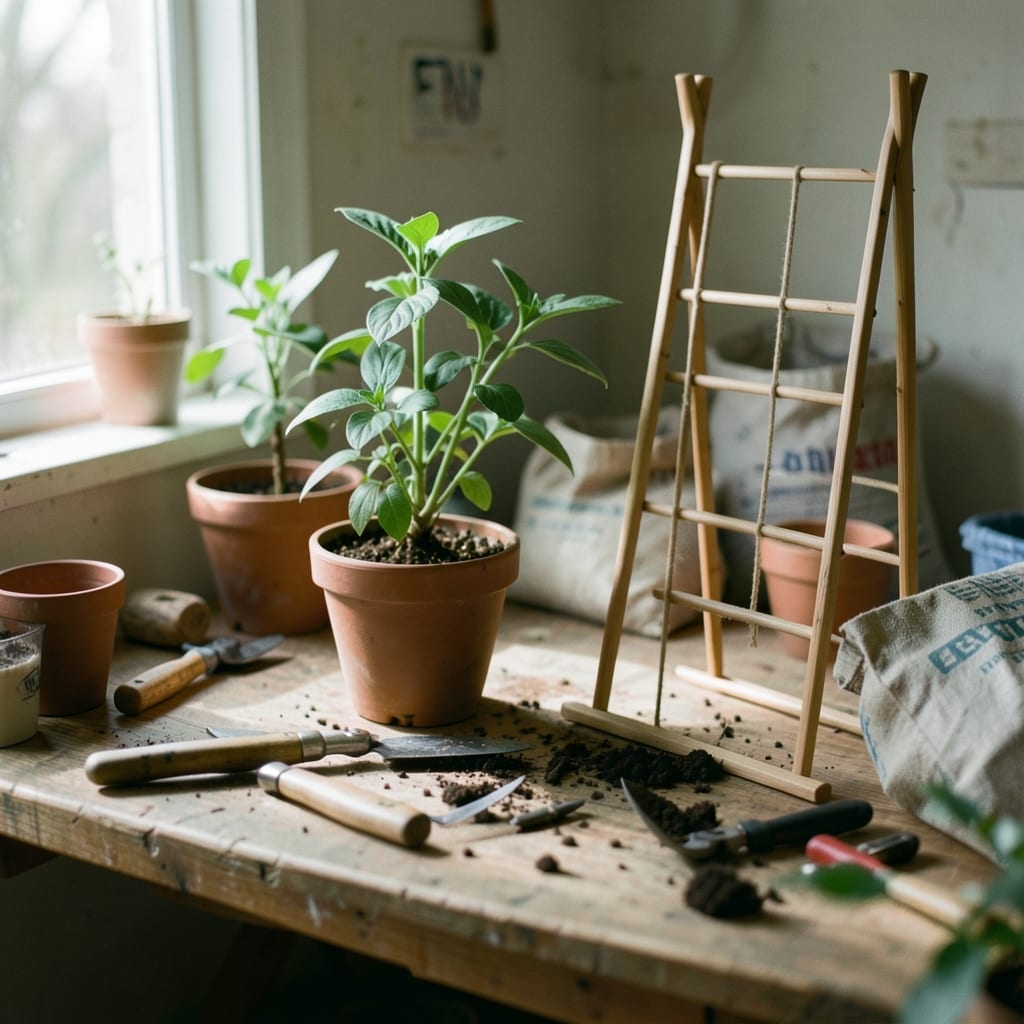
It started with one tomato plant that kept collapsing
It was a late May morning in New Hampshire, and I’d just planted my first heirloom tomatoes—‘Brandywine’, deep pink and heavy with promise.
The soil was rich, the sun was warm, and for the first week, the seedlings looked perfect: sturdy stems, bright green leaves, the kind of progress that makes a gardener’s chest swell. Then the wilting began.
Not the slow, thirsty droop of neglect, but a sudden, limp heaviness, like the plants had been drained of water overnight. I checked the soil—moist, not dry. The leaves—no brown edges, no curl. Just a sad, sagging weight.
I thought it was too much sun. So I moved them to the shade of a nearby cedar, where the air stayed cool and damp. For two days, they perked up. Then the next morning, they were flat again. This time, the stems were soft to the touch, almost mushy.
I dug one up and the roots were blackened, rotting at the base. I’d never seen anything like it. The plant looked healthy from a distance, but the moment I touched it, the truth was there: something was killing it from the inside out.
I tried everything. I switched to raised beds, thinking the ground was too compacted. I watered only in the morning, then only in the evening. I added compost, then sulfur, then a mix of both.
Each time, the plants would hold their shape for a few days before wilting again, slower this time, but just as surely. The worst part? The ones that *did* survive grew twisted, their fruits small and misshapen, as if they’d spent their energy fighting for their lives instead of growing.
By July, I’d lost half the bed, and the rest were barely hanging on.
Nine tries before it worked
The tenth attempt was the one that finally stuck. I’d read about a fungal disease called *Phytophthora*, which thrives in damp, heavy soil and attacks the roots. The problem wasn’t the sun or the watering—it was the soil itself.
My yard sat in a low spot where rain pooled, and no matter how much I amended the dirt, the drainage was still terrible. So I dug deeper. Literally.
I removed the top 18 inches of soil entirely, replaced it with a mix of sand, perlite, and aged compost, and built the beds up higher than before. This time, I also planted the tomatoes in the afternoon, giving the soil time to dry slightly before nightfall.
The first week was nerve-wracking. I checked the plants twice a day, probing the soil with my fingers, watching for the slightest wilt. Then, on the eighth day, I saw it: a new leaf, bright and firm, pushing out from the stem.
By the third week, the plants were thriving—tall, bushy, and covered in blossoms. But the real test came when I noticed something else. The second batch of seedlings, the ones I’d planted as backups in a different spot, were also struggling.
They weren’t wilting, exactly, but they were stunted, their leaves yellowing at the edges. I’d solved one problem, but the soil was still too rich in nitrogen, burning the roots.
The fix was simple in hindsight: balance. I added more worm castings and a slow-release fertilizer, cutting the nitrogen by half. The plants stabilized, and by mid-July, the first tomatoes were ready to pick.
They weren’t perfect—some were cracked from the heat, others split open when they got too ripe—but they were *alive*. And for the first time that season, I understood that gardening isn’t about following rules. It’s about watching, waiting, and being willing to fail nine times before you get it right.
The mind behind these pages

That was me—Kirsten Beaudry—standing in that soggy patch of earth, refusing to give up. I’ve always been the kind of person who tries something nine times before walking away. My mother used to say I had ‘the stubbornness of a terrier with a bone,’ and she wasn’t wrong.
Whether it was learning to play the violin at age ten (I quit after three years of screeching), or teaching myself to bake sourdough (the first loaf was a dense, gray brick), I’ve always needed to see the thing through—even when it made no sense.
Gardening was different. It wasn’t just a hobby; it was the first time I could see my persistence pay off in something tangible. The plants didn’t care about my mistakes. They just grew—or didn’t. And that honesty? It taught me more than any gardening book ever could.
Now, I write about the things that *actually* work, not the pretty versions of gardening that ignore the mess in between. Because the first leaf *does* decide the harvest. It’s just that most people never see it.
I also collect old seed packets. Not the ones you plant—those are for the garden. These are the ones I keep in a shoebox under my bed, the failed experiments: the marigolds that bolted in the heat, the basil that turned to dust before it flowered. They’re not trophies.
They’re proof that even the best gardeners have bad years.
So if you’re reading this, you’ve probably already lost something. Maybe it’s a plant, maybe it’s your patience. Either way, you’re in the right place.
Everything here is written the way that tomato was
This site doesn’t exist because I know how to garden perfectly. It exists because I know how to garden *imperfectly*—and how to write about the parts that don’t go as planned. Every guide here starts with a failure.
Not a dramatic one, like the time I lost an entire row of zucchini to squash vine borers (though that happened too), but the quiet, stubborn kind: the plant that wilts for no reason, the seedling that stalls at two inches, the bed that looks fine until you dig into it.
Those are the stories worth telling.
We test everything at least three times before it’s published. Not because we’re perfectionists, but because we’ve learned that the third try is where the real lessons hide. The first time, you’re guessing. The second, you’re adjusting. The third? That’s when you see what actually works—and what doesn’t.
And if a method fails after the third try? We write about that too. Because gardening isn’t about success. It’s about what you do after the first two times don’t work.
You’ll notice something else: no step skips the *why*. We don’t just say ‘water deeply.’ We say ‘water deeply *because* your soil drains like a sieve, and these roots need moisture to reach that depth before the afternoon sun dries them out.’ The details matter.
They’re the difference between a plant that survives and one that thrives—and between a gardening site that tells you what to do and one that tells you *how* to do it, even when you’re doing it wrong.
What that means for you
Here, you won’t find step-by-step guides that assume you’re starting from scratch. You’ll find the parts we had to figure out the hard way—the soil mix that finally drained, the pruning method that didn’t snap the stems, the companion plants that actually *do* keep pests away. And if we’re wrong?
We’ll tell you that too. Because the best gardening advice isn’t the kind that sounds right in a blog post. It’s the kind that holds up when you’re knee-deep in dirt and nothing is going as planned.
What you *won’t* find are perfect gardens, perfect seasons, or perfect solutions. What you *will* find is the same stubbornness that kept me digging up that tomato bed nine times. Because gardening isn’t about having all the answers.
It’s about asking the right questions—and being willing to keep trying until you find them.
Got a plant that’s giving you trouble? A method that’s not working? Send us the details—what you’ve tried, what you’ve seen, and what you’re still wondering. The best stories here start with a failure, and yours might be next.
The guides are grouped by category: Advice, Aphids, Blooming, Companion Plants, Container Gardens and Diseases.