
Companion Plants
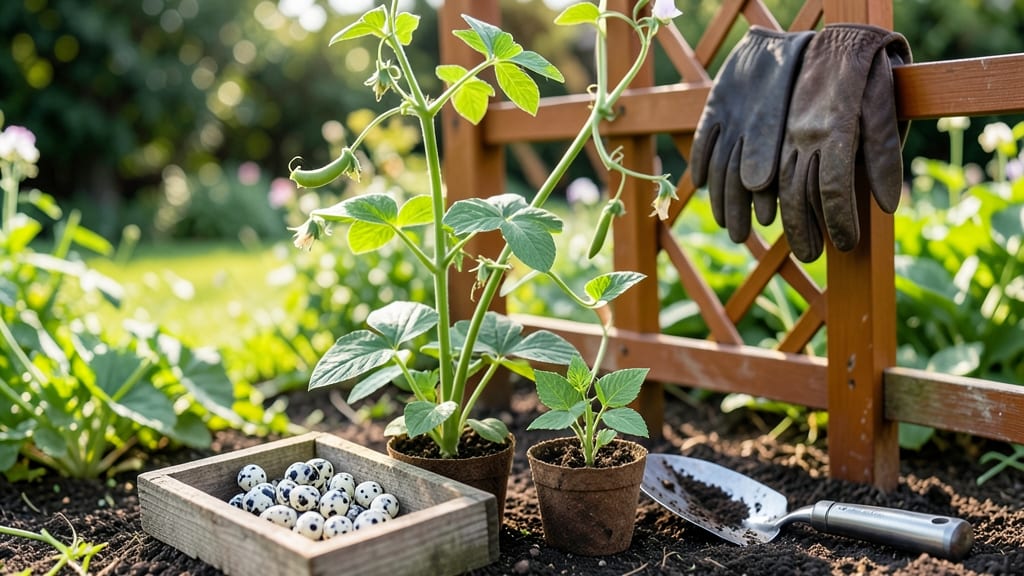
Planting peas in Indiana at the right time means the difference between a bountiful harvest and a sad, frost-nipped disappointment.
Indiana gardeners know timing is everything—plant too early, and frost will ruin your crop; too late, and you’ll miss the sweetest harvest. Get the exact weeks before last frost for maximum yields, plus regional adjustments for Indiana’s microclimates.
With USDA zones 5b-6b and last frosts typically hitting mid-April, your window is tight but doable. Early spring plantings (March-April) and late summer options (July-August) both work, but soil temperature and variety matter just as much as the calendar.
Below, I’ll break down the ideal planting weeks for your zone, how to prep soil for fast germination, and the top varieties that thrive in Indiana’s climate—so you can enjoy fresh peas from late spring through fall.
Indiana’s exact pea planting schedule by zone (with last frost dates)
Indiana’s USDA zones 5-8 create distinct planting windows for peas, where timing directly impacts yield. Northern Indiana’s colder microclimates (zones 5-6) demand earlier sowing, while Southern Indiana’s warmer zones 7-8 allow later starts.
According to Purdue Extension, average last frost dates range from April 15 in the north to April 25 in the south, with fall planting possible until July 31.
Peas thrive in cool soil temperatures (40-85°F), making them ideal for Indiana’s early spring or late summer planting. For maximum sweetness, aim to harvest before summer heat sets in.
Southern Indiana gardeners can push fall planting until August 15, while northern zones should finish by July 20 to avoid frost.
Key adjustment: Use row covers to extend northern zones’ planting by 2-3 weeks in spring or fall harvests. Southern zones can experiment with succession planting every 2 weeks for continuous yields.
For Northern Indiana (zones 5-6), start seeds indoors 4-6 weeks before your last frost date to jumpstart growth. Use biodegradable pots for transplanting, as peas hate root disturbance.
My favorite early variety, ‘Sugar Snap’, thrives when planted March 15-April 5—just as soil warms to 45°F.
Central Indiana’s zone 6-7 gardeners enjoy a 2-week flexibility window. Plant ‘Wando’ shelling peas March 20-April 10 for a 60-day harvest window. Southern Indiana’s zone 7-8 allows late starts—try ‘Oregon Sugar Pod’ April 1-15 for summer harvests.
Fall planting requires precise timing: Northern zones must finish by July 20, while Southern zones can extend to August 15. Use cold-hardy varieties like ‘Lincoln’ for fall harvests before first frost. Always mulch heavily to protect roots from temperature swings.
Indiana’s microclimates create local variations. If you live near Lake Michigan, expect later frosts—delay planting by 1 week. Conversely, urban heat islands in Indianapolis may allow earlier spring starts by 10 days. Always monitor local forecasts for frost warnings.
For container growing, use 5-gallon pots and plant 2-3 weeks earlier than ground planting—containers warm faster in spring. My balcony garden in zone 6 produces ‘Tom Thumb’ peas when started March 25 in black plastic pots.
Remember: Peas fix nitrogen, so don’t over-fertilize. A light compost mix at planting is all they need. For maximum yields, trellis varieties like ‘Super Sugar Snap’—they’ll climb 6-8 feet and produce 3x more pods than bush types.
🌱Final tip: Mark your planting dates on a garden calendar and harvest every 2-3 days to encourage continuous production. With these zone-specific windows, you’ll enjoy sweet peas from May through September!
3 Critical factors that change your pea planting timeline
Pea plants are famously sensitive to timing—get the window wrong, and you’ll either lose your crop to frost or miss the sweetest harvest.
In Indiana, three key factors shift your ideal planting schedule: soil temperature, pea variety type, and whether you’re planting in containers or directly in the ground. Let’s break down how each affects your timeline and what adjustments to make.
First, soil temperature is non-negotiable for peas. They thrive when soil reaches 40°F (4°C), but planting too early in cold soil slows germination and invites rot.
In Indiana’s USDA zones 5b-6b, this typically means waiting until 2-3 weeks before your last frost date—usually mid-March in Southern Indiana and early April in Northern regions. A soil thermometer is your best friend here.
Plant when soil hits 40°F (4°C)—use a thermometer to check!
Snap peas: 60-70 days | Snow peas: 65-75 days | Shelling peas: 55-65 days
Containers warm faster—plant 1-2 weeks earlier than in-ground
Next, the pea variety you choose directly impacts your planting timeline. Snap peas (like 'Sugar Snap') take 60-70 days to mature, while snow peas ('Oregon Sugar Pod') need 65-75 days. Shelling peas ('Wando') are fastest at 55-65 days.
In Indiana, this means shelling peas can often be planted 2 weeks earlier than snap peas to align with your frost-free window.
Don’t overlook container planting, which can shift your timeline by 1-2 weeks. Containers absorb and retain heat faster than soil, allowing you to plant earlier in spring (as early as late February in Southern Indiana) or later in fall (up to early September).
Just ensure your containers have drainage and are at least 10 inches deep—peas need room to develop strong roots.
Pro tip: For fall harvests, aim to plant 80-90 days before your first frost (typically mid-September in Northern Indiana). Use cold-hardy varieties like 'Green Arrow' snap peas, which tolerate light frosts. Pair this with row covers to push your harvest window even later into October.
Remember, Indiana’s microclimates matter. Urban areas like Indianapolis often warm up 1-2 weeks faster than rural zones, while Northern Indiana (e.g., Fort Wayne) may need to wait until late April. Always check your local Purdue Extension frost dates and adjust accordingly.
By accounting for these three factors—soil temperature, variety type, and planting method—you’ll pinpoint the perfect window for maximum pea yields in your Indiana garden. Happy planting! 🌱