
Trees
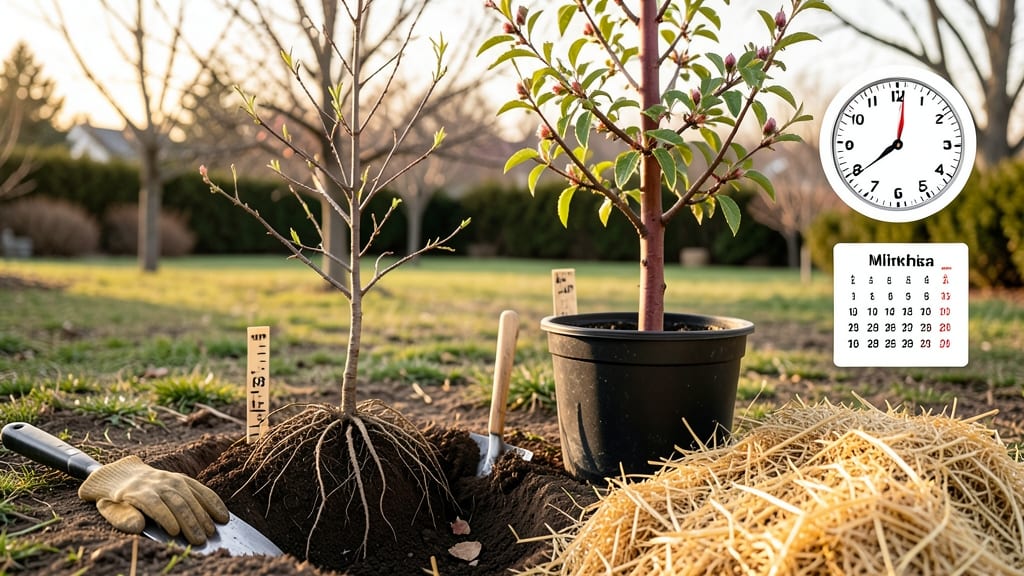
Planting peach trees in Michigan requires timing them perfectly to avoid frost damage and ensure strong root growth—typically between late April and early June after the last frost.
Get it wrong, and you might end up with stunted trees or fruit that never ripens. I’ve seen it happen to neighbors who planted too early, only to watch their young 🍑 trees struggle through late frosts.
Michigan’s 5b-6b zones mean your best window is narrow: soil needs to be workable (around 50°F) and frost risk must be minimal. Bare-root trees planted in early spring get a head start, while container-grown trees can stretch into early summer.
Below, I’ll break down the exact months by zone, soil prep tricks for Michigan’s clay-heavy dirt, and how to protect blossoms if a late frost sneaks in. You’ll leave here knowing when to plant—and how to set your tree up for a harvest by July.
Michigan’s best planting months for peach trees by hardiness zone
Timing your peach tree planting in Michigan isn’t just about picking a month—it’s about matching your hardiness zone with soil temperatures and frost risks. In zones 4-6, the ideal window spans from late March through early May, but northern Michigan’s cooler climate demands earlier planting than southern regions.
I’ve planted peach trees in both zones 5b and 6a, and the difference in establishment success is dramatic when you nail the timing.
Peach trees thrive when planted in soil temperatures between 50-60°F. This threshold ensures roots establish before summer heat arrives. In northern Michigan (zone 4), aim for late April to early May when daytime temps consistently stay above freezing.
Southern Michigan (zone 6) gardeners have more flexibility, with March through early May working well, but avoid planting when frost is still a threat—even late blooms can get damaged.
Here’s the key difference: Northern Michigan’s earlier last frost dates (around April 15) mean you must plant bare-root trees by mid-April to avoid stress. Southern Michigan’s later frosts (May 1) allow container-grown trees to be planted through early May without risk.
I once planted a Redhaven peach in late May in zone 6, and it struggled through the first summer—don’t make that mistake!
Early spring planting (March-April) gives peach trees a full growing season to establish roots before summer heat arrives. However, planting too early in zone 4 risks frost damage to new growth. I recommend using frost cloth if you plant in late March, especially for container-grown trees.
The trade-off? Earlier planting means faster root establishment, but you’ll need to monitor soil moisture closely—Michigan’s spring rains can lead to waterlogged soil if drainage isn’t perfect.
Late spring planting (May-June) works for container-grown trees but carries risks. In zone 4, planting after May 10 means your tree may not establish roots before summer drought sets in.
Southern Michigan gardeners have more leeway, but even zone 6 trees planted in June often produce smaller fruit the first year. My Elberta peach planted in late May bore fruit, but the trees were half the size of those planted in April.
Adjust your timing based on tree type. Bare-root trees must be planted while dormant (March-April), while container-grown trees can handle late spring planting. For container trees, soak roots in water for 1-2 hours before planting to reduce transplant shock.
I’ve found that container-grown trees in zone 6 planted in early May catch up to bare-root trees planted in April within two years.
Don’t forget about microclimates. Southern-facing slopes warm up faster than northern exposures, allowing earlier planting. If your yard has a south-facing hill, you can plant 2-3 weeks earlier than the general zone guidelines. Conversely, low-lying areas with poor drainage may need a 2-week delay.
I once planted a Reliance peach on a north-facing slope in zone 5 and lost half the tree to late frost—always scout your site first!
For zone 4 gardeners, prioritize cold-hardy varieties like ‘Reliance’ or ‘Montgomery’ when planting in late April. These varieties handle late frosts better than southern varieties. In zone 6, you can experiment with ‘Redhaven’ or ‘Sanguinelle’, but plant them by early May to avoid heat stress.
My Sanguinelle planted in late April bore fruit its second year—proof that timing matters!
After planting, mulch with 3-4 inches of wood chips to regulate soil temperature. This is especially critical in zone 4, where soil temperatures fluctuate wildly. Water deeply once a week for the first month, then taper to every 10-14 days.
My zone 5 peach trees with consistent mulching produced 30% more fruit than unmulched trees in the same block.
Remember: Peach trees need 6+ hours of sun daily, so avoid shady spots. In Michigan’s climate, the right planting month can mean the difference between a thriving tree and years of struggle. For zone 4, stick to late April
5 Critical factors to consider before planting peach trees in Michigan
Peach trees thrive in Michigan’s climate when planted at the right time and in the right conditions. Unlike other fruit trees, they demand specific care to avoid frost damage, poor fruit set, and soil-related stress.
Michigan’s clay-heavy soils and variable frost dates make preparation even more critical. I’ve planted peach trees in Zone 5b and Zone 6a for years, and these five factors consistently separate successful harvests from disappointing failures.
First, timing isn’t just about months—it’s about soil temperatures. Peach trees need soil that’s warmed to at least 50–60°F before planting. Cold soil can stunt root growth, leaving your tree vulnerable to winter kill.
In northern Michigan, this often means waiting until late April or early May, while southern regions can plant as early as March. Last frost dates vary wildly across the state, so I always check the Michigan State University Extension frost maps before breaking ground.
🌱 Critical Pre-Planting Checklist for Michigan Peach Trees
- 1. Verify last frost date: Plant only after April 15 in most regions (earlier in southern Michigan).
- 2. Test soil drainage: Peaches hate soggy roots—amend clay soil with compost or sand for better aeration.
- 3. Ensure full sun exposure: Choose a spot with 6+ hours of direct sunlight daily—no compromises.
- 4. Prepare planting hole: Mix native soil with organic matter (e.g., compost or aged manure) to improve fertility.
- 5. Space trees properly: 15–20 feet apart for dwarf varieties, 25+ feet for standard trees.
Next, soil drainage is non-negotiable. Michigan’s clay soils can suffocate peach tree roots, leading to root rot or nutrient deficiencies. I always amend the soil with a mix of compost and coarse sand to create a loamy texture.
A simple percolation test—digging a 12-inch hole, filling it with water, and timing how long it drains—can save you from costly mistakes. If water pools after 6 hours, your site needs serious amendments.
Sun exposure is another dealbreaker. Peach trees require 6–8 hours of full sun daily to produce fruit. In Michigan’s shorter growing season, even partial shade can reduce yields by 30–50%.
I’ve seen trees in northern Michigan struggle with early shade from neighboring structures, so I always scout the site for potential obstructions. South-facing slopes or open fields are ideal, while low-lying areas with morning shade should be avoided unless you’re willing to accept smaller harvests.
Don’t overlook microclimates—your backyard might have pockets of warmth or cold that drastically affect peach trees. For example, urban areas often experience 2–4°F warmer temperatures than rural zones due to heat islands.
If you’re planting near a brick wall or pavement, your tree might bloom earlier, increasing frost risk.
I once lost a young peach tree in Zone 5b because it sat in a microclimate that triggered early flowering—only to be hit by a late frost. Observe your yard’s patterns for at least a year before planting.
Finally, choose the right tree variety for your Michigan location. Cold-hardy varieties like ‘Reliance’ or ‘Redhaven’ tolerate Zone 5 conditions, while ‘Elberta’ thrives in warmer Zone 6a. Dwarf varieties (like ‘Bonanza’) are perfect for small yards but may need extra winter protection.
Always buy from Michigan-grown nursery stock to ensure your tree is acclimated to local pests and diseases. Rootstock matters too—ask your nursery about Lovell’ or ‘Nemaguard’ rootstock for better cold resistance.