Trees
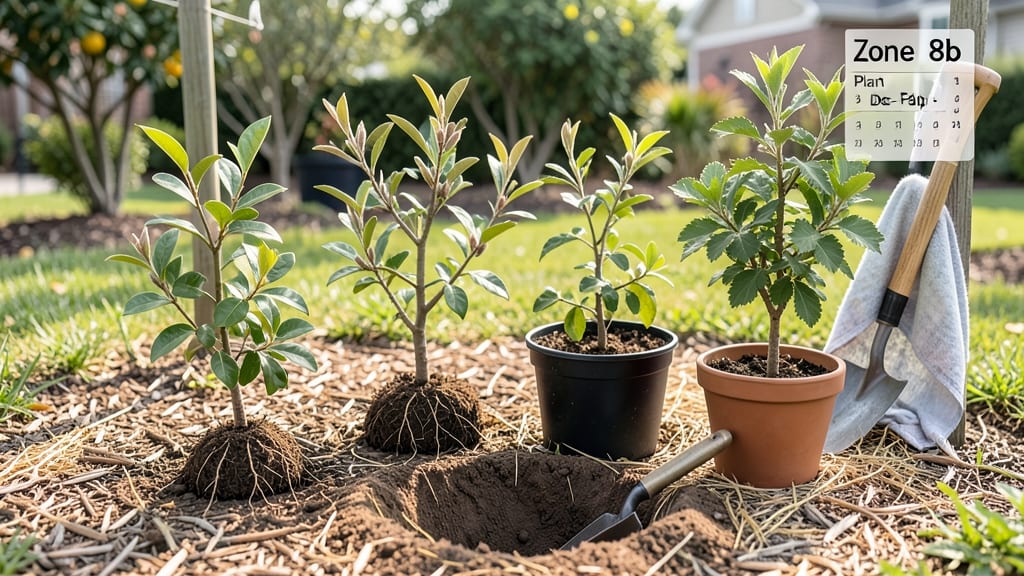
Planting fruit trees in Zone 8b during late winter to early spring 🍎 ensures they establish strong roots before summer heat arrives.
Planting fruit trees at the wrong time in Zone 8b can mean the difference between thriving orchards and struggling saplings—so timing isn’t just important, it’s critical for root establishment.
In this mild-winter zone, the 4-6 weeks before your last frost date (typically mid-February to early March) is your best window. That gives young trees time to settle in before the heat of summer kicks in.
Below, I’ll break down the exact months for different fruit trees—like peaches, figs, and citrus—plus soil prep tips to set them up for success.
Best planting months for fruit trees in Zone 8b by tree type
Zone 8b’s mild winters and long growing season create a unique window for planting fruit trees—but timing still matters. Deciduous trees like peaches and plums thrive when planted in late winter, while evergreens such as citrus and figs prefer early spring to avoid heat stress.
The key is aligning planting with soil temperatures and dormancy cycles to ensure strong root growth before summer heat arrives.
In Zone 8b, soil temperatures typically rise above 50°F (10°C) by February, signaling the start of the ideal planting window. However, evergreen fruit trees like olives and pomegranates benefit from waiting until March or April when nights stay warmer.
Meanwhile, deciduous varieties planted in February can establish roots before bud break, giving them a head start for spring growth.
Here’s a quick reference for Zone 8b’s best planting months by tree type, including soil temperature targets and regional adjustments:
For Zone 8b gardeners, microclimates play a huge role. Coastal areas with milder winters (e.g., San Diego) can plant citrus as early as February, while inland regions like Las Vegas may wait until April to avoid late-spring frosts.
Always check your local frost dates—even Zone 8b can see unexpected 28°F (-2°C) dips in January.
Evergreen fruit trees like citrus and olives need extra care in Zone 8b’s hot summers. Planting them in early spring (March-April) gives roots time to establish before June heat arrives. Use drip irrigation and mulch to retain moisture, as these trees are shallow-rooted and prone to stress during droughts.
Deciduous trees, such as peaches and plums, benefit from a dormant-season planting window. Planting in late winter (February) allows roots to grow before the tree breaks dormancy in March.
This timing also reduces transplant shock, as the tree isn’t actively growing when you disturb its roots. Just be sure to water deeply every 7-10 days until roots establish.
If you’re planting bare-root trees (common in nurseries), do it as soon as you receive them—within 1-2 weeks—to prevent root desiccation. For container-grown trees, you have more flexibility but still aim for cooler months to minimize stress.
Always prune damaged roots before planting and avoid fertilizing until new growth appears in spring.
One Zone 8b-specific tip: If you miss the ideal window, you can plant deciduous trees in late fall (November), but avoid planting evergreens after June. Summer heat can burn young roots, and the tree may struggle to establish before winter.
For citrus, consider shade cloth during the first summer to reduce heat stress.
Finally, don’t overlook soil preparation. Zone 8b soils often struggle with clay compaction or poor drainage. Amend planting holes with compost and sand (for clay soils) or perlite (for sandy soils) to improve root growth.
A 5-gallon bucket of compost mixed into the planting hole works wonders for nutrient retention.
With the right timing and care, your Zone 8b fruit trees will thrive—producing abundant harvests for years to come. Happy planting! 🌳🍑
How to prepare soil and site for fruit tree success in Zone 8b
Preparing your soil and planting site is just as crucial as timing when it comes to growing healthy fruit trees in Zone 8b. The mild winters here mean you can extend your planting window, but your soil must support strong root development to avoid stress during temperature swings.
Start by testing your soil pH—most fruit trees thrive in slightly acidic to neutral soil, between 6.0 and 7.0.
If your soil is heavy clay or sandy, amend it with organic matter like compost or well-rotted manure. This improves drainage and water retention, which is critical in Zone 8b’s variable rainfall patterns.
A 12-inch deep hole is standard, but loosen the surrounding soil to encourage roots to spread outward rather than circling the trunk.
Step-by-Step Soil and Site Prep
- 1 Test Soil pH: Use a kit to check pH. Adjust with lime (for acidic soil) or sulfur (for alkaline soil) if needed.
- 2 Amend Soil: Mix 3-4 inches of compost into the top 12 inches of soil. Add perlite or sand if drainage is poor.
- 3 Choose a Sunny Spot: Select a site with 6-8 hours of sunlight daily. Avoid low areas where cold air settles.
- 4 Improve Drainage: If water pools, create a raised mound or add gravel to the hole’s bottom.
- 5 Mulch Heavily: Apply 3-4 inches of organic mulch (wood chips or straw) around the base, keeping it 6 inches away from the trunk.
For drainage challenges, consider planting on a slight slope or installing a French drain nearby. Zone 8b’s occasional heavy rains can drown roots if water doesn’t drain away quickly. If your soil is too alkaline, add elemental sulfur a few months before planting to lower the pH gradually.
Once your site is ready, water deeply before planting to settle the soil. This helps prevent air pockets around the roots. After planting, maintain consistent moisture—especially in the first 30 days—to encourage root growth. A drip irrigation system works best for even watering without wetting the foliage.
Finally, protect young trees from late frosts by placing a frost cloth over them during cold snaps. In Zone 8b, even mild frosts can damage tender new growth. With the right soil prep, your fruit trees will establish strong roots and reward you with bountiful harvests for years to come.