
Trees
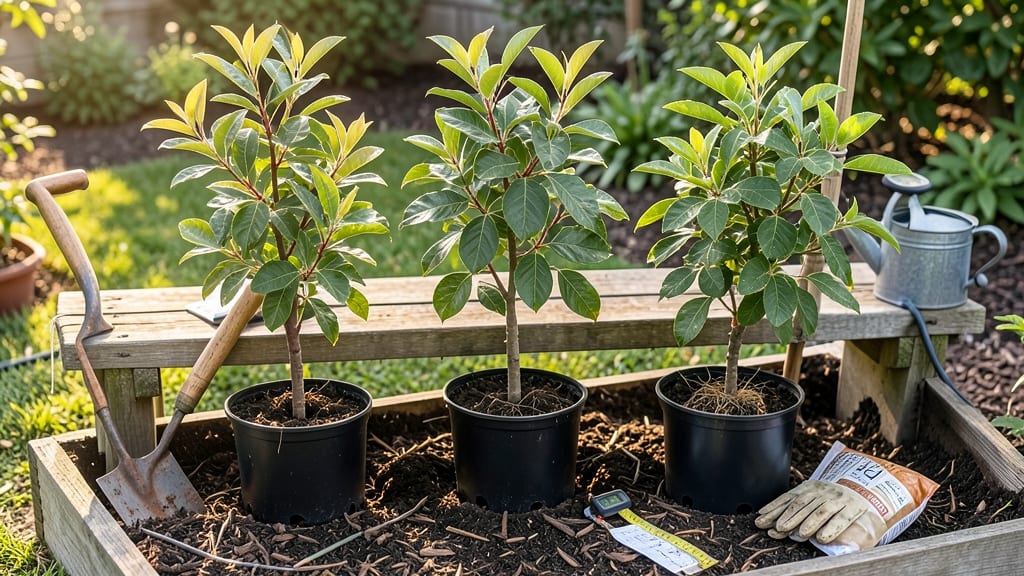
The best time to plant fruit trees in Texas depends on your region’s frost dates and heat tolerance — aim for late winter through early spring or fall for strong root growth.
Picture this: you’ve picked out the perfect 🍎 fruit tree, but if you plant it in scorching summer heat or during a late frost, you’re setting it up for failure.
Texas’ diverse climate means North Texas has a different timeline than South Texas, and getting this wrong can mean years of struggling with weak roots or stunted growth.
Most fruit trees thrive when planted in October or November, giving them time to establish roots before summer’s brutal heat arrives. But in North Texas’ 8a-10b zones, early spring (February-March) works too, as long as you avoid frost-sensitive varieties.
Below, I break down the exact planting windows by region, soil prep tips for Texas’ alkaline dirt, and how to choose heat-tolerant varieties that actually bear fruit. No more guesswork — just stronger trees and bigger harvests.
Texas fruit tree planting calendar by region: north vs. central vs. South Texas timelines
Texas' diverse climate zones create wildly different planting windows for fruit trees. In the High Plains, where winters are colder and summers brutal, you’ll need to time plantings around late winter frost dates.
Meanwhile, South Texas gardeners can plant nearly year-round thanks to its mild winters and long growing season. Getting this right means the difference between a thriving orchard and a struggling sapling.
Your first critical decision is choosing between fall planting (ideal for most Texas regions) and early spring options. Fall planting gives roots time to establish before summer heat, while spring planting works best for container-grown trees. Let’s break down the exact windows by region to maximize your fruit tree’s success.
In the High Plains, where temperatures can plummet below freezing, your planting window is narrow but critical. The November 1 to December 15 window lets roots establish before winter dormancy, while the February 15 to March 15 window works for container-grown trees.
Avoid planting during April through June when summer heat stress becomes deadly for young trees.
North Texas offers slightly more flexibility with its October 15 to November 30 fall window and February 1 to March 15 spring window. The key here is avoiding the July to September heatwave, which can cause transplant shock.
For cold-hardy citrus varieties like trifoliate orange, you can push these windows slightly later in spring.
Central Texas gardeners have the advantage of milder winters, allowing a September 15 to November 15 fall window and January 15 to March 1 spring window. The region’s calcareous soils mean you’ll need to amend with sulfur or peat moss to lower pH for optimal fruit production.
Never plant during June to August when temperatures regularly exceed 100°F.
South Texas is the most forgiving, with a nearly year-round planting window. Focus on September 1 to November 15 for fall planting and January 15 to February 28 for spring.
The region’s humidity demands extra attention to fungal disease prevention and proper air circulation around your trees. Tropical varieties like mangoes and avocados thrive here but require consistent moisture.
Regardless of region, always plant bare-root trees in their dormant season (winter) and container-grown trees in early spring or fall. The three-month window before your region’s first frost is your safest bet for root establishment.
For example, if your first frost is November 15, aim to plant by August 15.
Pro tip: Use mulch to regulate soil temperature and retain moisture during Texas’ extreme seasons. A 3-4 inch layer of organic mulch around your tree’s base will make all the difference in survival rates.
Pair this with deep watering schedules (15-20 gallons per tree) to ensure your young fruit trees establish strong root systems before summer’s heat arrives.
🌱
How to prepare your Texas soil and site for fruit tree planting success
Texas soil can be tricky—often alkaline and clay-heavy, which means fruit trees need extra care to thrive. Before planting, focus on soil amendments and drainage improvements to mimic the well-draining, slightly acidic conditions most fruit trees prefer.
Skipping this step can lead to poor root growth and stunted trees, even with the best planting timing.
Start by testing your soil’s pH level. Texas soils often run 7.5–8.5 (alkaline), but most fruit trees prefer 6.0–7.0. Use a simple soil test kit from your local extension office or garden center.
If your pH is too high, sulfur-based amendments or peat moss can help lower it gradually over time.
Organic matter is your next priority. Texas soils lack natural nutrients, so mix in 2–3 inches of compost or well-rotted manure into the top 12 inches of soil. This improves water retention and microbe activity, which are critical for young roots. For heavy clay soils, consider adding coarse sand or perlite to improve drainage.
Use sulfur or peat moss to lower alkaline soil to 6.0–7.0 for optimal nutrient uptake.
Add 2–3 inches of compost or aged manure to improve soil structure and fertility.
Break up clay with sand or perlite and create a slight mound for the planting hole to prevent waterlogging.
Use bamboo fencing or shrubs to protect young trees from Texas winds, which can dry out soil and stress roots.
Apply 3–4 inches of mulch (wood chips or straw) to retain moisture and regulate soil temperature.
Don’t overlook drainage. Poor drainage is a common issue in Texas, especially after heavy rains. Dig a planting hole twice as wide as the root ball but no deeper.
If your soil is heavy clay, create a slight mound in the hole to encourage water to flow away from the roots. A French drain or gravel layer at the bottom can also help if your site is prone to waterlogging.
Texas’ hot winds and intense sun can stress young fruit trees, so consider installing windbreaks. Use bamboo fencing, shrubs, or even temporary tarps to shield the planting site from harsh winds. This protects the soil from drying out and gives roots a better chance to establish.
Pair this with 3–4 inches of mulch (wood chips or straw) to lock in moisture and regulate soil temperature.
Finally, choose the right location with full sun exposure (6–8 hours daily) and protection from strong winds. Avoid low spots where cold air pools, as even drought-tolerant varieties like figs or pecans can suffer from late frosts.
With these steps, your Texas soil will be ready to support healthy, productive fruit trees for years to come.