
Plants
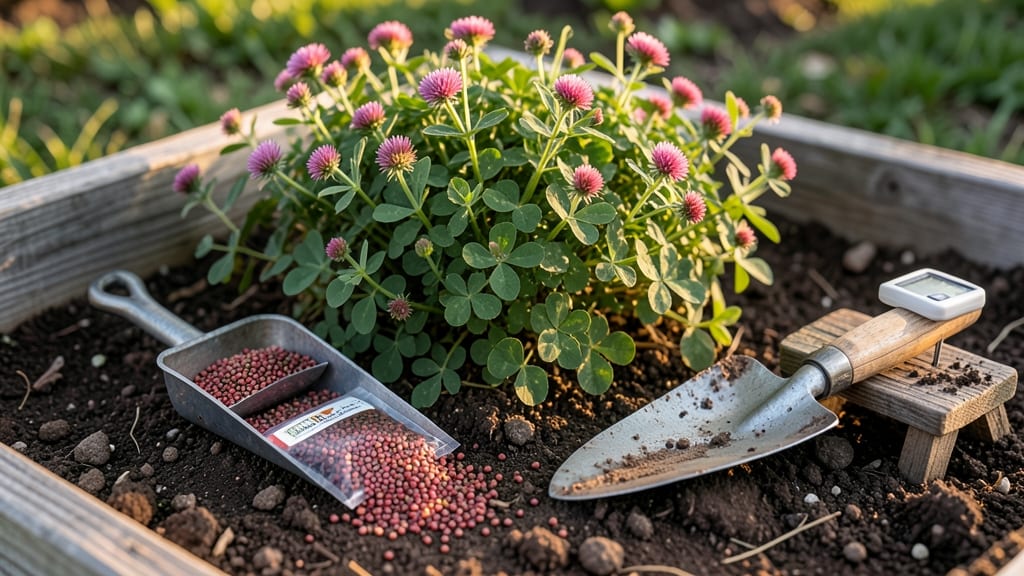
Planting crimson clover 🌸 in Texas at the right time means the difference between a thriving cover crop and wasted seeds.
Texas gardeners know timing is everything—plant too early, and frost will kill it; too late, and you miss the optimal growth window. But mastering the perfect schedule can transform your soil fertility with minimal effort.
For USDA zones 8a-10b, the best windows are August through October for fall planting or February to March in spring. These months give seedlings time to establish before summer heat or winter frost sets in.
Below, I’ll break down the exact frost-free planting dates by region, soil prep tips, and how to protect your clover from Texas’s unpredictable weather—so you can get it right the first time.
Best months to plant crimson clover in Texas by region
Texas's diverse climate means crimson clover planting windows vary dramatically from North Texas to South Texas. In USDA zones 8a-10b, timing is critical—plant too early, and frost zaps seedlings; too late, and summer heat stunts growth.
My region-specific guide breaks down the perfect month-by-month schedule for each area, so you can maximize soil health without the guesswork.
For North Texas (Dallas/Fort Worth), the fall planting window is tight due to earlier frosts. Central Texas (Austin/San Antonio) offers a slightly longer window, while South Texas (Houston/Beaumont) can plant later into fall.
Spring planting is also possible, but soil temperatures must stay above 40°F for germination. Let’s dive into the exact months that work best for each region.
🌱
In North Texas, where frost arrives by mid-November, I recommend planting crimson clover no later than October 15. This gives seedlings 6-8 weeks to establish roots before winter. Spring planting should start by February 1 to avoid summer heat stress.
For Central Texas, you’ve got a bit more flexibility—planting through late October is safe, and spring planting can extend into late March.
If you’re in South Texas, you’re in luck! The longer frost-free season lets you plant as late as mid-November. However, avoid planting after November 15, as cooler winter temps can slow growth.
For spring, March 1 is your cutoff to beat the summer heat. My pro tip: Use a soil thermometer to confirm temps are ideal before seeding.
For all regions, late summer planting (August) is ideal because it allows crimson clover to establish before fall rains and cooler temps. This fall growth also means it’ll be ready to fix nitrogen in your soil by winter.
If you miss fall, early spring is your next best bet—just be sure to water consistently until seedlings are 2-3 inches tall.
One common mistake I see? Planting too late in spring (after April 15 in North/Central Texas or April 30 in South Texas). By then, summer heat and drought conditions make germination difficult. Stick to these windows, and you’ll see lush, healthy clover within 4-6 weeks.
🌿
Ready to get planting? Grab your seed drill or broadcast spreader, and aim for 15-20 lbs per acre for best coverage. Lightly rake the soil to ensure good seed-to-soil contact, then water gently to settle seeds.
With the right timing, your crimson clover will thrive—and so will your soil!
How soil temperature and frost dates affect crimson clover germination
Crimson clover thrives when planted in soil temperatures between 40°F and 70°F. Below 40°F, seeds won’t germinate, while above 70°F, they risk drying out before sprouting. Texas’s unpredictable frost dates can throw off even the best-laid plans, but understanding these thresholds helps you adjust planting times for success.
In North Texas, where first frosts arrive as early as November 15, aim to plant crimson clover by mid-October to give seedlings time to establish before winter. South Texas, with later frosts (often February 1 or later), offers a longer window—plant as late as December in some areas.
- 1 Soil temp must stay between 40°F and 70°F for germination—use a soil thermometer to check depths of 2-4 inches before planting.
- 2 Plant 4-6 weeks before first frost (e.g., September-October in North Texas) to ensure seedlings mature before cold snaps.
- 3 Adjust for early/late frosts—if frost hits earlier than expected, cover seedlings with row fabric or mulch to protect them.
- 4 Extend the season with raised beds—they warm up faster in spring and stay cooler in fall, giving you 2-3 extra weeks of planting flexibility.
- 5 Spring planting works best in February-March when soil temps rise above 50°F—avoid planting in April heat, which stresses seedlings.
A soil thermometer is your best tool for precision. Insert it 2-4 inches deep (where seeds will be) and wait 30 minutes for an accurate reading. If temps hover near 40°F, delay planting until conditions improve—cold soil slows germination and weakens seedlings.
Texas’s unpredictable weather means frost can arrive early or late. Check your local USDA frost date maps and add a buffer: if your area’s average first frost is November 15, plant by October 15 to account for delays.
For spring planting, wait until soil temps consistently stay above 50°F for at least a week.
To extend the growing season, use row covers or black plastic mulch in fall to warm the soil and protect young plants. In spring, raised beds can help you plant 2-3 weeks earlier than ground planting, giving crimson clover a head start before summer heat arrives.
When adjusting planting dates, prioritize seedling health over calendar dates. A well-timed planting in cooler but frost-free conditions will outperform a rushed effort in extreme heat, even if it’s technically "on schedule." Monitor your garden closely, and don’t hesitate to use temporary covers if frost threatens.