
Plants
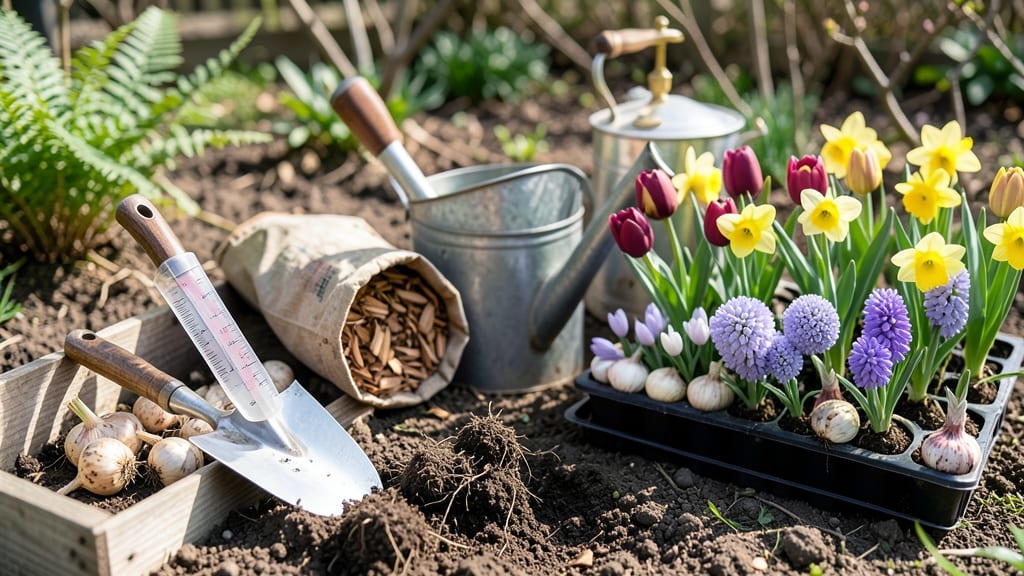
Planting spring bulbs in Michigan in spring means timing it right after your last frost date—usually mid-April, but it varies by region—so you don’t miss the 6-8 week window for vibrant blooms.
Timing is everything when planting spring bulbs in Michigan—get it wrong, and you might miss vibrant blooms entirely. But with Michigan’s varying microclimates, knowing the exact window for planting daffodils, tulips, and hyacinths can mean the difference between a stunning garden and a disappointing one.
If you’ve ever waited too long and watched your bulbs rot in cold soil, or planted too early and had them heaved out by freezing cycles, you know how critical this step is.
The key is understanding your local frost dates, soil temperature, and the hardiness of your chosen 🌷 Spring-Planted Bulbs.
Here, I’ll break down the ideal planting windows for Michigan’s USDA Zones 5b-6b, share the best bulbs for your climate, and give you actionable tips to ensure perfect blooms year after year.
Michigan planting zones: when to plant bulbs by USDA Zone (5-6)
Michigan’s USDA Zones 5 and 6 create distinct planting windows for spring bulbs, where timing can make or break your blooms. In Zone 5 (Upper Peninsula and northern Lower Peninsula), colder soils demand earlier action, while Zone 6 (southern Lower Peninsula) offers a slightly extended window.
Both zones share one critical rule: plant when soil temps hover between 40°F and 50°F—this ensures roots establish before frost returns.
Most gardeners focus on fall planting for spring bulbs, but Michigan’s unpredictable frosts make early spring planting a viable backup. The key difference? Fall-planted bulbs need 6-8 weeks to root before winter, while spring-planted bulbs must go in 2-4 weeks before your last frost date.
For Michigan, that’s typically mid-March to early April in Zone 6 and late March to mid-April in Zone 5.
Here’s the zone-specific breakdown you need to avoid missed blooms or frozen bulbs:
For Zone 5, prioritize daffodils and alliums—they’re the most cold-hardy and bloom reliably even after late frosts. In Zone 6, you’ll see tulips and hyacinths thrive with earlier planting, but watch for late April frosts, which can blacken delicate blooms.
Pro tip: Plant tulips in clusters of 12+ to create a bold display that hides sporadic failures.
Don’t rely solely on calendar dates—soil temperature is your true guide. Use a soil thermometer to confirm readiness; if temps dip below 40°F, wait or protect bulbs with straw mulch (3–4 inches thick).
In my Zone 5b garden, I’ve had success planting ‘Ice Follies’ daffodils as early as late March, but ‘Darwin Hybrid’ tulips often need to wait until mid-April to avoid frost damage.
Another critical factor? Frost risk after planting. Michigan’s northern zones can see surprise frosts into early May, while southern areas typically warm up faster. To hedge your bets, plant early-blooming varieties first (like crocus) and late bloomers last (like alliums).
This staggered approach ensures you’ll have continuous color from April through June, regardless of late frosts.
If you miss the spring window, don’t panic—fall planting is still an option, but aim for 6–8 weeks before your first hard frost. For most of Michigan, that’s late September to early November.
The trade-off? Fall-planted bulbs need consistent moisture until roots establish, so mulch heavily to retain soil warmth and prevent heaving during freeze-thaw cycles.
One common mistake? Planting bulbs too shallow. In both zones, dig holes 6–8 inches deep (or 2–3 times the bulb’s height) and space them 3–6 inches apart, depending on variety.
For example, tulip bulbs need 6 inches of depth, while daffodils can handle 8 inches for better frost protection. Amend the soil with compost or bone meal to give roots a phosphorus boost for next year’s blooms.
Finally, watering strategy differs by zone. In Zone 5, water deeply after planting and again when shoots emerge in spring, but reduce frequency as temps rise.
In Zone 6, you can water weekly once growth starts, but avoid overhead watering to prevent fungal diseases like botrytis, which thrives in Michigan’s humid springs.
With these zone-specific dates and soil triggers, your Michigan garden will burst with vibrant spring blooms—no matter where you’re planting. Happy digging! 🌷
5 Critical signs your Michigan soil is ready for spring bulbs (and what to do if it’s not)
Spring bulb planting in Michigan hinges on soil readiness, not just calendar dates. While the average last frost date (mid-April) is a starting point, your soil might still be too cold or wet for bulbs like tulips or daffodils.
I’ve learned the hard way—planting too early can leave bulbs vulnerable to frost heave, while waiting too long risks stunted growth. Let’s break down the 5 non-negotiable signs your Michigan soil is finally ready, plus what to do if Mother Nature throws a curveball.
First, check the soil temperature at a depth of 6 inches. Bulbs thrive when soil reaches a steady 40°F or warmer. Use a soil thermometer—if it’s still dipping below this, hold off.
I’ve found that in Zone 5b (northern Michigan), this often happens by late April, while Zone 6a (southern Michigan) may hit this mark by early April. Pro tip: Morning is the best time to check, as temperatures fluctuate less.
Next, look for crocus blooms in your yard or nearby gardens. These hardy harbingers of spring are your natural soil thermometer. When crocus flowers pop up, it’s a sure sign the ground is warm enough for tulip and hyacinth bulbs.
I plant mine as soon as I see these purple or white blooms—it’s my foolproof cue that the risk of frost has passed for most of Michigan.
Now, let’s talk moisture. Your soil should be workably moist, not soggy. Press your finger 2 inches into the soil—if it feels damp but not wet, you’re golden. Overly saturated soil can suffocate bulbs and invite rot.
If your garden is still muddy, wait a few more days or amend the soil with compost to improve drainage. I’ve had to delay planting twice because of unseasonably wet springs, and my bulbs still thrived when I finally got them in the ground.
- Soil Temp Check: 40°F+ at 6" for 3+ days. Use a thermometer—don’t guess! 🌡️
- Crocus Blooms: Their appearance signals safe planting. No crocus? Wait. 🌷
- Moisture Test: Damp but not soggy. Squeeze a handful—it should crumble, not stick. 💧
- Frost Risk: Check your local frost-free date (usually April 15-30 in Michigan). Plant 2-3 weeks after. ❄️
- Visual Cues: Daffodil foliage emerging? Time to plant! Yellow leaves mean bulbs are already up. 🌱
🚨 If your soil isn’t ready: Use row covers or mulch (straw or shredded leaves) to protect bulbs from late frosts. Plant in containers for flexibility!
Don’t overlook frost risk, even if your soil is warm. A late frost can devastate newly planted bulbs. I always cross-reference the National Weather Service for my region’s frost predictions. If frost is forecasted within 7-10 days, delay planting or use frost cloth to shield your bulbs.
In my Zone 5b garden, I’ve had to cover bulbs planted in early April twice—it’s better to be safe than sorry.
Finally, watch for emerging foliage from last year’s bulbs. If you spot daffodil or tulip leaves pushing through the soil, it’s a green light to plant. These bulbs are already hard at work, and your new additions will follow suit.
I’ve noticed that in southern Michigan, this often happens by early April, while northern gardens might see it in late April. Timing is everything!
If your soil still isn’t ready by mid-April, don’t panic. Plant your bulbs in containers and keep them in a garage or cold frame until the ground warms up. I’ve successfully overwintered bulbs this way, and they bloomed just as beautifully the following spring.
The key is patience and adaptation—Michigan’s weather will keep testing you, but with these signs, you’ll always be prepared. 🌿