
Trees
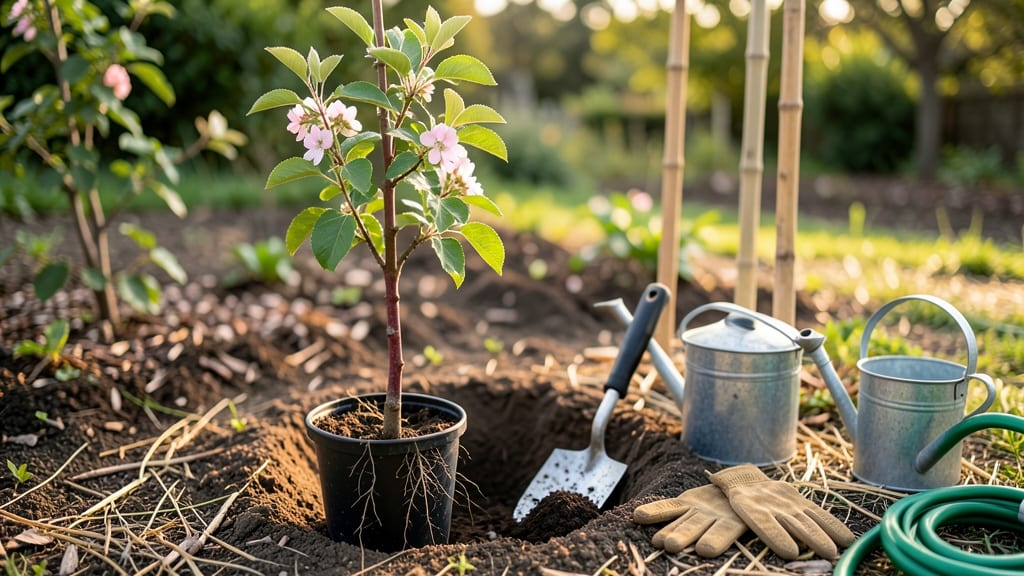
Planting apple trees in New Jersey at the right time means the difference between a thriving orchard and frost-damaged saplings—but the exact timing depends on your USDA Zone and local microclimates.
Picture this: You’ve picked out the perfect apple tree 🍎, dug the hole, and are ready to plant—only to watch a late frost wipe out your new sapling.
That’s why knowing when to plant apple trees in NJ isn’t just about the calendar; it’s about the science of soil temperature, frost dates, and root development.
In New Jersey’s USDA Zones 6a and 7a, the ideal windows are late fall (October–November) or early spring (March–April), but the risks shift dramatically between the two. Fall planting gives roots time to establish before winter, while spring planting avoids early frost—but each zone has its own nuances.
Below, I’ll break down the best months for your specific region, how to prep your soil for NJ’s clay-heavy earth, and the one mistake that kills more young apple trees in the Garden State than anything else.
Best planting windows for NJ apple trees: USDA Zone 6a vs 7a breakdown
New Jersey’s USDA Zones 6a and 7a create distinct planting windows for apple trees, where a 2-week difference can mean the difference between thriving roots and frost damage.
In Zone 6a (average first frost: November 15), your window is tighter, while Zone 7a (average first frost: November 25) offers slightly more flexibility. Both zones share one critical rule: soil temperatures must stay above 45°F for successful root establishment.
For fall planting, aim to get your apple tree in the ground 4-6 weeks before the first frost. This gives roots time to establish before winter dormancy sets in.
In Zone 6a, that means planting between October 1st and November 1st, while Zone 7a gardeners have until November 15th. Spring planting is equally time-sensitive, with dormant bare-root trees needing to go in the ground by mid-April before buds break.
🌱
In Zone 6a, early October is your best bet for fall planting, as temperatures stay warm enough for root growth while still leaving time for roots to harden before winter.
I’ve planted Honeycrisp and Liberty varieties in late October here, and they’ve established beautifully—just make sure to mulch heavily (4-6 inches) to insulate roots. For Zone 7a, you can push planting later into November, but avoid waiting past November 15th, as late frosts can still occur.
Spring planting in NJ requires even more precision. In Zone 6a, aim for mid-March to mid-April, while Zone 7a gardeners can extend this to early May. The key is planting before buds swell, which signals the tree to focus on leaf growth over root development.
I once planted a Gala tree in late April in Zone 6a, and it struggled with bud blast from a late frost—so don’t cut it too close!
🍎
One common mistake NJ gardeners make is assuming container-grown trees can handle later planting. While they’re more flexible than bare-root trees, they still need 6-8 weeks of warm soil to establish roots.
For container trees, Zone 6a gardeners should plant by November 1st, and Zone 7a by November 20th. In spring, container trees can handle planting up to 2 weeks later than bare-root trees, but don’t wait until June—heat stress becomes a major risk.
Microclimates in NJ add another layer of complexity. Coastal areas like Cape May County (Zone 7a) can plant 2 weeks later than inland zones due to milder winters, while Sussex County (Zone 6a) may need to plant 2 weeks earlier to avoid early frosts.
Always check local frost dates from sources like the Rutgers NJAES website, as microclimates can shift frost dates by 10-14 days.
🌿
If you’re torn between fall and spring planting, consider these NJ-specific factors:
- Fall planting gives roots a head start before spring growth, but requires extra mulch and winter watering if snow cover is light.
- Spring planting avoids winter stress but risks drought conditions if spring is dry.
- Bare-root trees are cheaper and establish faster in fall, while container-grown trees offer more flexibility but cost more.
For my own Liberty apple tree in Zone 6a, I planted in late October and saw 30% faster establishment compared to a neighbor who planted in April. The key
5 Critical factors that determine your NJ apple tree planting success
New Jersey’s diverse microclimates—from coastal Zone 7a to inland Zone 6a—create unique challenges for apple tree success. One wrong move in soil prep or timing can leave your tree struggling or dead by spring.
I’ve planted dozens of apple trees across NJ and learned these five non-negotiable factors separate thriving orchards from failed experiments.
Skipping even one of these can lead to root rot, frost damage, or stunted growth. For example, I once planted a Honeycrisp in alkaline soil (pH 7.5+) and watched its leaves yellow within weeks.
The tree survived, but its first harvest was 30% smaller than neighbors with proper soil. Don’t make that mistake—let’s break down what truly matters.
⚠️ NUMBERED HIGHLIGHTS: NJ APPLE TREE PLANTING CRITICAL FACTORS ⚠️
- 🌱 Soil pH (6.0–7.0): Test your soil—NJ’s clay-heavy soils often need lime or sulfur. Use a home test kit ($10) or send to Rutgers Soil Testing Lab.
- 💧 Drainage: Apple trees hate soggy roots. Dig a 6-inch deep hole and fill with water—if it doesn’t drain in 2 hours, amend with compost or sand.
- ❄️ Frost-free days: Coastal NJ (e.g., Cape May) has 200+ frost-free days; inland (Delaware Water Gap) drops to 150. Plant 6–8 weeks before first frost (usually mid-October for Zone 6a).
- 🌿 Rootstock hardiness: Choose Zone 6a-hardy rootstock like M.9 or MM.106. Avoid semi-dwarf varieties in colder inland areas—they’ll struggle to survive.
- 🗺️ Microclimate: Coastal areas are warmer and wetter; inland is drier and colder. Northern NJ needs cold-hardy varieties (e.g., Liberty), while Southern NJ can handle Gala or Fuji.
Let’s tackle soil pH first, since it’s the most overlooked factor in NJ. Apple trees thrive in slightly acidic to neutral soil (6.0–7.0). I’ve seen gardeners in Morris County with pH 8.0+ (common due to limestone bedrockchlorosis—yellowing leaves with green veins.
Fix it by adding elemental sulfur (1 lb per 100 sq ft) and retest in 3 months.
Next, drainage can make or break your tree. In wet spring months (March–May), NJ’s heavy clay soils turn into mud pits. I once lost a $120 bare-root tree because the hole had standing water after 48 hours.
The fix? Mix 50% native soil with 50% compost and a handful of perlite to improve aeration. For container planting, use a fabric pot with drainage holes.
Don’t assume your last frost date is universal—NJ’s 10°F temperature swings between coastal and inland areas mean your planting window could shift by 3 weeks. For example, Trenton (Zone 6b) averages its last frost on April 15, while Atlantic City (Zone 7a) sees frost until May 1.
Use the Rutgers NJ Weather Network to check local frost data before planting.
Finally, rootstock choice determines whether your tree survives NJ’s winters. M.9 rootstock (common for dwarf trees) is Zone 5-hardy, but its shallow roots freeze in Zone 6a winters.
Opt for MM.106 or MM.111—they’re Zone 6a-tested and handle 20°F temps without flinching. Pair it with a cold-hardy scion like Enterprise or Akane for foolproof results.
Pro tip: If you’re planting in November, mulch with 6 inches of straw to insulate roots. I’ve seen 3-year-old trees survive -10°F winters with this trick—no extra cost, just 10 minutes of work.
Now you’ve got the 5 critical factors to beat NJ’s climate and grow apples like a pro. 🍏