
Lawn
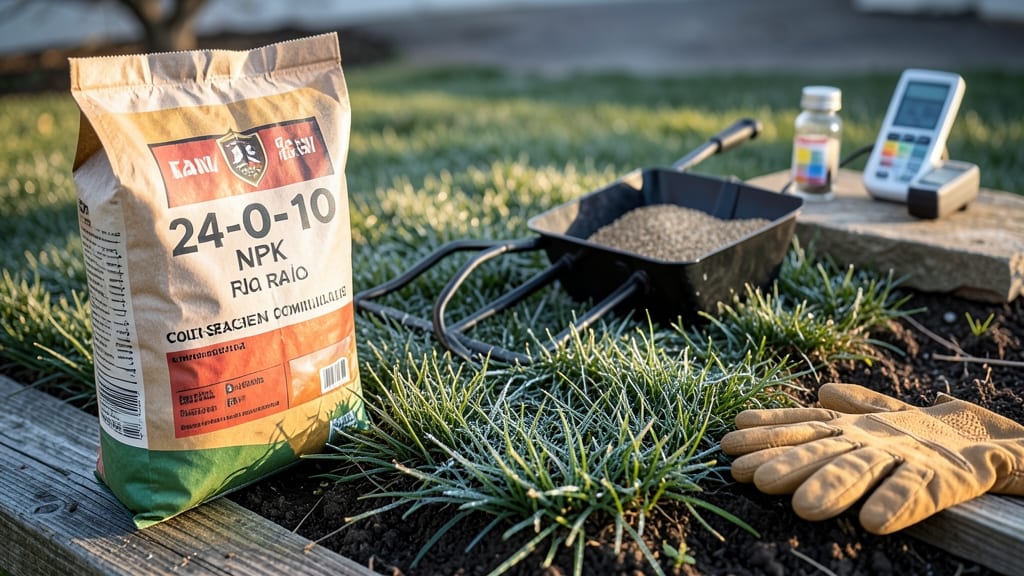
Fertilizing lawn grass for winter happens about 6–8 weeks before the first frost—a timing window that strengthens roots and sets up spring growth without overstimulating dormant grass.
Picture this: You’ve just put away your lawn tools for the season, but your neighbor’s yard is already greener next spring. The difference? A single late-season feeding done right.
Too early, and you risk encouraging tender new growth before winter sets in. Too late, and the fertilizer won’t have time to work its magic before dormancy kicks in.
In USDA Zone 6a, that means aiming for mid-September to early October—just as temperatures start to dip but before the ground freezes. The key is choosing a slow-release fertilizer with a lower nitrogen ratio (like 10-0-10) to avoid burning roots or attracting pests as winter approaches.
Below, I’ll break down the exact timing for your climate, how to pick the right fertilizer for your grass type, and the three mistakes that turn winter feeding into a spring disaster. Let’s get your lawn ready for its strongest start yet.

Optimal timing for winter lawn fertilization by climate Zone
A well-timed winter lawn fertilizer application strengthens roots and ensures vibrant spring growth—but timing is everything. In cool climates (Zones 3–7), late fall feeding is critical, while warm climates (Zones 8–10) may skip winter fertilization entirely.
The key is avoiding frost damage and dormancy disruptions while giving grass the nutrients it needs to survive winter. Let’s break it down by region and temperature thresholds.
Your grass type matters too. Cool-season grasses like Kentucky bluegrass and fescue thrive with fall fertilization, while warm-season grasses like Bermuda and Zoysia go dormant and don’t need winter feeding. Even in mild winters, applying fertilizer too late can lead to nutrient runoff or pest attraction.
Below, I’ll share the exact windows for each climate zone, including ideal soil temperatures and month-by-month guidelines.
Pro Tip: Always check your local first frost date—this is your deadline. Fertilizing 6–8 weeks before frost gives roots time to absorb nutrients without encouraging late-season growth that weakens before winter.
In cool climates (Zones 3–7), aim to fertilize between September and October when soil temperatures hover between 50–65°F (10–18°C). This timing ensures grass roots have time to absorb nutrients before dormancy sets in.
For example, in Zone 5, I fertilize my Kentucky bluegrass in early October, about 6 weeks before the first frost. This gives the grass enough time to strengthen its root system without encouraging late-season growth that could be damaged by cold snaps.
For transition zones (Zones 7–8), where winters are mild but summers are hot, the window shifts later. Fertilize in October or November only after soil temperatures drop below 70°F (21°C).
This prevents the grass from trying to grow when nights are still warm, which can lead to weak, frost-sensitive growth. In Zone 7b, I wait until mid-October to apply fertilizer to my tall fescue, ensuring it’s ready for winter without risking damage from an early cold snap.
In warm climates (Zones 9–10), winter fertilization is generally unnecessary. Grasses like St. Augustine and Zoysia go fully dormant and won’t benefit from late-season feeding. Instead, focus on early spring fertilization (February–March) to kickstart growth. If you must fertilize in winter, December is
How to choose the right winter fertilizer for your grass type
Choosing the right winter fertilizer depends on your grass type and climate. Cool-season grasses like Kentucky bluegrass and tall fescue thrive with a low-nitrogen boost in late fall, while warm-season grasses like Bermuda or Zoysia need minimal feeding when dormant.
The key is balancing nitrogen (N), phosphorus (P), and potassium (K) to avoid root stress.
Winter fertilization isn’t about promoting growth—it’s about strengthening roots so your lawn recovers faster in spring. A 10-0-10 or 12-0-12 ratio is ideal for cool-season grasses, while warm-season grasses typically skip winter feeding entirely.
Organic options like composted manure or bone meal can also work, but slower-release synthetics are more predictable.
How to read fertilizer labels for winter: Look for low nitrogen (first number) and higher potassium (third number) to harden cell walls. For example, a 10-0-10 label means 10% nitrogen, 0% phosphorus, and 10% potassium—perfect for late-season root development. Avoid high-nitrogen fertilizers (like 24-0-6), as they encourage tender growth that won’t survive frost.
| Grass Type | Ideal NPK Ratio | Best Fertilizer Type | Application Window |
|---|---|---|---|
| Cool-Season (Bluegrass, Fescue, Ryegrass) | 10-0-10 or 12-0-12 | Slow-release synthetic or composted manure | Late September–October (6–8 weeks before frost) |
| Warm-Season (Bermuda, Zoysia, St. Augustine) | Skip or 0-0-20 (potassium only) | Potassium sulfate (organic) or no fertilizer | None (dormant in winter) |
| Organic Lawns (All Types) | 2-3-2 (balanced) | Compost, worm castings, or kelp meal | Early fall (September) |
For organic fertilizers, composted manure or kelp meal provide potassium and micronutrients without synthetic risks. Synthetic options like potassium sulfate are faster-acting but may require precise application. Always water thoroughly after fertilizing to prevent burn and ensure nutrients reach roots.
If your lawn is thin or patchy, consider a soil test first—low potassium or phosphorus can limit winter resilience. For most homeowners, a light application of 0.5–1 lb of fertilizer per 1,000 sq ft is sufficient.
Over-fertilizing in winter can lead to nutrient runoff or fungal growth as temperatures fluctuate.
Timing is everything: Apply winter fertilizer on a cool, dry day when temps are above 50°F but before the first frost. This gives roots time to absorb nutrients without encouraging late-season growth that won’t survive cold snaps.
For southern climates, a late-October feed may still help, but northern lawns should stop by early November.