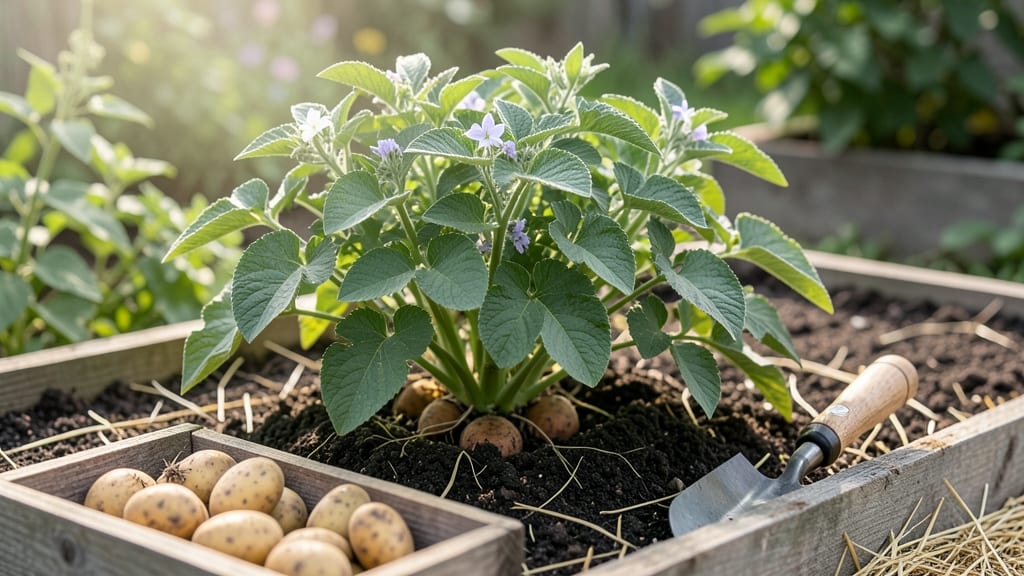
Planting potatoes in Texas at the right time means the difference between a bountiful harvest and wasted effort—and with four distinct climate zones, there’s no one-size-fits-all answer.
Texas gardeners know timing is everything—plant potatoes too early and risk frost damage, too late and miss peak harvests. But with the Lone Star State’s diverse climate zones, the ‘best time’ varies by variety and location.
North Texas gardeners should aim for late February to early March, while South Texas growers can start as early as January. The key? Soil temperatures above 45°F and counting back 90 days to harvest before summer’s heat sets in.
Below, I break down the exact months for early, mid-season, and late varieties, how to adjust for microclimates, and the three mistakes that ruin Texas potato harvests every year.
🥔
When to Plant Potato
Jan
🌱
Feb
🥔
Mar
🥔
Apr
🌱
May
🌸
Jun
☀️
Jul
☀️
Aug
☀️
Sep
🍂
Oct
🍂
Nov
🍂
Dec
❄️
Texas potato planting calendar by variety: exact months to avoid frost and maximize yield
Texas gardeners know timing is everything—potatoes need warm soil and frost-free conditions to thrive. The last frost dates vary dramatically across regions, from January 15 in South Texas to March 15 in North Texas.
Planting too early risks cold soil and rotten tubers, while waiting too long cuts harvest time short.
To maximize yields, I’ve broken down the optimal planting windows by potato variety and Texas region, ensuring you avoid frost while aligning with each variety’s maturity timeline.
Whether you’re growing Yukon Golds in the High Plains or Red Pontiacs in the Gulf Coast, these exact months will help you plan for success.
Key factors to consider: soil temperature (must be 45°F+), frost-free days (North Texas has only 210 days vs. 300+ in South Texas), and variety maturity (early vs. late harvest). Below, I’ve mapped out the best months for each region and variety type.
| Region |
Variety Type |
Best Planting Months |
Last Frost Date |
Harvest Window |
Notes |
| North Texas (Lubbock, Amarillo) |
Early (Red Pontiac, Kennebec) |
Late February - Early March |
March 15 |
April - Early May |
Use row covers for extra protection |
| North Texas (Lubbock, Amarillo) |
Mid-Season (Yukon Gold, Russet) |
Early March - Mid-March |
March 15 |
May - Early June |
Plant deeper in sandy soils |
| North Texas (Lubbock, Amarillo) |
Late (Purple Viking, Fingerlings) |
Mid-March - Early April |
March 15 |
June - Early July |
Risk of heat stress; mulch heavily |
| Central Texas (Austin, Waco) |
Early (Red LaSoda, Norland) |
January - Early February |
February 15 |
March - Mid-April |
Ideal for spring harvests |
| Central Texas (Austin, Waco) |
Mid-Season (Yukon Gold, Katahdin) |
February - Early March |
February 15 |
April - May |
Best for home gardeners |
| Central Texas (Austin, Waco) |
Late (Purple Majesty, German Butterball) |
March - Early April |
February 15 |
May - June |
Extend season with shade cloth |
| South Texas (Houston, Corpus Christi) |
Early (Red Norland, White Rose) |
December - Early January |
January 15 |
February - March |
Perfect for winter harvests |
| South Texas (Houston, Corpus Christi) |
Mid-Season (Yukon Gold, Russet Burbank) |
January - February |
How to adjust planting dates for Texas microclimates: soil temps, rainfall, and heat tolerance
Texas's diverse microclimates mean your potato planting dates should shift based on where you live. Urban areas like Dallas often experience heat islands that warm soil faster, while rural West Texas stays cooler longer.
Start by checking your last frost date—North Texas averages March 15, but hill country can delay until April 1.
Soil temperature is critical: potatoes need 45°F+ soil to sprout. Use a soil thermometer—sandy soils in East Texas warm quickly, while clay soils in Central Texas lag behind. In drought-prone areas, irrigate beds 2 weeks before planting to raise soil temps naturally.
⚠️ Warning: Late Planting Pitfalls
Planting after April 15 in North Texas risks heat stress—tubers form poorly above 85°F. South Texas gardeners can push to February 1 but must use shade cloth in peak summer. Never plant when daytime temps exceed 90°F for 3+ days.
Adjust for rainfall patterns: West Texas gardeners should plant earlier (January) to capture spring rains, while Gulf Coast areas can wait until March 1 when humidity drops. In clay-heavy soils, add compost to improve drainage—stagnant water causes rot.
Extend seasons with row covers or black plastic mulch. In North Texas, cover seedlings with frost cloth until soil warms to 50°F. Black plastic mulch raises soil temps by 5-10°F—ideal for late starts in Zone 8a. Remove covers when flowers appear to prevent overheating.
Heat-tolerant varieties like Red Lasoda handle 95°F+ better than Yukon Gold, but all potatoes benefit from afternoon shade in summer. In urban gardens, container-grown potatoes mature 2 weeks faster due to better drainage and controlled soil temps.
Monitor rainfall forecasts—drought years may require drip irrigation to maintain consistent moisture. In high-humidity zones (East Texas), space plants 12 inches apart to prevent disease. Always harvest before July in hotter regions to avoid bitter tubers.
★★★★★4.9(1 review)
|