
Plants
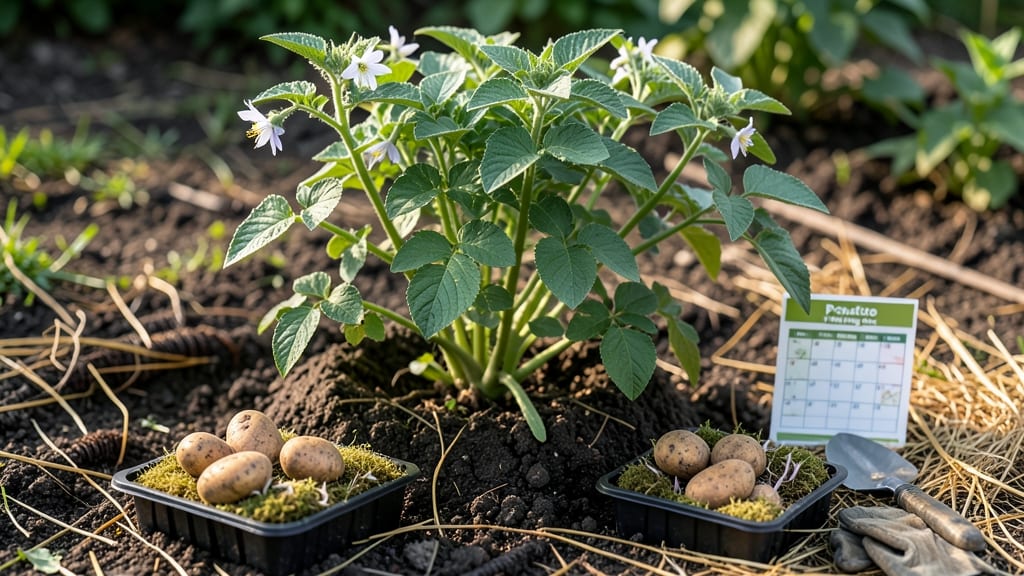
Plant potatoes in Michigan between mid-April and early May — timing that dodges frost and sets you up for a harvest before the first chill of fall.
I’ve seen gardeners rush planting after the last frost, only to watch their crop wither when a late freeze sneaks in. Or worse, delay too long and miss the 90-day growing window that’s critical for Michigan’s shorter seasons.
The difference between a bountiful harvest and a handful of shriveled tubers often comes down to those few weeks.
This guide breaks down the exact dates for USDA Zones 5-6, including how soil temperature and regional frost patterns (like the Upper Peninsula’s later springs) shift your schedule.
You’ll also learn how to prep your soil, space your seed potatoes, and adjust for early vs. late varieties—so you’re not left digging up green, underripe spuds in October.
Ready to grow potatoes that fill your pantry? Here’s how to nail the planting window, avoid Michigan’s most common mistakes, and turn your garden into a tuber goldmine.
Optimal Michigan potato planting dates by USDA Zone 5-6 (with frost risk factors)
Michigan’s USDA Zones 5-6 offer a short but productive growing season for potatoes, where precise planting timing prevents frost damage and maximizes yields. The last frost dates typically range from April 15 in southern Michigan to May 15 in the Upper Peninsula, creating a 2-week window for planting adjustments.
Soil temperatures must reach 45–55°F for consistent germination, a critical factor in Michigan’s unpredictable spring weather.
Regional variations matter—southern Michigan (Zone 6) can start planting as early as mid-April, while northern Michigan (Zone 5) should wait until late April to early May.
These differences align with Michigan State University’s recommendations to avoid late spring frosts, which can kill young potato sprouts before they establish roots.
For early varieties like Red Pontiac or Yukon Gold, aim to plant 4 weeks before your last frost date—this gives tubers time to mature before summer heat stress. Mid-season varieties (e.g., Kennebec) need a slightly later start, while late varieties (e.g., Russet Burbank) can tolerate cooler soils and benefit from late April plantings.
Here’s the key comparison for Michigan’s Zone 5-6 potato planting windows, accounting for frost risk and soil readiness:
Michigan’s Upper Peninsula (Zone 5) faces higher frost risk, so gardeners there should prioritize mid-season varieties with 90–110-day maturity. In contrast, southern Michigan (Zone 6) can safely plant early varieties as soon as soil is workable, even if frost lingers into early May.
Always check local frost forecasts—the National Weather Service’s Michigan climate maps are invaluable for last-minute adjustments.
For container gardening, start potatoes 2–3 weeks earlier than in-ground plantings, as pots warm up faster. Use black plastic mulch to raise soil temperatures 5–10°F, accelerating growth in cooler zones. This trick is especially useful for northern Michigan gardeners with shorter seasons.
After planting, monitor for early blight, a common issue in Michigan’s humid summers. Space rows 30 inches apart and avoid overhead watering to improve airflow. If a late frost hits after planting, cover seedlings with frost cloth until temperatures stabilize—this protects young plants without delaying growth.
Harvest times vary by variety: early potatoes (e.g., Red LaSoda) are ready in 60–70 days, while late varieties (e.g., Russet Norkotah) need 110–120 days.
Plan accordingly to avoid missing peak harvest windows, especially in Zone 5, where first frosts can arrive as early as mid-October.
Protect your investment by planting 1–2 weeks earlier than your local extension office suggests—this buffer accounts for Michigan’s unpredictable spring weather. With the right timing, you’ll enjoy bountiful, disease-resistant potatoes that thrive in Michigan’s unique climate. 🥔
How to adjust planting time for early vs. late potato varieties in Michigan’s climate
Michigan’s 90–120-day growing season demands precision when planting potatoes. Early varieties like red potatoes need a head start, while late varieties like fingerlings can wait until June. The key is matching your potato type to Michigan’s last frost dates (April 15–May 15) and soil temperature thresholds (45–55°F).
Plant too early, and frost will kill sprouts; too late, and you’ll lose yield to late-season blight.
I’ve grown potatoes in Michigan for years, and the difference between a bountiful harvest and a disappointing yield often comes down to timing.
For example, Yukon Golds (mid-season) thrive when planted in early May, while Kennebec potatoes (late-season) can handle a June planting if soil temps stay above 50°F. Let’s break down the exact schedule to maximize your potato harvest.
- 🌱 Early Varieties (Red Potatoes): Plant 4 weeks before last frost (mid-April) for a 90-day harvest by late July. Ideal for USDA Zone 5.
- 🌿 Mid-Season (Yukon Golds): Plant 2 weeks after last frost (early May) for a 100-day harvest in early September. Perfect for Zone 5-6.
- 🥔 Late Varieties (Fingerlings): Plant late May to early June for a 120-day harvest in October. Best for Zone 6 or southern Michigan.
- ❄️ Soil Prep Tip: Wait until soil reaches 45°F+—use a soil thermometer to check. Cold soils stunt growth.
- 🌡️ Blight Avoidance: Space plantings 2–3 weeks apart to stagger harvests and reduce late blight risk.
For cold soils, I recommend pre-warming the planting area by covering it with black plastic for 1–2 weeks before planting. This trick works wonders in northern Michigan, where soils stay chilly longer. Add compost or well-rotted manure to improve drainage—potatoes hate soggy soil and will rot if waterlogged.
Adjust your schedule based on regional frost patterns. In southern Michigan (Zone 6), you can push late varieties to early June, but in northern Michigan (Zone 5), stick to May planting for safety. Always monitor weather forecasts—a late frost in May can devastate early plantings.
Pro tip: Hill your potatoes when they reach 6 inches tall to prevent green tubers (toxic) and improve yield. Mulch with straw to retain moisture and suppress weeds. With the right timing, you’ll harvest 10–15 pounds of potatoes per 10-foot row—double the average yield!
Remember, Michigan’s short growing season rewards patience. Plant early for summer harvests, mid-season for fall feasts, and late for storage potatoes. Happy planting! 🥔