
Fertilization
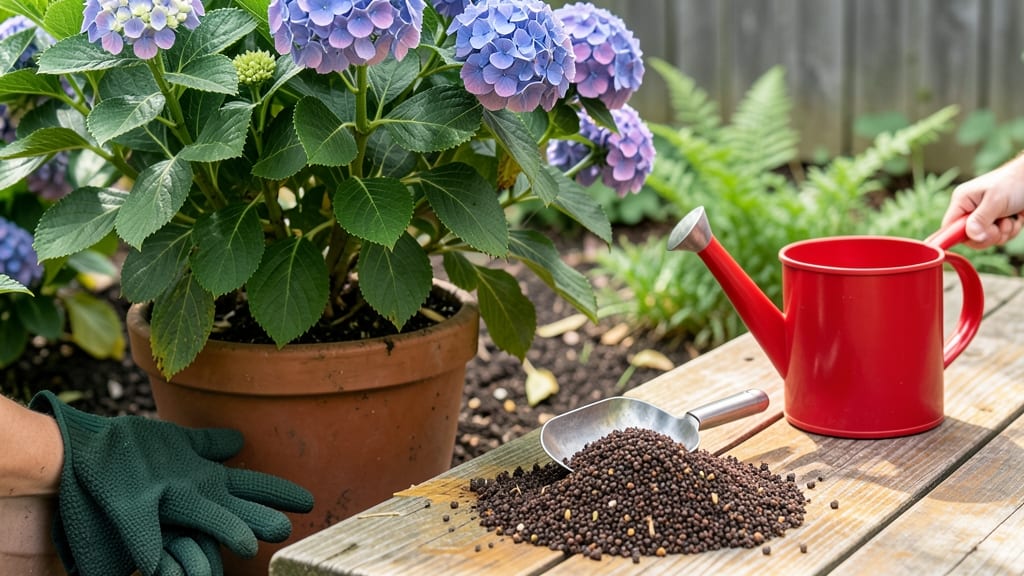
Fertilizing hydrangeas at the right time is the secret to those showstopping blooms you’ve been dreaming of 🌸 — and most gardeners mess it up by feeding too early or too late.
Picture this: you’ve spent all spring tending to your hydrangeas, only to watch them produce tiny buds instead of lush, vibrant clusters. That’s because timing matters more than the fertilizer itself. Too soon, and you’ll stunt growth; too late, and you’ll miss the bloom window entirely.
Here’s the deal: the best time to fertilize hydrangeas is early spring, right after the last frost, and again in mid-summer to keep those flowers coming. But there’s a twist—whether you want blue, pink, or purple blooms changes everything, and I’ll break down how to adjust for each.
In this guide, you’ll learn the exact seasonal schedule for feeding, how to pick the right fertilizer for your hydrangea’s color goals, and the warning signs that tell you’re overdoing (or underdoing) it. No more guesswork—just blooms that steal the show.
Best fertilization timeline for hydrangeas by bloom color
Getting your hydrangeas to bloom in your desired color—whether blue, pink, or purple—starts with precise fertilization timing. Unlike many plants, hydrangeas don’t just need food—they need it at the right stages to produce vibrant blooms.
Miss the window, and you’ll end up with fewer flowers or washed-out colors. The key is feeding them when their roots are active but before they focus on flower production.
Most gardeners overlook the fact that hydrangea blooms form on old wood (last year’s growth) or new wood (current season’s growth), depending on the variety. This means your fertilization schedule must align with their growth cycles.
For example, mophead hydrangeas bloom on old wood, so feeding too late can reduce next year’s blooms. Meanwhile, panicle hydrangeas bloom on new wood, so mid-season feeding is critical. Let’s break down the science-backed timeline for each bloom color.
Let’s start with the early spring prep, which is the most critical window for setting up your hydrangeas for colorful blooms. In March or April, after the last frost, apply a slow-release fertilizer like 16-4-8 or 10-10-10 to wake up the roots.
For blue blooms, mix in aluminum sulfate (1 tablespoon per plant) to lower the soil pH to 5.5 or below. If you want pink blooms, add lime to raise the pH to 6.0 or higher.
This is also the time to prune dead wood from last season, as new growth will emerge from the base.
Next, mid-season feeding in June or July keeps your hydrangeas thriving during their peak growth phase. For blue hydrangeas, reapply aluminum sulfate (½ tablespoon per plant) every 4-6 weeks to maintain acidity. Pink hydrangeas
How to adjust fertilizer type for hydrangea bloom color changes
Want to shift your hydrangeas from pink to blue—or lock in that perfect purple hue? The secret lies in your soil pH and the right fertilizer amendments.
Hydrangeas are finicky about color, but with a few simple tweaks, you can create a stunning seasonal color palette that changes with your mood. The key is understanding how aluminum sulfate and lime interact with your soil.
Most gardeners overlook the fact that blue hydrangeas thrive in acidic soil (pH 5.2-5.5), while pink blooms love neutral to slightly alkaline soil (pH 6.0-7.0). Purple is simply a mix of the two!
If your hydrangeas aren’t producing the color you want, it’s time to test your soil and adjust accordingly. I’ll walk you through the exact steps to make those changes safely and effectively.
✅ Pros & Cons of Fertilizer Adjustments
- ✔ Lowers pH quickly (1-2 weeks)
- ✔ Affordable and widely available
- ✔ Works well in sandy soils
- ✔ Raises pH gradually (4-6 weeks)
- ✔ Improves soil structure over time
- ✔ Safe for long-term use
- ✖ Can burn roots if overapplied
- ✖ Requires frequent retesting
- ✖ Not ideal for clay-heavy soils
- ✖ Slower to take effect
- ✖ Can lock up essential nutrients
- ✖ Overuse raises pH too high
To shift your hydrangeas to blue blooms, start by testing your soil’s pH using a home test kit (available at garden centers). If your pH is above 5.5, sprinkle 1-2 tablespoons of aluminum sulfate per gallon of water and water the base of the plant thoroughly.
Repeat every 4-6 weeks until you see the color change, which typically takes 6-8 weeks.
For pink blooms, aim for a pH of 6.0 or higher. Apply dolomitic lime at a rate of 5-10 pounds per 100 square feet, working it into the top 6 inches of soil.
Water well after application, and retest your soil in 3 months to monitor changes. Organic gardeners can use crushed eggshells or wood ash for a gentler approach.
If you’re aiming for purple blooms, keep your soil pH between 5.5-6.0. This is the sweet spot where aluminum and lime balance out. Use a slow-release fertilizer like 10-10-10 in early spring to support overall plant health, and avoid drastic pH swings.
Monitor your hydrangeas closely—color changes can take 2-3 growing seasons to fully manifest.
Pro tip: Mulch with pine bark to maintain acidic soil naturally, or use composted leaves for a neutral pH. Avoid synthetic fertilizers high in phosphorus, as they can disrupt bloom color and promote leafy growth instead.
With patience and the right amendments, your hydrangeas will become a seasonal rainbow of blue, pink, and purple! 🌸