
Plants
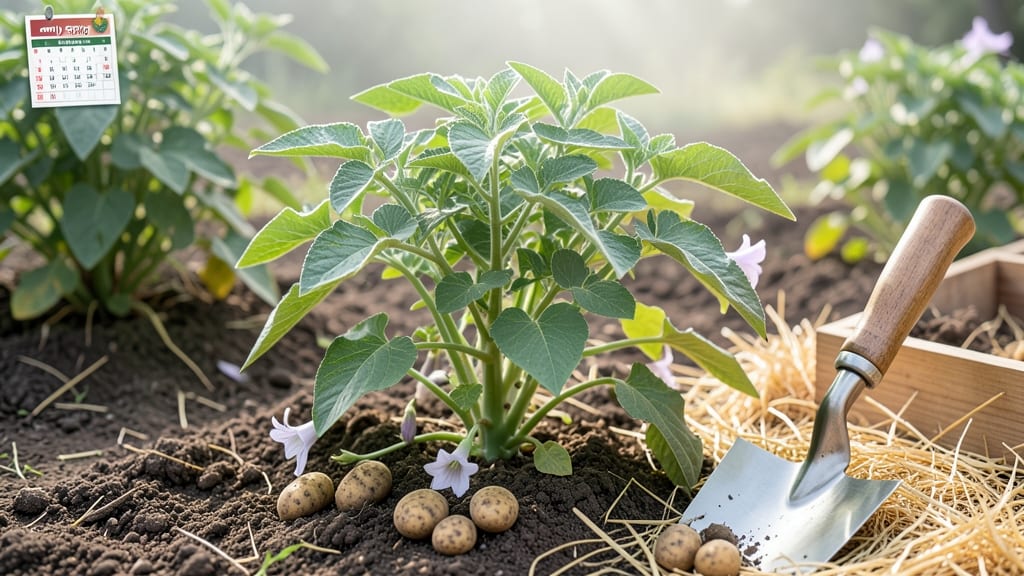
You can plant potatoes in Michigan when the soil reaches 45°F and stays reliably warm, typically 2-4 weeks after your last spring frost—but the exact timing shifts dramatically from Detroit to the Upper Peninsula.
Michigan gardeners know timing is everything—plant potatoes too early, and frost will ruin your crop; too late, and you’ll miss peak harvest season. But with Michigan’s diverse USDA zones, the perfect planting window varies by region, soil temperature, and even last frost dates.
In Zone 6a (southern Michigan), that means late March to early April, while Zone 4b (Upper Peninsula) may not be ready until early May. The difference isn’t just weeks—it’s about soil warmth, not just calendar dates.
Below, I break down the exact weeks to plant by zone, how to prep your soil for faster warming, and the 3 signs your potatoes are ready to go in—so you can avoid the two biggest mistakes Michigan growers make every spring.
Michigan potato planting calendar by USDA zone (exact weeks for optimal growth)
Michigan’s USDA zones 4b through 6a create unique challenges for potato growers. In zone 4b (Upper Peninsula), you’ll need to plant 4-6 weeks earlier than in zone 6a (Detroit area) to avoid late frosts.
The key is waiting for soil temperatures to reach 45°F+—this ensures consistent sprouting and avoids rot from cold, wet conditions.
For early varieties, aim to plant 2-3 weeks before your last frost date—this gives tubers time to establish roots before warmer weather arrives. Mid-season varieties need 4-6 weeks before last frost, while late varieties should go in 6-8 weeks before to maximize Michigan’s 90-120 day growing season.
Here’s how to use this calendar: Check your USDA zone, then match your last frost date (find it via MSU Extension’s frost maps) to determine your exact planting window.
For example, in Traverse City (zone 5b), planting in late April to early May is ideal, while Grand Rapids (zone 5a) can wait until mid-May.
🌱
In zone 4b (Upper Peninsula), where springs are cooler and shorter, focus on early-maturing varieties like Yukon Gold or Red Norland. These can be planted as early as mid-April if soil is workable, but use row covers to protect from late frosts.
Meanwhile, zone 6a (Detroit) gardeners have more flexibility—planting in late April works well for early varieties, with mid-season types following 2-3 weeks later.
For Grand Rapids (zone 5a), aim to have early potatoes in the ground by May 1 to avoid blackleg disease from prolonged cool, wet soil.
If your soil stays below 45°F past May 15, wait until soil warms naturally—rushing will cause rot. Traverse City’s (zone 5b) sandy soils warm faster, so you can plant early varieties by April 20 if conditions allow.
Pro tip: Use a soil thermometer to confirm 45°F+ temperatures at 6-inch depth. If your soil is too cold, potatoes won’t sprout—even if air temps are warm.
In northern Michigan, this often means waiting until late April or early May, while southern Michigan can start as early as mid-April.
🌿
Don’t forget about fall planting for late-season harvests! In zones 5b-6a, you can plant seed potatoes in late July for a fall crop. These potatoes mature quickly (60-75 days) and can be harvested before first frost.
Just ensure your soil stays warm (above 50°F) and use row covers to extend the season.
For harvest timing, early varieties in zone 4b may be ready
How to adjust planting time for Michigan’s unpredictable spring weather
Michigan’s spring weather can be as unpredictable as a snowstorm in May, making potato planting a high-stakes game. Late frosts and chilly soil can stall growth, while waiting too long risks a shorter harvest window.
The key? Flexible strategies to adapt to Mother Nature’s whims while maximizing your potato yield.
First, check your USDA zone—Michigan ranges from 4b in the Upper Peninsula to 6a in southern areas. Even within these zones, microclimates mean your neighbor’s perfect planting time might not work for you. Soil temperature is your best friend: aim for 45°F+ at least 6 inches deep before planting.
- 📅 Use a soil thermometer to confirm 45°F+ soil temp before planting—cold soil delays sprouting.
- 🛡️ Row covers (floating fabric) add 5-8°F protection against late frosts (3-4 weeks of coverage works for early plantings).
- ☀️ Black plastic mulch warms soil 2-4°F faster than bare earth—lay it 2 weeks before planting.
- 🌱 Straw mulch (3-4 inches) insulates roots and retains moisture—ideal for zone 4b gardeners.
- ⏰ Backup dates: If frost hits, replant early varieties (e.g., Yukon Gold) 2 weeks later—they mature in 60-75 days.
If your soil stays stubbornly cold, try straw mulch or black plastic to jumpstart warming. Lay plastic 2 weeks before planting—it absorbs sunlight and raises temperatures faster than bare soil. For zone 4b gardeners, this can shave 1-2 weeks off your planting timeline.
Don’t forget row covers! These lightweight fabrics act like a blanket, protecting tender sprouts from late frosts (common in May). I’ve used them to extend my planting window by 3-4 weeks in zone 5. Just remove covers when flowers appear to prevent overheating.
For a risk-free approach, plant early-maturing varieties (like Red LaSoda) first—they tolerate cooler soils and still yield 50-70 lbs per 100 sq ft. If frost strikes, these varieties recover faster than late bloomers.
Finally, track your last frost date (check MSU Extension for local data) and count backward: early potatoes need 60-75 days to harvest, so plant 6-8 weeks before your average last frost. In zone 6a, that’s often mid-April; in zone 4b, wait until late May.