
How To
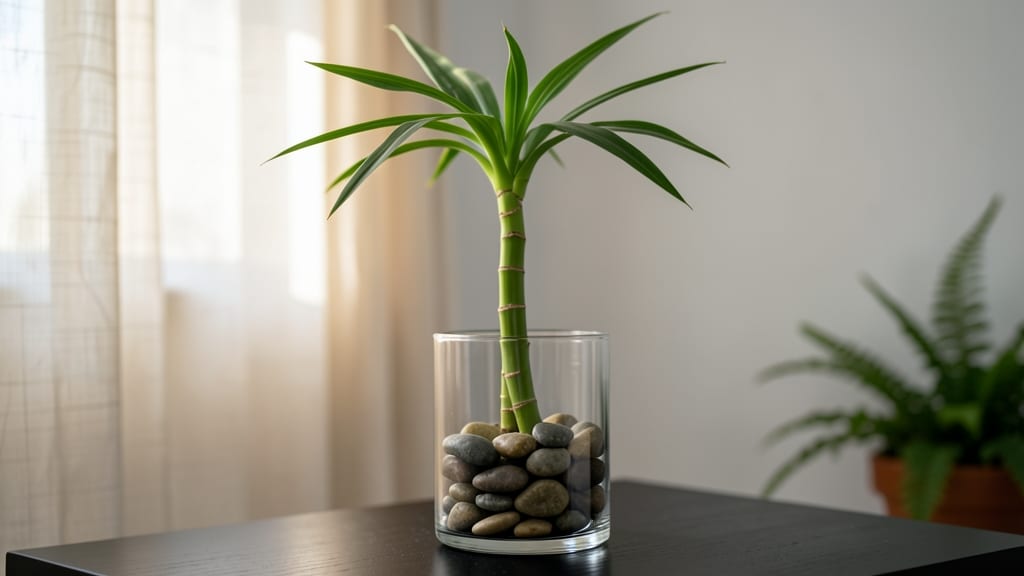
Lucky bamboo grows to 1 to 3 feet tall under ideal conditions, but its height depends on care, container size, and light exposure.
If you’ve ever wondered why your lucky bamboo seems to grow at different speeds—or how to predict its final height—you’re not alone. This fast-growing plant follows a precise height timeline, but few gardeners know the exact stages to expect.
Indoors, lucky bamboo 🌱 typically reaches 1 to 2 feet in its first year, while outdoor varieties can stretch toward 3 feet with proper sunlight and space. The key to controlling its height lies in water quality, pot size, and occasional pruning.
In this guide, I’ll break down the exact height timeline by growth stage, plus the 5 factors that determine how tall your lucky bamboo will grow—and how to shape it to your liking.


Lucky bamboo height timeline by growth stage: exact measurements
Lucky bamboo (Dracaena sanderiana) grows at a surprisingly predictable pace when given the right conditions. Understanding its height progression helps you track progress and adjust care. Most plants reach mature height within 12-18 months, but growth rates vary based on light, water, and container size.
Below, I’ll break down the month-by-month height timeline with exact measurements and the factors that influence each stage.
New lucky bamboo cuttings or seeds start as tiny 1-inch sprouts and grow just 0.5 inches per month in their first 3 months. This slow start is normal—focus on establishing healthy roots before rapid growth begins.
Without proper care, seedlings may stall at this stage for months, so consistent water quality and indirect light are critical during these early weeks.
| Growth Stage | Average Height | Timeframe | Key Growth Factor |
|---|---|---|---|
| Seedling | 1-2 inches | Month 1 | Root establishment |
| Early Growth | 3-6 inches | Months 2-3 | Water quality |
| Rapid Growth | 12-18 inches | Months 4-6 | Light exposure |
| Mature Plant | 24-36 inches | Months 7-12 | Container size |
| Dwarf Variety | 12-18 inches | 12+ months | Genetics |
By month 3, your lucky bamboo should reach 3-6 inches if cared for properly. This is when you’ll notice the first visible growth spurt. The key here is using distilled or rainwater—tap water with chlorine or fluoride can stunt growth.
I’ve seen plants double in height during this stage when given optimal conditions, but slow growth often signals root stress or poor lighting.
Between months 4 and 6, lucky bamboo enters its rapid growth phase, adding 2-4 inches per month. This is when you’ll see the most dramatic changes, with stems elongating quickly toward their mature height.
Place your plant near a north-facing window for indirect light—direct sun can scorch the leaves. During this stage, I recommend rotating the pot weekly to ensure even growth on all sides.
At 6 months old, most lucky bamboo plants measure 12-18 inches, with some reaching 24 inches under ideal conditions. This is also when you’ll notice the first leaf development beyond the initial strappy growth.
If your plant seems leggy or sparse, it’s likely not getting enough light. Move it closer to a window or supplement with a grow light for 4-6 hours daily to encourage bushier growth.
By 12 months, lucky bamboo typically reaches its mature height of 24-36 inches, though some varieties stay shorter. The growth rate slows significantly after this point, with most plants adding just 1-2 inches per year thereafter.
This is when container size becomes critical—root-bound plants grow slower. If you want to encourage more height, repot into a taller container with fresh well-draining soil mix.
Outdoor lucky bamboo grows 20-30% faster than indoor plants due to better light and airflow. If you move your plant outside during spring and summer, expect 3-5 inches of additional growth per month.
However, protect it from direct afternoon sun and harsh winds, which can damage the delicate stems. I’ve had outdoor plants reach 4 feet in a single season with proper care!
For dwarf varieties, growth slow
What determines lucky bamboo height: 5 key factors
Lucky bamboo (Dracaena sanderiana) grows at different rates based on five critical factors. Understanding these will help you predict its height and adjust care accordingly. The most influential variables are light exposure, water quality, container size, temperature, and variety type.
Each factor directly impacts whether your plant reaches its standard 2-3 ft height or stays shorter.
For example, a dwarf variety in a small pot with low light may only grow to 1-2 ft, while a standard variety in bright indirect light could reach 3 ft in ideal conditions. Let’s break down how each factor plays a role in determining your lucky bamboo’s final height.
📊 PROS & CONS OF FACTORS AFFECTING LUCKY BAMBOO HEIGHT
✅ PROS
- Bright indirect light promotes faster, taller growth (up to 3 ft)
- Large containers encourage deeper roots and taller stems
- Dwarf varieties stay compact (ideal for small spaces)
- Warm temperatures (70-85°F) speed up growth cycles
- Distilled/rainwater prevents mineral buildup that stunts height
❌ CONS
- Low light results in slow, leggy growth (1-2 ft max)
- Small pots restrict root expansion, limiting height
- Tap water causes mineral deposits that slow growth
- Cold drafts (<60°F) stunt new stem production
- Overcrowded roots lead to weak, shorter stems
Balancing these factors ensures your lucky bamboo reaches its full potential height.
Light exposure is the #1 height determinant. Lucky bamboo thrives in bright, indirect light, which triggers photosynthesis and stem elongation. Place it near a north-facing window for optimal growth—this setup can push heights toward the upper 2-3 ft range. Direct sunlight, however, burns leaves and slows growth, while dim light leads to stunted, pale stems that rarely exceed 1.5 ft.
Water quality might seem minor, but it’s critical. Tap water contains chlorine and minerals that accumulate in the container, suffocating roots and slowing growth. Switch to filtered, distilled, or rainwater to see stems reach their full genetic height potential. Even a slight improvement in water quality can add 6-12 inches to mature height over a year.
Container size affects height indirectly by limiting root development. A small pot (under 6 inches) restricts growth to 1-2 ft, while a large container (10+ inches) allows roots to spread, supporting taller stems. Repot every 1-2 years to prevent root-bound stress, which stunts vertical growth. For bushier, shorter plants, choose wider (not deeper) pots to encourage lateral expansion.
Temperature plays a subtle but important role. Lucky bamboo grows best in 70-85°F conditions. Below 60°F, growth nearly halts, and stems may become weak and leggy. Conversely, consistent warmth (like near a heater in winter) can accelerate growth by 20-30% compared to cooler environments. Avoid sudden temperature swings, which stress the plant and reduce height gains.
Finally, variety type sets the baseline height. Dwarf varieties (like 'Rainbow Compact') max out at 1-2 ft, while standard types (e.g., 'Golden Goddess') reach 2-3 ft. If height is your goal, select a standard variety and optimize the other four factors.
For compact growth, choose a dwarf type and limit light exposure slightly to control height naturally.