
Trees
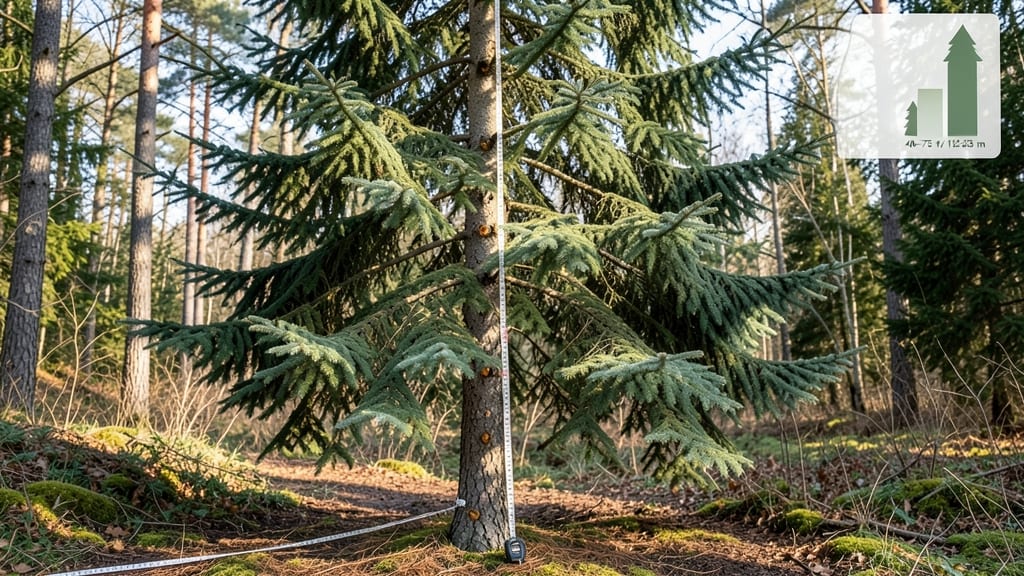
Balsam fir trees 🌲 can grow up to 60 feet tall, towering like a living Christmas tree in your yard—but knowing their mature height helps you avoid planting them too close to your house.
If you're dreaming of a fragrant evergreen that adds holiday charm to your landscape, understanding the mature height of balsam fir trees is essential—because planting too close to your house could mean years of trimming headaches.
These evergreens typically reach 40-60 feet at maturity, with growth rates of 12-24 inches per year in ideal conditions. In cooler USDA Zone 6a climates, they may stay slightly shorter but still dominate your outdoor space.
Below, I’ll break down how sunlight, soil, and care influence their height, plus tips for spacing and small-space alternatives if 60 feet feels overwhelming.


Balsam fir tree height by age: growth rate and mature size
If you're dreaming of a fragrant evergreen that adds holiday charm to your landscape, understanding the balsam fir tree height is essential. These trees can grow between 15 to 50 feet at maturity, depending on growing conditions.
Knowing their growth rate helps you plan spacing and avoid future trimming nightmares near your home or driveway.
The balsam fir (Abies balsamea) is a slow-to-moderate grower, typically adding 12 to 24 inches per year under ideal conditions.
In the wild, they can reach towering heights of 40 to 60 feet, but cultivated varieties often stay shorter—around 20 to 30 feet—when pruned or grown in urban settings. Their height progression is predictable, making them easier to plan for than fast-growing species.
Here’s how tall balsam fir trees grow by age: A 1-year-old sapling is just 1 to 2 feet tall, while a 5-year-old tree reaches 5 to 10 feet. By year 10, expect heights of 15 to 25 feet, and mature trees (20+ years) can soar to 30 to 50 feet or more. Their growth slows significantly after 20 years, focusing more on width than height.
| Age (Years) | Height Range (Feet) | Growth Rate (Inches/Year) | Notes |
|---|---|---|---|
| 1 | 1–2 ft | 12–24 in | Seedling stage; delicate roots |
| 5 | 5–10 ft | 12–18 in | Established growth; prune for shape |
| 10 | 15–25 ft | 12–15 in | Rapid height gain; needs space |
| 20 | 25–40 ft | 6–12 in | Slower growth; focus on canopy |
| 30+ | 30–50+ ft | 3–6 in | Mature height; minimal vertical growth |
Sunlight plays a critical role in determining how tall your balsam fir grows. In full sun (6+ hours/day), these trees reach their maximum height—40 to 60 feet—while partial shade (3 to 5 hours/day) keeps them shorter, around 20 to 30 feet.
If you’re in a shady yard, expect slower growth and a denser, bushier shape rather than a towering tree.
Soil quality also impacts height. Balsam firs thrive in acidic, well-draining soil (pH 4.5–6.0). Poor soil with compacted clay or alkaline pH stunts growth, often resulting in trees that stay under 20 feet.
Amend your soil with peat moss or pine bark to mimic their natural forest habitat and encourage healthier, taller growth.
Pruning habits can significantly alter a balsam fir’s height. If you prune the top leader (the central stem) early, the tree may grow wider instead of taller.
For a Christmas tree shape, prune lower branches annually to maintain a conical form, but avoid cutting the top—this can reduce height by up to 30% over time.
In urban landscapes, where space is limited, many gardeners opt for dwarf varieties like 'Nana' or 'H
Factors that determine balsam fir tree height: climate, soil & care
The mature height of your balsam fir tree isn’t set in stone—it’s shaped by where you live, what’s in your soil, and how you care for it.
In USDA Zone 6a, these trees naturally reach 40-60 feet, but in warmer zones like 7b, they may max out at 20-30 feet due to slower growth. The right conditions can turn a 50-foot giant into a 20-foot stunner—or vice versa.
Your soil pH plays a starring role too. Balsam firs thrive in acidic soil (pH 4.5-6.0), where nutrients like iron and manganese are abundant. Test your soil—if it’s alkaline (pH 7.0+), your tree’s growth could stall, leaving you with a shrub-sized disappointment instead of a towering evergreen.
Amend with peat moss or pine needles to keep it happy.
🌲 Factors Affecting Balsam Fir Height
✅ Pros of Optimal Conditions
- USDA Zone 6a: Reaches 50-60 ft
- Acidic soil (pH 4.5-6.0): Faster growth, 12-24" per year
- Morning sun + afternoon shade: Dense foliage, healthier branches
- Deep watering (10L weekly): Prevents stunted growth
- Minimal pruning: Natural pyramidal shape preserved
❌ Cons of Poor Conditions
- USDA Zone 7b+: Maxes out at 20-30 ft
- Alkaline soil (pH 7.0+):** Yellowing needles, slower growth
- Full sun exposure: Sunburned tips, weak branches
- Underwatering: Stunted growth, dry soil stress
- Over-pruning: Sparse canopy, leggy appearance
Note: Dwarf varieties (like 'Nana') can stay under 10 ft even in ideal conditions.
Watering habits can make or break your balsam fir’s height. These trees love consistent moisture but hate soggy roots—think deep watering (10 liters weekly) in the morning to encourage strong root development.
In drought-prone zones, growth slows dramatically, and your tree might only reach half its potential height. Mulch around the base to retain moisture and keep roots cool.
Pruning is another game-changer. Unlike many trees, balsam firs don’t respond well to heavy pruning. Over-trimming can lead to a sparse, leggy appearance and stunted growth. Instead, focus on removing dead branches and shaping lightly in late winter to maintain their natural pyramidal form.
If you’re growing one as a Christmas tree, avoid pruning the lower branches—let them grow full for that classic look.
Finally, your local climate sets the stage. In cooler, wetter regions (like the Northeast U.S.), balsam firs grow taller and faster due to ideal conditions. But in hot, dry climates, they may struggle unless you mimic their natural habitat with shade and extra water.
If you’re in Zone 8+, consider planting near a pond or sprinkler system to keep them thriving.
With the right care, your balsam fir could become the centerpiece of your yard—fragrant, towering, and full of holiday magic. But skip the ideal conditions, and you might end up with a smaller, weaker tree that needs constant attention.
Start with soil testing and proper spacing, and you’ll be well on your way to growing a 60-foot giant—or a manageable 20-footer, depending on your space. 🌲