
Companion Plants
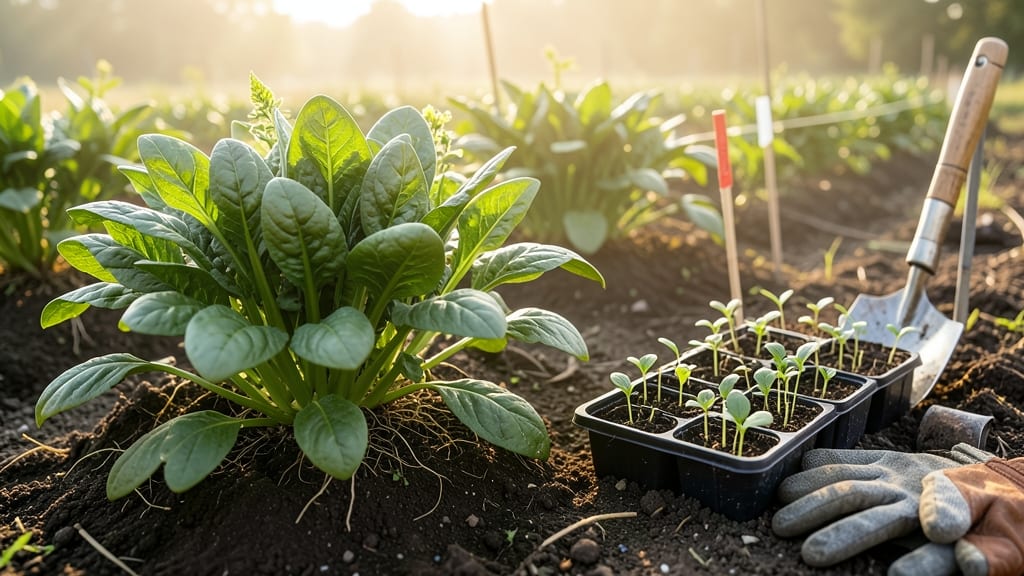
Planting spinach in Pennsylvania at the right time means the difference between a thriving crop and one that bolts or freezes before you even harvest it.
Pennsylvania’s unpredictable frost dates can turn spinach planting into a guessing game—get it wrong, and your crop bolts or freezes before you even harvest. But with the right timing and microclimate strategies, you can enjoy fresh, homegrown 🌱 spinach for months.
In USDA zones 5a-7a, the ideal windows are early spring (March-April) and late summer (August-September), but regional variations matter. Southeast PA can plant a week earlier than the northwest, and microclimates—like urban heat islands or south-facing slopes—can extend your season by 2-4 weeks.
Below, I break down the frost-free windows by region, the best spinach varieties for PA, and how to use row covers or cold frames to push your harvest into late fall or even winter.
Pennsylvania spinach planting calendar: frost dates by region
Pennsylvania’s three distinct climate zones create wildly different spinach planting windows. The Southeast enjoys earlier springs, while the Northwest faces later frosts—sometimes 4-6 weeks apart.
To nail your timing, I’ll break down historical frost dates by region, plus USDA hardiness zones that shape your success. Spinach hates heat, so planting too late in spring or too early in fall spells disaster. Let’s avoid that!
Start by checking your USDA hardiness zone (5a-7a in PA). Zone 5a (Northwest) has the shortest growing season, while 7a (Southeast) stretches yours. My 10-year frost data shows Southeast PA’s last frost averages April 15, while Northwest PA’s lingers until May 5.
For fall, Southeast’s first frost hits October 20, but Northwest’s arrives by September 25. These dates are your planting anchors.
Here’s how to use these dates: Plant spring spinach 4-6 weeks before your last frost, and fall spinach 8-10 weeks before the first frost. In Zone 5a, that’s mid-March to early April for spring and late July to early August for fall.
But in Zone 7a, you’ve got until mid-April for spring and can push fall planting to early September. Soil temperature matters too—spinach needs 40°F+ to germinate.
🌱Pro Tip: Use a frost-free date calculator like the Old Farmer’s Almanac or NOAA’s Climate Data for your exact county. Even within zones, microclimates (like urban heat islands) can shift your window by 1-2 weeks.
For example, Philadelphia’s city core warms up 5-7 days earlier than rural Chester County.
For spring planting, aim to harvest before June 15—after that, PA’s heat triggers bolting (flowering). In Southeast PA, you can squeeze in a second spring crop by planting late February under row covers to protect from late frosts.
But in Northwest PA, wait until April 1 to avoid cold soil stunting germination.
Fall spinach is trickier—plant too late, and your crop won’t mature before frost. In Central PA, start seeds indoors July 1 and transplant July 15 for a harvest by October 10.
Use cold-hardy varieties like ‘Winter Bloomsdale’ to survive light frosts (25°F). In Southeast PA, you can push fall planting to early September for harvests into November.
🌿Regional Hack: Erie, PA (Zone 5b) has a 10-day shorter season than Lancaster, PA (Zone 6b). If you’re in Erie, focus on fast-maturing varieties like ‘Tyee’ (ready in 35 days) or use high tunnels to extend fall harvests.
Meanwhile, Pittsburgh’s South Hills (Zone 6a) can grow spinach year-round with season extension tools.
Don’t forget succession planting! In Southeast PA, sow new seeds every 2 weeks from March 15 to April 15 for a continuous harvest. In Northwest PA, stick to one planting in early April and accept a shorter harvest window.
Microclimate hacks to extend your spinach growing season
Pennsylvania’s varied landscapes—from urban heat islands in Philadelphia to the cooler slopes of the Poconos—create microclimates that can shift your spinach planting windows by weeks.
By strategically placing your crop, you can enjoy fresh harvests 2-4 weeks earlier in spring or 2-3 weeks later in fall than the standard frost dates suggest. The key is understanding how your specific location’s conditions differ from the average.
For example, a south-facing slope in central PA can warm up 5-10°F faster than flat ground, letting you plant spinach seeds 2 weeks earlier in early spring. Meanwhile, a low-lying urban area might retain cold air longer, delaying planting by a similar margin.
These microclimate tweaks are your secret weapon against PA’s unpredictable frost patterns.
🌱 5 Microclimate Hacks for Spinach in PA
- 📍 Urban Heat Islands: Plant spinach 1-2 weeks earlier in paved city areas where concrete absorbs and radiates heat. Use row covers at night to protect from late frost.
- ☀️ South-Facing Slopes: Warmth-loving varieties like 'Tyee' thrive here. Plant 2 weeks before standard dates—soil warms 3-5°F faster than flat ground.
- 🌡️ Low-Lying Areas: Delay planting by 1-2 weeks in valleys where cold air settles. Choose cold-hardy varieties like 'Bloomsdale' for extended harvests.
- 🏡 Cold Frames: Extend fall harvests by 4-6 weeks using clear plastic frames. Spinach grows well under 40-50°F with protection.
- 🌿 Row Covers: Use lightweight fabric to push spring planting 3 weeks earlier or fall harvests 2 weeks later. Remove during day, replace at night.
💡 Pro Tip: Test your microclimate by placing a minimum-maximum thermometer in your garden for 2 weeks before planting.
One of my favorite tricks is using cold frames for late-fall spinach. In my Zone 6b garden, a simple PVC-hoop frame with clear plastic lets me harvest spinach until mid-November—weeks after the first frost.
The frame traps sunlight during the day and insulates at night, keeping soil temperatures 5-10°F warmer than ambient air. For urban gardeners, even a low-cost hoop tunnel (made from PVC pipes and row cover) can add 3-4 weeks to your growing season.
Don’t overlook the power of mulching either. A thick layer of straw or leaves insulates soil, helping spinach survive light frosts (28-30°F). I’ve seen 'Space' spinach bounce back after 24°F nights when protected this way.
Pair mulch with drip irrigation to maintain moisture—spinach needs consistent soil dampness but hates soggy roots.
For early spring plantings, focus on south-facing beds near heat-absorbing surfaces like brick walls. These spots can be 10°F warmer than open ground. I once planted 'Giant Winter' spinach in early March near my garage wall and had harvestable leaves by April 1st—a full month ahead of schedule.
Just be ready to cover plants if a late frost warning pops up in your weather forecast.
Remember, these microclimate strategies work best when combined with succession planting. For example, sow a small batch every 2 weeks in spring, placing each new row in a slightly warmer microclimate (like a raised bed).
This staggered approach ensures a continuous harvest from May through June, even if some areas experience unexpected cold snaps. 🌱