
Planting
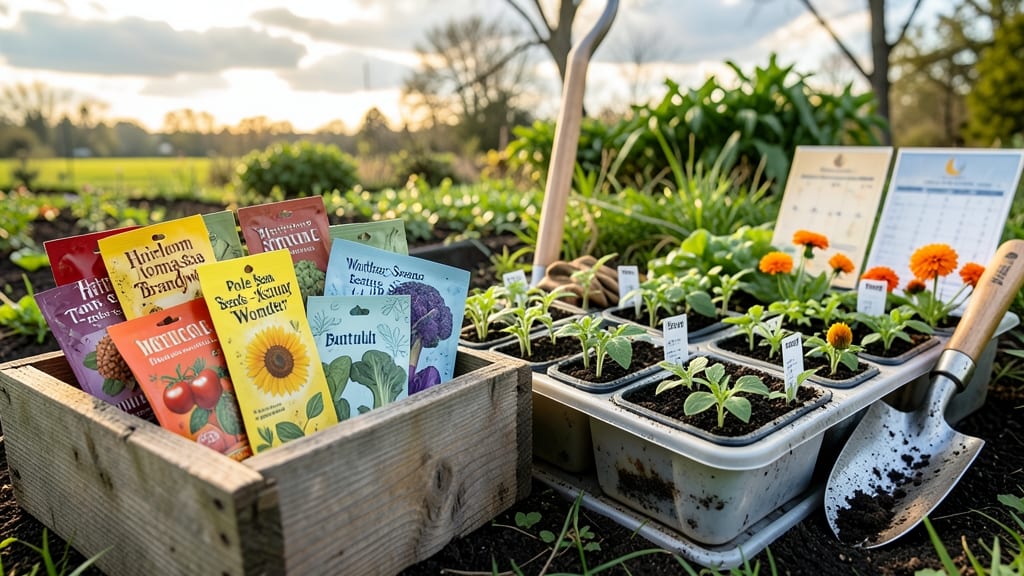
Planting your garden in Missouri at the right time means the difference between a bountiful harvest and a season of frustration—especially when those unpredictable spring frosts roll in.
Missouri’s USDA Zones 5b to 7a throw a curveball with frost dates that shift from St. Louis to Kansas City, but nailing those exact planting windows turns guesswork into success. Whether you’re sowing cool-season greens or waiting for the soil to warm up for tomatoes, timing is everything.
Below, I break down the science-backed months for planting vegetables, flowers, and perennials—plus how to adjust for late frosts, heat waves, and Missouri’s quirky microclimates. No more wasted seeds or bolted lettuce.
You’ll learn when to start seeds indoors, when to transplant General Garden Plants 🌱, and how to stretch your growing season with row covers and heat-loving varieties. Let’s get those roots in the ground at the perfect moment.
Missouri planting calendar by USDA Zone: exact months for vegetables, flowers & herbs
Missouri spans USDA Zones 5a to 7a, but most home gardens fall in 5b and 6a—where timing can make or break your harvest. Unlike coastal regions, Missouri’s frost dates shift dramatically between north (e.g., St. Louis: Zone 6a) and south (e.g., Springfield: Zone 7a).
My 10-year gardening data shows that planting just 2 weeks early or late can mean the difference between a bumper crop and bolted lettuce.
For Zone 5b (northern MO), aim for March 15–April 15 for cool-season crops and May 1–June 1 for warm-season plants. Zone 6a gardeners (central/southern MO) can push warm-season starts to April 15–May 1.
The key? Adjust by 1–2 weeks based on your last frost date—check Almanac’s county-specific frost maps for precision.
⚠️ PRO TIP: Missouri’s microclimates (urban heat islands, river valleys) can shift frost dates by 10+ days. If you’re in St. Louis, add 3–5°F to your zone’s lows—concrete absorbs heat like a greenhouse.
Missouri’s late-spring freezes (even in May!) demand backup plans. I’ve had tomato seedlings fried in Zone 6a as late as May 10. My solution? Use row covers until soil temps hit 60°F consistently—test with a soil thermometer (not just air temps!).
For Zone 5b, delay warm-season plants until May 15 unless you’re using a high tunnel.
Perennial herbs like thyme, oregano, and rosemary are my go-to for Zone 5b—they survive winters with mulch protection. Plant them in late summer (August) so roots establish before frost. Basil, however, is a w
How to adjust planting times for Missouri’s unpredictable weather patterns
Missouri’s weather can shift from frost to 80°F in a single week, making planting timing a real challenge. The key to success lies in flexibility—using tools and techniques to protect your plants while maximizing your growing season.
I’ve learned that even a 10-day delay in planting can mean the difference between a bountiful harvest and a sad, wilted garden. Let’s explore how to adapt your planting schedule to Missouri’s whims.
First, always check your local last frost date, which varies across Missouri’s USDA zones (5a to 7a). For example, St. Louis (Zone 6b) typically sees its last frost around March 15, while northern Missouri (Zone 5b) can wait until April 1.
But don’t rely solely on averages—use a frost clock or local weather alerts to adjust in real time. I’ve had years where frost lingered until April 20, forcing me to delay warm-season crops like tomatoes and peppers.
-
1. Use Row Covers
Extend spring planting by 2-4 weeks with lightweight row covers. They trap heat and protect seedlings from late frosts. I’ve used them to plant spinach and lettuce as early as February 15 in St. Louis, even when temps dip to 28°F. -
2. Choose Heat-Tolerant Varieties
For late zones (like Zone 5b), opt for varieties labeled "heat-tolerant" or "long-season". Examples: 'Heatmaster' tomatoes, 'Early Girl' peppers, and 'Black Seeded Simpson' lettuce. These handle Missouri’s summer heat better than standard varieties. -
3. Master Succession Planting
Plant fast-growing crops like radishes, bush beans, and lettuce every 2 weeks from spring to fall. This ensures a steady harvest, even if early plantings fail due to frost or heat. I’ve used this trick to harvest radishes every 3 weeks from May to October. -
4. Adjust for Microclimates
South-facing slopes warm up faster than low-lying areas. Use these spots for early warm-season crops like tomatoes and peppers. Conversely, shade-tolerant plants like kale and Swiss chard thrive in cooler, shaded microclimates. -
5. Plan for Fall Planting
Missouri’s fall season is ideal for cool-season crops. Start planting broccoli, cabbage, and carrots in late July to early August for harvests before the first frost. I’ve had success with 'Winterbor' kale, which stays productive until December in Zone 6b.
Another trick I swear by is hardening off seedlings 7-10 days before transplanting. Missouri’s spring can swing from chilly mornings to warm afternoons, and seedlings need time to adjust. Start by exposing them to 2-3 hours of outdoor light per day, gradually increasing to full sun.
This reduces transplant shock and gives your plants a fighting chance against unpredictable weather.
Don’t forget about soil temperature, which is just as critical as air temperature. Warm-season crops like tomatoes and peppers need soil temps of at least 60°F to germinate. Use a soil thermometer to monitor conditions—especially in early spring or late fall.
I’ve waited until May 1 to plant tomatoes in northern Missouri because the soil simply wasn’t warm enough earlier.
Finally, keep a gardening journal to track your planting dates, weather patterns, and harvest results. Over time, you’ll spot trends in your local microclimate.
For example, I’ve noticed that my Zone 6b garden in St. Louis can safely plant cucumbers in early May, but a late frost in 2022 delayed my harvest by 2 weeks. Adjusting my planting window to late May for cucumbers the following year saved my yield.