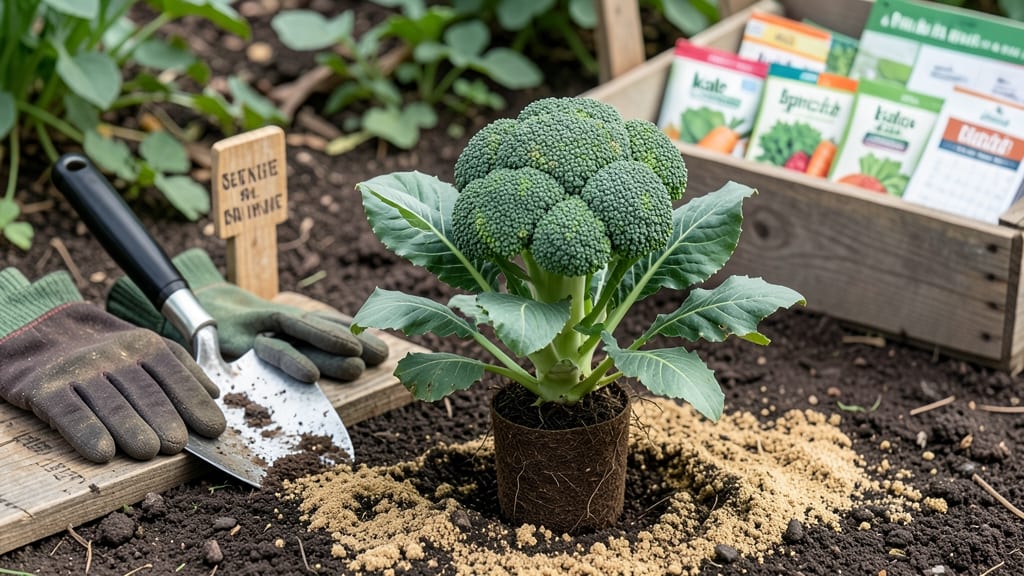
Planting fall crops in Ohio 4-6 weeks before frost is the secret to a harvest that lasts well into winter.
Ohio’s short growing season demands precision—plant too early, and your greens bolt; too late, and frost ruins your harvest. Timing is everything, and these exact weeks before frost will transform your garden’s productivity.
You’re not just avoiding frost—you’re working with Ohio’s USDA Zone 6a climate to maximize yield. Whether you’re sowing kale in late July or radishes in early September, the right schedule means tender greens when others are scrambling for store-bought salads.
Here’s how to calculate your exact planting dates, adjust for microclimates, and extend harvests into December with cold frames—so you’re eating fresh homegrown long after your neighbors’ gardens go dormant.
Jan
❄️
Feb
❄️
Mar
🌱
Apr
🌱
May
🌸
Jun
☀️
Jul
🌱
Aug
🌾
Sep
🌾
Oct
🍂
Nov
🍂
Dec
❄️
Ohio’s fall planting calendar: exact weeks before frost by crop type
Ohio’s fall frost dates typically arrive between October 15-25, depending on your USDA zone (5-7). To maximize your harvest, plant cool-season crops 4-8 weeks before the first expected frost. In Zone 6a, that means late July to early September for most vegetables.
The key? Matching each crop’s days to maturity with your local frost window—plant too early, and you’ll waste space; too late, and frost ruins your efforts.
For Ohio gardeners, I’ve broken down the best planting windows by crop type, using historical frost data from the Ohio State University Extension.
Leafy greens like spinach and kale can handle light frosts (28°F), while root crops like carrots and beets need 4-6 weeks to mature before hard frost (25°F). Brassicas like broccoli and cabbage fall somewhere in between, requiring 60-80 days to reach harvest.
Pro Tip: Use row covers or cold frames to extend your growing season by 2-4 weeks in Ohio’s cooler zones. This simple trick can push your harvest into November or even December for hardy crops like kale, peas, and radishes.
Ohio Fall Planting Calendar by Crop Type
| Crop Type |
Weeks Before Frost |
Best Planting Window (Ohio) |
Days to Maturity |
Frost Hardiness |
| Leafy Greens (Spinach, Lettuce, Kale) |
4-6 |
Late July - Mid-August |
30-50 days |
28°F (light frost) |
| Root Crops (Carrots, Beets, Radishes) |
4-6 |
Late July - Early September |
40-60 days |
25°F (hard frost) |
| Brassicas (Broccoli, Cabbage, Kale) |
6-8 |
Mid-July - Late August |
60-80 days |
20°F (very hardy) |
| Herbs (Cilantro, Parsley, Dill) |
4-5 |
Late July - Early September |
30-50 days |
28°F (light frost) |
| Peas & Beans (Snap Peas, Shelling Beans) |
8-10 |
Early July - Mid-August |
How to calculate your local frost dates for perfect timing
Ohio’s fall frost dates vary by 1-2 weeks across the state, so relying on a single average won’t work. Instead, use historical data from Ohio State University Extension and adjust for your microclimate.
Urban areas like Columbus often frost 1 week later than rural zones, while valleys can freeze 3 days earlier than hilltops. Start by finding your last spring frost and first fall frost—these bookend your growing season.
For Ohio’s 10-year averages, the first fall frost typically arrives between October 10-25, depending on your location. Southern Ohio (USDA Zone 6b) usually sees frost 2 weeks later than northern areas (Zone 5a).
Check the Ohio Agricultural Statistics Service for your county’s exact dates, then subtract 4-6 weeks to determine your ideal planting window for most fall crops.
Here’s how to calculate your personalized frost dates step by step:
1
Find your county’s average frost dates: Visit the Ohio State University Extension website and search for your county’s 10-year frost data. For example, Columbus averages a first frost on October 18, while Toledo sees frost by October 10.
2
Adjust for microclimates: If you’re in an urban area, add 3-5 days to your frost date (heat islands delay frost). For valleys or low-lying spots, subtract 2-3 days (cold air settles). Use a minimum thermometer for 3 nights to confirm.
3
Check seed packet guidelines: Most packets list days to maturity (e.g., 45 days for kale). Subtract this from your adjusted frost date to find your planting deadline. For example, if frost is October 20 and kale needs 50 days, plant by August 22.
4
Test soil temperature: Use a soil thermometer to ensure it’s 50°F or warmer at a 4-inch depth. Cool soil slows germination—wait until temps rise if needed. Most fall crops thrive in 60-70°F soil.
5
Plan for succession planting: Sow fast-growing crops like radishes (25 days) or spinach (30 days) every 2 weeks until 4 weeks before frost. This stretches your harvest and maximizes space.
Once you’ve nailed down your frost dates, use them to create a personalized planting schedule. For example, broccoli (60 days to maturity) should go in late July to early August in northern Ohio, while carrots (70 days) can wait until mid-August.
Always plant hardy greens like kale (30-50 days) just 3-4 weeks before frost for a late-season harvest.
Pro tip: Bookmark the National Weather Service’s frost prediction maps for real-time updates. If an early frost threatens, cover sensitive crops with row fabric or a cold frame to buy 1-2 extra weeks of growing time. With these calculations, you’ll never guess again—just plant with confidence! 🌱
★★★★★5.0(7 reviews)
|