
Plants
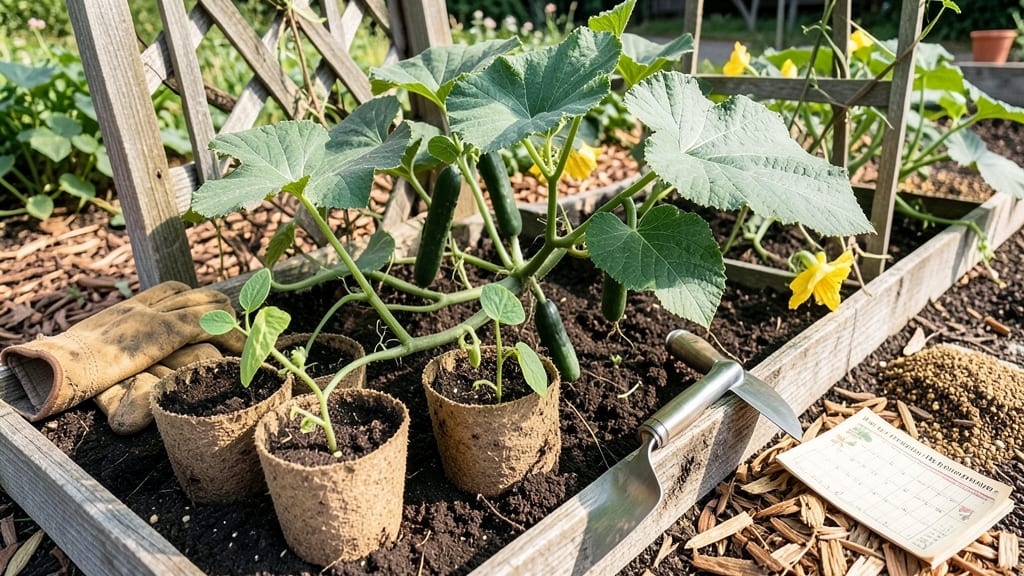
Plant cucumbers in Zone 6b once soil temperatures hit 60°F and all frost risk has passed—typically mid-April to early June, depending on your microclimate.
Cucumbers thrive in warmth, but planting them too early in Zone 6b’s unpredictable spring can mean lost harvests from frost or stunted growth. Master the soil warmth test and avoid these costly mistakes with a foolproof timing strategy.
In this guide, I’ll walk you through the exact steps to test your soil, the best cucumber varieties for your region, and how to extend your harvest with row covers—so you can enjoy fresh 🥒 from July through September.
You’ll also learn how to time succession plantings for a continuous supply, plus the one simple trick that saves late-season cucumbers from early frost.
Zone 6B cucumber planting timeline: frost dates, soil temps & key deadlines
Cucumbers are warm-season crops that refuse to thrive in cold soil, making timing everything in Zone 6B. The average last frost date here is April 15, but soil temperatures often lag behind air temps—sometimes by weeks.
Planting too early risks frost damage or slow, leggy growth, while waiting too long cuts your harvest window short. The sweet spot? Soil temps above 70°F and all frost danger passed.
Most gardeners in Zone 6B start cucumbers after May 1, but this varies by microclimate. Urban areas with heat islands may warm faster, while rural spots can stay chilly longer.
For heat-tolerant varieties like 'Straight Eight' or 'Marketmore', aim for mid-May to early June to maximize your harvest before first frost (October 15). Succession planting every 2 weeks after your initial date extends yields through summer.
| Stage | Action | Soil Temp | Zone 6B Window |
|---|---|---|---|
| Soil Prep | Amend with compost; test pH (6.0–6.8) | 55°F+ | March–April |
| Start Indoors (optional) | Sow seeds 3–4 weeks before last frost | 65°F+ | Late March–April |
| Direct Sow | Plant seeds ½" deep, 3–4" apart | 70°F+ | Mid-May–Early June |
| Transplant | Move seedlings after hardening off | 60°F+ | Late May–June 1 |
| Succession Plant | Sow every 2 weeks for continuous harvest | 70°F+ | June–July 15 |
| Harvest Peak | Pick regularly to encourage production | N/A | July–September |
Your Zone 6B growing season spans just 165 frost-free days, so prioritize fast-maturing varieties (50–60 days to harvest). 'Straight Eight' (58 days) and 'Marketmore' (60 days) are reliable choices, while 'Diva' (55 days) works for late starts.
If your season feels short, opt for bush varieties like 'Bush Champion'—they take up less space and mature faster than vining types.
For gardeners in cooler microclimates, row covers or cold frames can push planting back by 2–3 weeks. Remove covers when flowers appear to prevent heat stress. Alternatively, start seeds indoors under grow lights and transplant hardened-off seedlings after May 15.
Just beware: cucumbers hate transplant shock, so handle seedlings gently and keep them well-watered post-transplant.
Watch for false springs—those warm spells in April that lull you into planting early. A late frost in May can wipe out tender seedlings overnight. To play it safe, use biodegradable seed starter pots or plant in black plastic mulch to warm the soil faster.
Mulch also suppresses weeds and retains moisture, which cucumbers crave during fruit development.
If you’re in a high-elevation part of Zone 6B (e.g., near mountains), your frost dates may run 2–3 weeks later than average. Check local Cooperative Extension Service data or use a soil thermometer to confirm readiness.
Pro tip: Morning soil temps are the most accurate predictor of planting success—aim for 70°F at 10 AM.
Don’t forget succession planting! Cucumbers produce heavily for 6–8 weeks, then yields taper off. By sowing new seeds every 2 weeks through early July, you’ll enjoy fresh cucumbers until first frost.
Save space by training vines on a trellis—this also improves air circulation and reduces disease risk. Just ensure your trellis is 6–8 feet tall for standard varieties.
Finally, late-season varieties like 'National Pickling' (65 days) can be direct-sown in early July for a fall harvest. These heat-tolerant types handle Zone 6B’s summer heat better than early varieties.
Pair them with drought-resistant mulch (like straw) to conserve moisture during dry spells. With the right timing, you’ll turn your Zone 6B garden into a cucumber powerhouse!
How to test soil warmth for cucumbers: the 5-Minute method to avoid frost risk
Cucumbers need warm soil to germinate—below 60°F, seeds rot or sprout poorly. In Zone 6B, late frosts can linger until April 15, so timing matters.
A simple soil warmth test ensures your cucumbers start strong and avoid frost damage. I’ve used this method for years to protect my ‘Straight Eight’ and ‘Marketmore’ plants.
Most gardeners rely on air temperature, but soil warms later. For cucumbers, aim for 70°F+ at 4 inches deep. Morning readings are most accurate because afternoon sun can skew results.
Grab a soil thermometer (or DIY with a potato—more on that below!) and check for 3 consecutive days before planting.
- 1. Choose your spot: Pick the sunniest, southern-facing area of your garden where cucumbers will grow.
- 2. Test depth: Insert the soil thermometer 4 inches deep—this mimics where seeds will be planted.
- 3. Time it right: Take readings at 10 AM (before sun peaks) for 3 mornings in a row.
- 4. Check the temp: If readings are consistently 70°F+, it’s safe to plant. Below 60°F? Wait.
- 5. DIY alternative: Bury a raw potato in the soil. If it sprouts in 3–5 days, soil is warm enough!
Pro tip: Afternoon readings can be 10–15°F warmer due to sun exposure. If your morning test hits 65°F but afternoon spikes to 80°F, don’t panic—stick with morning data. Also, dark, wet soil stays cooler longer, so amend with compost to help it warm faster.
If your soil isn’t warm enough by mid-May, extend your season with row covers or cold frames. These raise soil temps by 5–10°F and protect young plants.
I’ve used floating row covers to plant 2 weeks earlier without frost damage. Just remove covers when flowers appear to allow pollination.
Common mistakes? Planting too early is the biggest—seeds rot in cold soil. Another pitfall is over-relying on calendar dates. Last frost in Zone 6B varies yearly; always test soil, not just the weather forecast. Also, shallow planting (less than 1 inch deep) exposes seeds to temperature swings.
Once your soil passes the test, plant cucumber seeds 1 inch deep, 2–3 feet apart, and water deeply. With the right timing, you’ll harvest crisp cucumbers by July—no frost risk in sight! 🥒