
Companion Plants
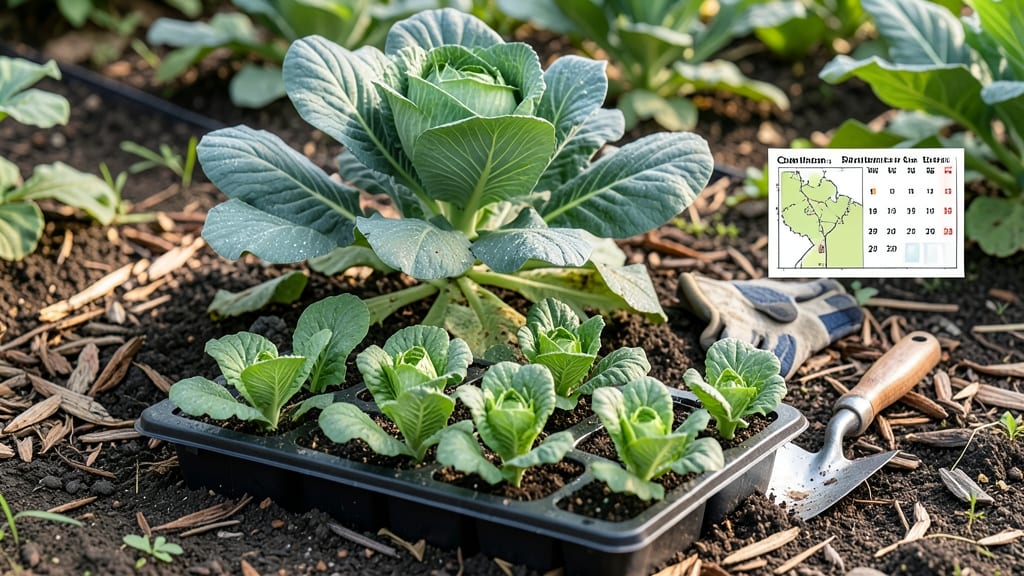
Planting cabbage in Pennsylvania at the right time means the difference between a bountiful harvest and a sad, frost-nipped mess.
If you’ve ever watched your 🥬 seedlings shiver under a late spring frost or bolt into bitter greens before forming heads, you know timing is everything. Pennsylvania’s diverse microclimates — from chilly Erie to warmer Pittsburgh — demand precision, not guesswork.
Below, I’ll break down the exact windows for spring and fall planting, how to adjust for your local frost dates, and the cold-hardy varieties that thrive in PA’s Zone 6a. No more wasted seeds or missed harvests.
You’ll learn when to start seeds indoors, when to transplant, and how to stretch your growing season with simple tricks like row covers. Ready to grow crisp, flavorful cabbage all season long?
PA planting zones for cabbage: exact dates by last frost timeline
Pennsylvania spans USDA Hardiness Zones 4-7, meaning frost dates vary dramatically from the Poconos (Zone 5) to Pittsburgh (Zone 6) and Philadelphia (Zone 7). Your cabbage's success hinges on planting 4-6 weeks before your last frost for spring crops or 10-12 weeks before your first frost for fall.
Without precise timing, you risk frost damage or bolting (premature flowering).
Local frost data is your best friend. Check the NOAA Climate Data portal or your county's Penn State Extension reports for exact dates—these often differ by 1-2 weeks from general USDA averages.
For example, Erie (Zone 6a) typically sees its last frost around April 20, while Scranton (Zone 5b) waits until May 5.
Cabbage thrives in cool weather (50-75°F), so avoid planting when soil temps exceed 80°F. Use a soil thermometer to confirm—ideal transplanting temps are 45-65°F. In hotter zones like Zone 7 (Philadelphia), opt for late summer transplants (August) to escape summer heat.
Here’s how to calculate your frost-free window: Subtract your first frost date from your last frost date. For example, in Harrisburg (Zone 6b), with a last frost of April 10 and first frost of October 20, you have 193 frost-free days.
This gives you two planting windows: March 15-April 15 for spring and August 15-September 15 for fall.
Microclimates matter! Urban areas like Philadelphia can be 2-3°F warmer than rural zones, delaying frost. If you’re unsure, ask local gardeners or scout nearby farms. For instance, State College (Zone 6a) gardeners often plant 2 weeks later than those in Erie due to lake-effect cooling.
Start seeds indoors 6-8 weeks before transplanting to give seedlings a head start. Use grow lights if your indoor temps drop below 55°F at night. Harden off seedlings 7-10 days before transplanting by exposing them to outdoor conditions gradually.
This step is critical—shocked seedlings struggle to recover in PA’s unpredictable spring weather.
For fall cabbage, aim to harvest before hard frosts hit. In Zone 5, this means planting by August 1 for a September-October harvest. In Zone 7, you can push it to September 1 for a late fall harvest.
Use cold-hardy varieties like 'January King' or 'Winterbor' to extend your season.
Pro tip: Use row covers or low tunnels to protect young plants from late spring frosts. These can push your planting window 2-3 weeks earlier without risk.
Just remove covers when temps rise above 70°F to prevent overheating. In Zone 4 areas, this is often the difference between success and failure.
Always verify your local frost dates annually—they shift with climate change. For example, Pittsburgh’s last frost has crept earlier by 5 days over the past decade. Stay ahead by bookmarking Penn State’s Ag Progress Reports or following your county’s Master Gardener Facebook groups for real-time updates.
Remember: Cabbage needs consistency. If your last frost date is April 15, planting on March 1 gives you a 6-week buffer—enough time for seedlings to mature before cold snaps.
But if you’re in Zone 7 with a March 31 last frost, wait until March 15 to avoid frost damage.