
Plants
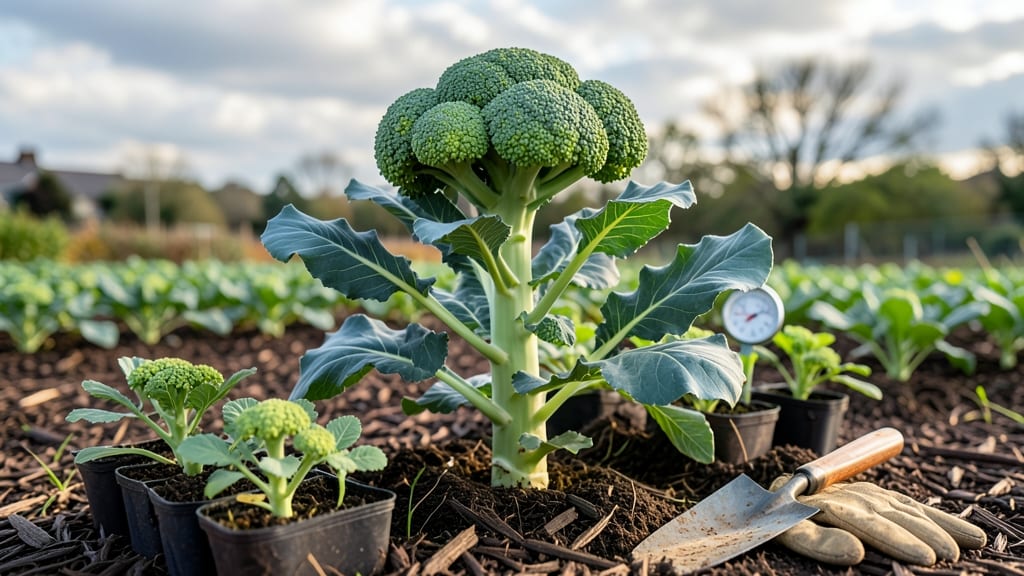
Planting broccoli in Colorado at the right time means the difference between a bountiful harvest and a sad, bolted mess by July.
Colorado’s unique climate—with its high altitudes and unpredictable frost patterns—can make broccoli planting a guessing game. But timing it right ensures a bountiful harvest before the first hard freeze. Here’s how to calculate your ideal planting window using Colorado’s frost dates and microclimates.
For most of the state, broccoli thrives when planted 4-6 weeks before the last frost—typically late March to early April. But in higher elevations like the Rocky Mountains, where frost lingers longer, you may need to wait until mid-April.
Fall plantings work too, with August being the sweet spot for a late-season harvest.
Below, I’ll break down the exact frost-date math for your region, the best cold-hardy varieties for Colorado, and how to stretch your growing season with simple tricks like row covers. Ready to grow head-sized broccoli that actually stays edible?
Colorado’s broccoli planting zones by frost dates (2024 guide)
Colorado’s diverse elevations create unique frost patterns that demand precision when planting broccoli. The Front Range (Denver, Boulder) typically sees last frosts in mid-April, while high-altitude areas like Aspen or Leadville may experience frost until late May.
Meanwhile, the Eastern Plains (Pueblo, Colorado Springs) often warm up 2-3 weeks earlier than mountain regions. These variations mean your planting window can shift by 6+ weeks depending on location.
To avoid premature bolting or frost damage, use Colorado State University’s frost-date calculator (available at CSU Extension). This tool accounts for microclimates like urban heat islands in Denver or cold air pockets in valleys.
For example, a garden in Fort Collins (Zone 5) may plant 2 weeks earlier than one in Durango (Zone 6) at the same elevation.
Broccoli thrives in cool-season conditions, so aim to plant 4-6 weeks before your average last frost date. In Zone 4 (e.g., Grand Junction), start seeds indoors by early March for transplanting in late March.
In Zone 7 (e.g., Albuquerque), you can direct-sow as early as February. Always verify with local CoCoRaHS weather stations for real-time data—especially in 2024, when La Niña patterns may delay spring warming.
For high-altitude gardens (e.g., Aspen or <
How to extend your broccoli season in Colorado (cold-hardy varieties & tips)
Colorado’s short growing season and unpredictable frost dates can challenge broccoli lovers, but the right cold-hardy varieties and strategies can extend your harvest well into fall. By choosing early-maturing varieties and using protective tools, you can enjoy fresh broccoli from spring through late autumn—even in USDA Zones 4-7.
The key is selecting varieties that thrive in cooler temperatures and implementing techniques to shield them from late frosts or early heat.
For Colorado gardeners, the three best broccoli varieties are ‘Waltham 29’ (a classic cold-hardy choice), ‘De Cicco’ (a compact Italian heirloom), and ‘Packman’ (a hybrid with excellent disease resistance). These varieties tolerate light frosts and perform well in Colorado’s high-altitude conditions.
Pair them with row covers or cold frames to push your planting windows even further, ensuring a longer harvest season.
- 📅 Plant spring broccoli 4-6 weeks before your last frost date (typically late March to early April in most of Colorado). Use row covers for early starts.
- 🌱 Sow fall broccoli in mid-to-late August for a harvest before the first hard frost (aim for 90-120 days to maturity).
- 🛡️ Use cold frames or low tunnels to extend the season by 2-4 weeks in both spring and fall.
- 💧 Water deeply 1-2 inches per week, especially during dry Colorado summers, to prevent bolting.
- 🌡️ Monitor soil temps—broccoli thrives in 50-75°F soil. If temps rise above 80°F, provide afternoon shade.
One of the biggest challenges in Colorado is premature bolting due to heat or drought stress. If your broccoli starts sending up flower stalks too early, it’s often a sign of heat stress or insufficient water.
To prevent this, mulch heavily with straw or wood chips to retain moisture and keep roots cool. Additionally, avoid over-fertilizing with nitrogen, as this can also trigger bolting.
For fall plantings, focus on transplanting seedlings rather than direct sowing after mid-August. Seedlings give you a head start and are less likely to struggle with shortened daylight hours in late summer.
If you’re using row covers, remove them during the day to allow pollination (if you want seeds) but leave them on at night to protect against late frosts.
Watch for signs of stress like yellowing leaves, stunted growth, or small, loose heads. These often indicate nutrient deficiencies, pest damage, or environmental stressors. In Colorado, cabbage worms and aphids are common pests, so consider using neem oil or row covers for organic protection.
A balanced 5-10-10 fertilizer applied every 4-6 weeks will keep your plants vigorous and productive.
With the right varieties, planting timing, and protective measures, you can enjoy a longer broccoli season in Colorado—from early spring to late fall. Start with ‘Waltham 29’ or ‘De Cicco’, use row covers strategically, and keep an eye on soil moisture.
Your garden will thank you with a bountiful harvest! 🥦