
Plants
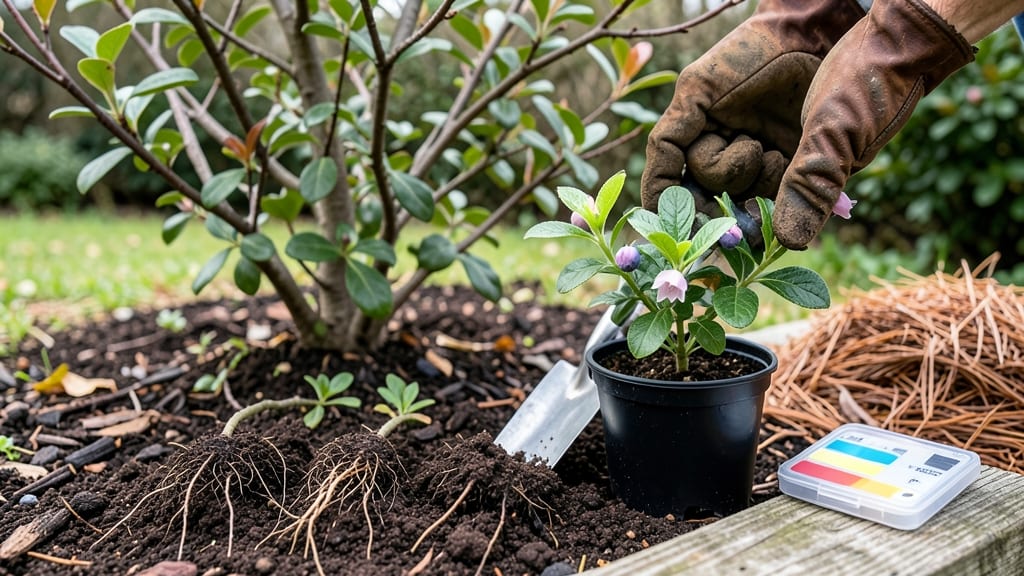
To plant blueberries in Iowa, aim for late April through early June after the last frost date—this window ensures your 🫐 shrubs establish strong roots before summer heat arrives.
Iowa’s unpredictable frost dates can make or break your blueberry harvest—planting at the wrong time means stunted growth or total failure. But with the right timing, you’ll enjoy sweet, bountiful berries year after year.
Most of Iowa falls in USDA Zones 5a-5b, where blueberries thrive if planted after the soil warms to at least 45°F. Waiting until mid-April (or later in northern Iowa) gives your plants the best chance to avoid late frosts while still benefiting from spring rains.
Below, I’ll break down the exact frost-free planting windows by region, soil prep secrets for Iowa’s clay-heavy ground, and how to choose the hardiest varieties for your yard.
Iowa’s frost-free planting windows for blueberries by region
Blueberries thrive in Iowa’s climate when planted at the perfect frost-free window, typically between late April and early June.
The USDA Hardiness Zones 4–5 across Iowa mean your exact timing depends on your location—plant too early, and frost will kill tender new growth; too late, and your bushes won’t establish strong roots before winter.
Let’s break down the ideal planting windows by region to ensure your blueberries get a head start.
Iowa’s frost dates vary dramatically from southern cities like Ottumwa (average last frost: April 10) to northern areas like Waterloo (average last frost: May 5). Even within a 50-mile radius, frost timing can shift by 2–3 weeks.
To avoid guesswork, I recommend checking the NOAA Climate Data portal for your specific county’s 30-year frost averages. This ensures you plant when the soil is 45°F+ and the risk of frost has passed.
Here’s how to use the NOAA tool: Visit NOAA’s Climate Data, select your Iowa county, and filter for last spring frost dates. For example, Des Moines averages its last frost on April 22, while Sioux City often waits until May 10.
Planting 2–3 weeks after these dates gives your blueberries the best chance to establish roots before summer heat arrives.
For bare-root blueberries, the window is narrower—aim for early spring (March–April) in southern Iowa or late April–May in northern zones. Container-grown blueberries offer a slightly longer window (April–June), but they still need 4–6 weeks of frost-free growth before winter dormancy.
Pro tip: If you’re in Zone 4b (like Mason City), opt for cold-hardy varieties like ‘Northblue’, which tolerate earlier planting.
Here’s a quick regional guide to avoid common mistakes:
- Southern Iowa (Zones 5a–5b): Plant by April 15 for maximum root establishment.
- Central Iowa (Zones 4b–5a): Wait until April 25–May 5 to align with average frost dates.
- Northern Iowa (Zone 4a): Delay until May 10–15 to prevent frost damage.
If you’re unsure about your exact frost date, use the 50°F soil temperature rule as a backup. Stick a soil thermometer 4 inches deep—once the soil hits 50°F consistently for 3 days, it’s safe to plant.
This method works even if frost dates shift due to climate variability. For example, in 2023, Cedar Rapids saw its last frost 2 weeks later than average, catching many gardeners off guard.
For container-grown blueberries, you have a slightly longer window (April–June), but they still need 6–8 hours of sun daily.
If planting in late May or June, prioritize watering (1–1.5 gallons per plant weekly) and mulching (3–4 inches of pine bark) to protect roots from summer heat. Avoid planting after June 15, as new growth may not harden off before winter.
One of the biggest mistakes I see in Iowa is planting too close to the last frost date.
How to prepare blueberry plants for Iowa’s soil and climate challenges
Iowa’s clay-heavy soil and variable winters create unique challenges for growing blueberries. Without proper preparation, your plants may struggle with poor drainage or winter dieback.
The key is adjusting your soil’s acidity (pH 4.5–5.5) and selecting varieties that thrive in USDA Zones 4–5. Let’s tackle these hurdles step by step.
First, test your soil’s pH using a home testing kit or send a sample to the Iowa State University Extension. Blueberries demand acidic soil—if your pH reads higher than 5.5, amend it with elemental sulfur or peat moss.
For clay soil, mix in compost or sand to improve drainage. This prep work ensures your plants can access nutrients and avoid root rot.
🌱 Key Takeaway: When to Plant Blueberries in Iowa
- Best Window: Late April–early June (after last frost)
- Soil Prep: pH 4.5–5.5 + drainage amendments
- Varieties: ‘Bluecrop’ (hardy, early) or ‘Patriot’ (late, disease-resistant)
- Mulch: 3–4 inches of pine straw or wood chips
📅 Pro Tip: Plant bare-root bushes in spring or container-grown plants in fall for best survival.
Next, choose cold-hardy varieties suited to Iowa’s swings. ‘Bluecrop’ is a top pick—it handles Zone 4 winters and produces early-season fruit. For late harvests, try ‘Patriot,’ which resists blueberry maggots and thrives in heavy clay. Avoid southern varieties like ‘Rabbiteye,’ which won’t survive Iowa’s winters.
After planting, protect roots from winter temperature fluctuations with a 3–4 inch layer of mulch. Use pine straw or wood chips—they acidify the soil slightly over time.
In early spring, remove mulch to prevent fungal growth before new shoots emerge. This balance keeps roots insulated without suffocating the plant.
Don’t overlook drainage solutions if your yard floods after rain. Dig a 12-inch deep trench around the planting area and fill it with gravel or crushed stone. This creates a root-friendly barrier while preventing waterlogging. Pair this with a well-draining raised bed if your soil is especially dense.
Finally, group blueberry bushes in a sunny, sheltered spot to maximize fruit production. Iowa’s late spring frosts can damage flowers, so plant near a windbreak like a fence or evergreen hedge. With these adjustments, your blueberries will thrive despite Iowa’s challenging climate.