
Trees
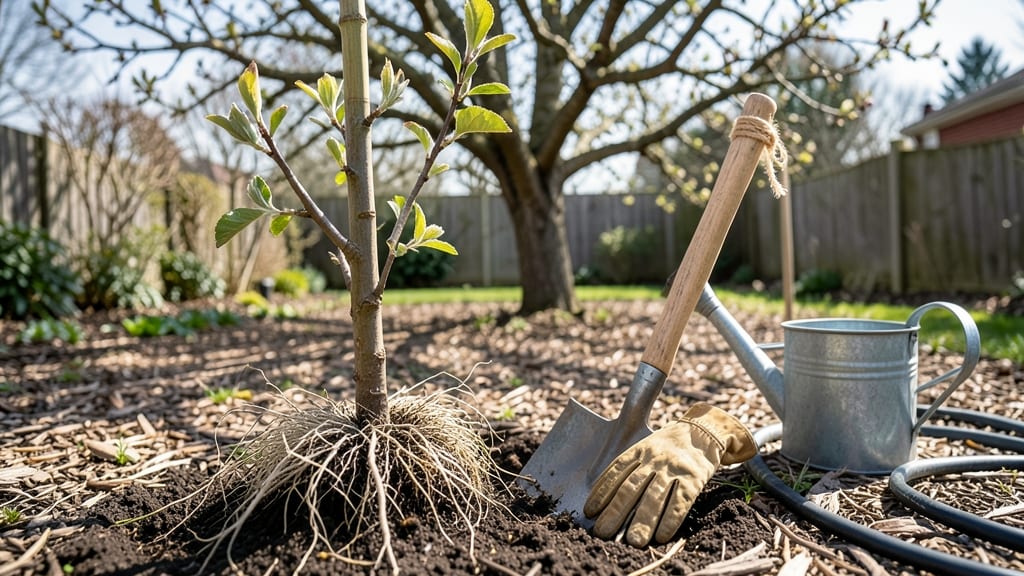
Planting apple trees in Arkansas requires timing them right to survive the state’s unpredictable chill hours and frost risks.
Miss the window, and your young 🍏 could bake in early heat or freeze under a late frost—both deadly for new roots. Arkansas’ 7a-8b zones demand precision, whether you’re planting bare-root saplings in February or container-grown trees in March.
Here’s the exact planting schedule, soil prep secrets, and how to protect your orchard from Arkansas’ wild swings between 400 and 1,000 chill hours.
You’ll learn which varieties thrive in your region, how to prep clay-heavy soil, and the one mistake that kills 80% of new plantings before they bear fruit.
Arkansas chill-hour zones: how to match apple varieties to your location
Arkansas’ chill-hour zones (400–1,000+ hours) determine which apple varieties will thrive in your backyard. Unlike USDA hardiness zones, chill hours measure winter cold exposure needed for fruit production.
In Arkansas, this ranges from 400 hours in the Delta to 1,000+ hours in the Ozark Mountains—meaning your location dictates your best apple choices.
Understanding these zones helps you avoid wasting money on varieties that won’t fruit. For example, Fuji apples (800+ chill hours) won’t produce in the southern Delta, while Anna apples (400+ chill hours) struggle in the cooler Ozarks.
Let’s break down Arkansas’ chill-hour regions and the best apple varieties for each, so you can plant with confidence.
Why chill hours matter: Apples need winter cold to set buds for spring blooms. Too few hours = no fruit. Too many? The tree may enter dormancy too early. Arkansas’ 4 distinct chill-hour zones create microclimates where some varieties excel while others fail. The Ozarks’ high elevation (600–1,000+ hours) supports crabapple hybrids, while the Delta’s mild winters (400–600 hours) favor tropical varieties like Anna.
| Zone | Chill Hours | Best Apple Varieties | Notes |
|---|---|---|---|
| Southern Delta | 400–600 | Anna, Dorsett Golden, Red Delicious | Heat-tolerant; low chill needs |
| Central Arkansas | 600–800 | Gala, Golden Delicious, Jonathan | Moderate chill; widely adaptable |
| Northwest Arkansas | 800–1,000 | Fuji, Granny Smith, Honeycrisp | Cooler nights; higher elevation |
| Ozark Mountains | 1,000+ | Crabapple hybrids, McIntosh, Cortland | Harsh winters; cold-hardy varieties |
If you’re in the Ozark Mountains, prioritize cold-hardy varieties like McIntosh or Cortland, which thrive in 1,000+ chill hours. These trees handle Arkansas’ late frosts and produce reliable harvests.
Meanwhile, gardeners in the Delta region should stick to low-chill varieties like Anna or Dorsett Golden, which avoid winter dormancy issues in milder climates.
For central Arkansas, where chill hours range from 600–800, versatile varieties like Gala or Golden Delicious are safe bets. These apples balance fruit production with adaptability to Arkansas’ unpredictable spring frosts.
Pro tip: Check the Arkansas Cooperative Extension for localized chill-hour maps—some microclimates (like river valleys) can shift zones by 100+ hours.
Don’t overlook dwarf apple trees for small spaces—they require the same chill hours but fit urban yards. Pair dwarf varieties like Columnar Honeycrisp (600+ hours) with a pollination partner (e.g., another Honeycrisp tree) for guaranteed fruit set.
In the Ozarks, semi-dwarf varieties like Jonathan (800+ hours) work well in home orchards, balancing size and productivity.
One common mistake? Assuming all Red Delicious trees thrive statewide—they need 700+ chill hours, making them risky in the Delta. Instead, opt for Dorsett Golden, a Delta-friendly variety bred for Arkansas’ heat.
For the Ozarks, Honeycrisp (900+ hours) is a top pick, but plant it on a sloped site to avoid frost pockets.
To test your chill hours, use a chill-hour calculator (available from the Arkansas Agricultural Experiment Station) or track winter lows with a home weather station. If you’re unsure, start with 2–3 varieties spanning your zone’s range—for example, a 600-hour (Gala) and 800-hour (Fuji) tree in central Arkansas.
This hedge ensures at least one variety fruits successfully.
Remember: Chill hours ≠ hardiness. A tree might survive winter but fail to fruit if its chill needs aren’t met. For example, Granny Smith (900+ hours) can survive Ozark winters but may not fruit in central Arkansas.
Always cross-reference chill-hour requirements with your local last frost date—planting too early risks frost damage to new growth.
Best planting months in Arkansas: month-by-month timeline for success
Arkansas’ variable climate means your apple tree’s success hinges on planting at the right time. The Ozark Mountains and Delta regions have different frost risks, so timing must account for local microclimates.
Whether you’re planting bare-root saplings or container-grown trees, knowing the exact window can save your investment from frost damage or heat stress.
For northern Arkansas (USDA Zones 6-7), the safest window is late February to early March, while southern Arkansas (Zones 7b-8a) can extend planting until mid-April. Container-grown trees offer more flexibility, but even they risk shock if planted too early or late.
Always check your last frost date—typically March 15 in the north and April 1 in the south.
After planting, water deeply every 7–10 days to encourage root growth. In northern Arkansas, protect young trees with frost cloth until April 15, while southern growers should monitor for late-spring heat waves that can scorch tender new leaves.
A 2–3 inch mulch ring around the base retains moisture and regulates soil temperature.
Adjust for microclimates: Valley areas (like the Arkansas River Valley) warm faster than hilltops, so plant 1–2 weeks earlier in low spots. If your yard has poor drainage, raise the planting mound by 6–12 inches to prevent root rot.
Arkansas’ clay soils benefit from gypsum amendments if compacted.
For container-grown trees, remove the pot and loosen roots before planting. Bare-root trees should have their roots spread gently—never bent—into a trench filled with water to hydrate roots before backfilling.
Stake only if your area has high winds, like the Ozark Plateau. Prune damaged roots but leave the root flare exposed above soil level.
Monitor for late frosts even after planting. In 2021, a March 20 frost in Fayetteville killed unprotected apple blossoms. Use a minimum thermometer to track nighttime temps and cover trees if forecasts warn of below 28°F.
With the right timing and care, your Arkansas orchard can thrive—just don’t rush the process!