
Trees
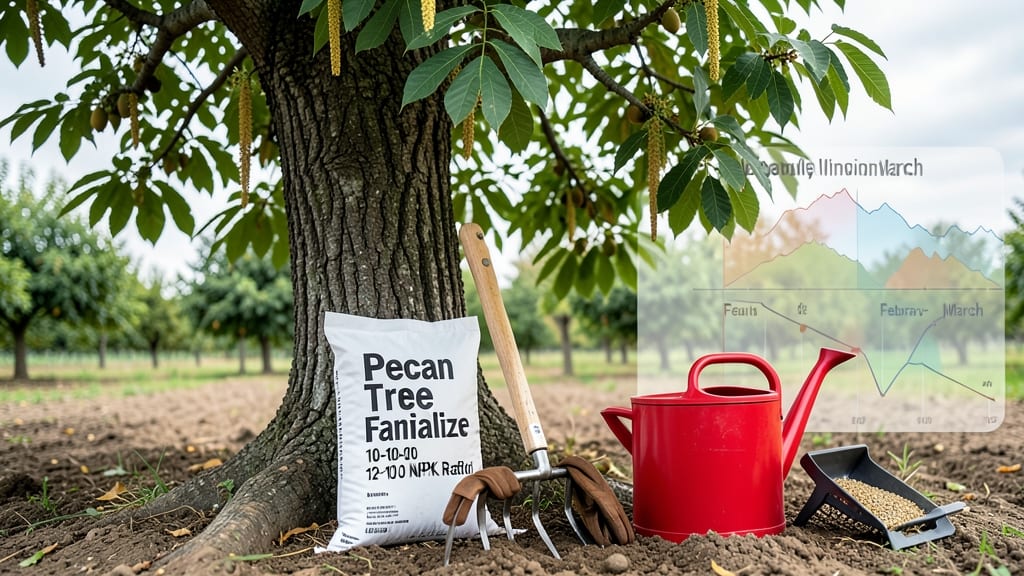
Fertilizing your 🌰 pecan tree in North Carolina at the right time—spring and early fall—is the key to stronger roots, bigger canopies, and a harvest of plump nuts.
Picture this: You’ve just planted your pecan tree, and you’re eager to see it thrive, but you’re not sure if that bag of fertilizer in your shed is the right move right now. Too early, and you risk burning delicate roots; too late, and you miss the growth window entirely.
North Carolina’s 7a-8b climate means timing matters more than ever. Skip the guesswork and learn the exact months to feed your tree—plus how soil type and tree age change the game—so you can boost production without overdoing it.
In this guide, you’ll discover the two best windows for fertilization, the best types of fertilizer for NC pecan trees, and how to spot when you’ve gone overboard. Let’s get your tree growing like a champion.
Optimal fertilization timing for pecan trees in NC: spring vs. fall schedule
North Carolina’s humid subtropical climate creates perfect conditions for pecan tree growth, but fertilization timing is critical to maximize nut production. Unlike many trees, pecans thrive with two key fertilization windows: early spring and late fall.
Missing these windows can lead to stunted growth or poor harvests—so getting the timing right is everything.
Most gardeners focus on spring fertilization because that’s when trees wake up from dormancy, but fall fertilization plays a surprisingly important role too. In NC’s USDA Zones 7a-8b, the last frost date (around March 15) and first frost date (around November 15) bookend the ideal fertilization periods.
Here’s the key difference: Spring fertilization fuels rapid growth and nut development, while fall fertilization builds root strength for winter resilience. For young trees (3 years old), focus on light, frequent feedings. Mature trees need heavier applications but at precise times to avoid overstimulation.
Before you fertilize, soil testing is non-negotiable. NC’s clay-heavy soils often lack essential nutrients like zinc, manganese, and potassium, which pecan trees crave. Send a sample to your local Cooperative Extension office—they’ll test for pH (ideal: 6.0-7.5) and nutrient levels.
If your soil is too acidic, apply lime 2-3 months before spring fertilization.
For young pecan trees (1-3 years old), start with a light application of 10-10-10 fertilizer in early spring (late March). Spread ½ pound per inch of trunk diameter around the drip line, then water deeply.
In fall, skip fertilization entirely—young trees need to focus on root establishment, not new growth.
Mature trees (5+ years old) need more aggressive feeding. Apply a 6-8-12 NPK fertilizer (higher in phosphorus and potassium) in early April, followed by a second application in late May.
In fall, switch to a low-nitrogen, high-potassium fertilizer (like 0-0-50) in mid-October to harden off the tree before winter.
Watch for NC-specific challenges: hurricane winds can uproot young trees, so stake them for the first 2 years. Also, pecan scab fungus thrives in NC’s humidity—avoid overhead watering during fertilization to prevent spreading spores.
Always apply fertilizer in the early morning to let nutrients soak in before afternoon heat.
Pro tip: Mulch heavily (3-4 inches of organic mulch) after fertilizing to lock in moisture and prevent nutrient runoff. In NC’s hot summers, mulch also protects roots from temperature swings. Just keep mulch 6 inches away from the trunk to avoid rot.
Timing isn’t just about months—it’s about tree signals. Look for new leaf buds in spring (your cue to fertilize) and yellowing leaves in fall (your cue to stop).
By mastering these two windows, you’ll give your NC pecan trees the boost they need for bigger harvests and stronger resilience. 🌰
Best fertilizer types for pecan trees: what to use and when to apply
Choosing the right fertilizer for pecan trees in North Carolina is critical for strong growth and high nut production. The best options depend on your tree’s age, soil health, and whether you prefer organic or synthetic fertilizers.
For NC’s climate, a balanced approach works best—especially during the active growing months of spring and early summer.
Pecan trees thrive with a 6-8-12 NPK ratio (nitrogen-phosphorus-potassium), but organic options like compost or well-rotted manure can also provide long-term benefits. Synthetic fertilizers offer quick results, while organic options improve soil structure over time.
The key is applying them at the right times to avoid nutrient burn or wasted resources.
When to fertilize pecan trees in NC depends on the season. Early spring (March-April) is ideal for kickstarting growth, while summer applications should be lighter to prevent late-season stress. Fall and winter fertilizing is generally not recommended—your tree needs rest during dormancy.
⏰ When to Fertilize Pecan Trees in NC
✅ DO:
- Spring (March-April): Apply full-strength fertilizer after bud break
- Early Summer (May-June): Use light feedings every 6-8 weeks
- Test soil first: Adjust NPK based on soil test results
- Water deeply: After applying to prevent root burn
❌ DON'T:
- Fertilize in fall: New growth risks frost damage
- Overapply nitrogen: Causes leafy growth, not nuts
- Use granular near trunk: Can burn roots if over-concentrated
- Skip soil testing: Guessing leads to wasted fertilizer
For organic fertilizers, composted manure or a slow-release organic blend (like cottonseed meal) works well. Spread 2-3 inches of compost around the drip line in early spring, then water thoroughly. Synthetic options like 10-10-10 or 6-8-12 fertilizers should be applied in small, frequent doses to avoid shocking the tree.
Young pecan trees (under 5 years) need gentler feeding—start with half the recommended dose and monitor for signs of stress. Mature trees can handle 1-2 pounds of fertilizer per 100 square feet, but always follow soil test recommendations for precise amounts.
Over-fertilizing is a common mistake that leads to leaf scorch or reduced nut quality.
Apply fertilizers in the early morning when temperatures are cool to reduce volatilization losses. Keep the fertilizer at least 6 inches away from the trunk and water immediately afterward to help nutrients penetrate the soil.
With the right approach, your NC pecan tree will reward you with healthier growth and bigger harvests year after year. 🌰