
Trees
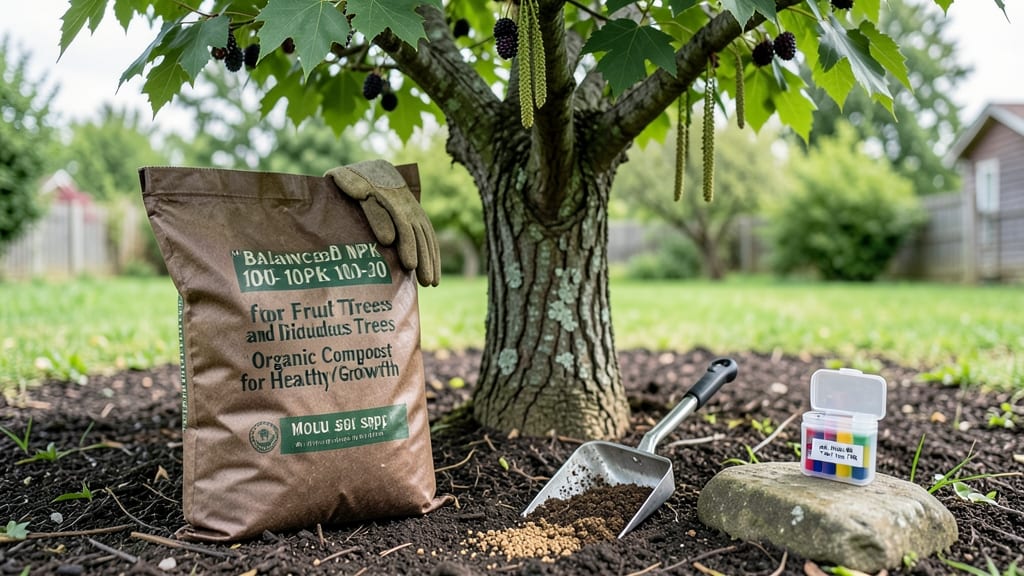
Fertilizing mulberry trees at the right time 🌳 can transform a struggling sapling into a fruit-bearing powerhouse — and skipping the timing window means wasted fertilizer and slower growth.
Picture this: You’ve just planted your mulberry tree in spring, and by summer, you’re staring at a handful of berries instead of the bushels you dreamed of. The difference? When you feed it. Mulberries respond best to a seasonal fertilization schedule, not just a random sprinkle when you remember.
In this guide, I’ll walk you through the best months to fertilize—early spring for root boosts, late summer for fruit production—and how to spot when your tree is begging for nutrients (or begging for a break).
You’ll also learn which fertilizers work best for mulberries, how much to use, and the one mistake that burns roots faster than summer sun. Let’s get your tree growing like it’s got something to prove.
Best seasons to fertilize mulberry trees for maximum growth
Fertilizing your mulberry tree at the right time can transform a struggling sapling into a fruit-bearing giant. Unlike annuals, trees like mulberries have distinct growth cycles where nutrients make the biggest difference. Timing matters most—apply fertilizer too early or late, and you risk burning roots or encouraging weak growth.
Let’s explore the optimal fertilization windows and why each season plays a critical role in your tree’s health.
Mulberries enter their active growth phase in spring, making early spring the perfect time to wake up their roots. This is when your tree needs a nutrient boost to fuel new leaves, branches, and—eventually—fruit production.
Summer fertilization supports ongoing growth, while fall applications should be avoided entirely. Understanding these seasonal cues ensures your mulberry thrives year after year.
Soil preparation is just as crucial as timing. Before applying any fertilizer, test your soil’s pH level (ideal: 6.0–7.0 for mulberries). Amend with compost or aged manure if your soil is too sandy or clay-heavy. A well-prepared root zone absorbs nutrients far more efficiently, reducing waste and maximizing growth.
Spring fertilization is your mulberry’s growth kickstart. Aim to apply fertilizer 4–6 weeks after bud break, when roots are actively seeking nutrients. Use a balanced fertilizer (like 10-10-10) to encourage even development.
For young trees, mix fertilizer into the top 6 inches of soil around the drip line. Older trees benefit from a broader application area—extend this to their full canopy width.
Summer is all about maintaining energy levels. After your mulberry bears fruit (typically June–September), apply a low-nitrogen fertilizer to replenish depleted nutrients. This supports root recovery and prepares the tree for next year’s growth. Avoid heavy applications in late summer, as this can stimulate vulnerable new growth before frost.
Fall and winter are no-fertilizer zones for mulberries. Fertilizing in fall can trigger late-season growth that won’t harden off before winter, leaving your tree susceptible to cold damage. Instead, focus on mulching with 2–4 inches of organic material (like shredded leaves) to protect roots and retain moisture.
Young mulberry trees (under 3 years old) need more frequent feeding—apply fertilizer every 4–6 weeks during the growing season. Mature trees, however, thrive on annual or biennial applications, especially if they’ve been established for 5+ years. Always water deeply after fertilizing to help nutrients penetrate the soil.
Watch for signs of nutrient deficiency, like yellowing leaves or stunted growth, which may signal it’s time to adjust your schedule. For example, chlorotic leaves often indicate iron or magnesium deficiency, while purple stems suggest phosphorus needs. These clues help you fine-tune your fertilization timing for future seasons.
Pro tip: Pair your fertilization routine with regular pruning to improve air circulation and sunlight exposure. Prune in late winter or early spring to remove dead wood and shape the tree before the growing season peaks.
This combo of timely nutrients and strategic pruning ensures your mulberry stays healthy and productive for decades.
By aligning your fertilization with your mulberry’s natural cycles, you’ll see stronger branches, bigger fruit yields, and a tree that withstands pests and diseases better.
Start with spring, maintain through summer, and let winter be a time of rest—your mulberry will thank you with lush foliage and a bountiful harvest every season. 🌿🍇
How to choose the right fertilizer for mulberry trees and apply it correctly
Selecting the right fertilizer for mulberry trees starts with understanding their needs. Mulberries thrive with a balanced NPK ratio (like 10-10-10) to support both leafy growth and fruit production. Young trees benefit from nitrogen-rich fertilizers to build roots, while mature trees need phosphorus and potassium for fruiting.
Organic options like compost or fish emulsion release nutrients slowly, while synthetic fertilizers offer quick results.
Your mulberry tree’s soil type and local climate also play a role. Sandy soils drain fast, so slow-release fertilizers work best, while clay soils hold nutrients longer, allowing for less frequent applications.
Always test your soil’s pH level—mulberries prefer slightly acidic to neutral soil (pH 6.0–7.0). If your soil is too alkaline, amend it with sulfur or peat moss before fertilizing.
When to Fertilize Mulberry Trees: Pros and Cons
Early Spring (March–April)
- Pros: Boosts root growth before bud break
- Cons: Over-fertilizing can cause leaf burn
Late Spring/Early Summer (May–June)
- Pros: Supports fruit development and leaf expansion
- Cons: Too much nitrogen reduces fruiting
Fall (September–October)
- Pros: None—tree is dormant
- Cons: Fertilizing now can stimulate late growth (vulnerable to frost)
Winter (November–February)
- Pros: None—tree doesn’t absorb nutrients
- Cons: Wasted fertilizer; risk of runoff
Best times: Early spring (root growth) and late spring (fruit production). Avoid fall/winter.
For organic fertilizers, I recommend composted manure or worm castings—they improve soil structure while feeding your tree. Synthetic options like 10-10-10 granular fertilizer are faster but require precise measurements to avoid burning roots.
Always water deeply after applying fertilizer to help nutrients reach the root zone. A 3-inch layer of mulch around the base (but not touching the trunk) retains moisture and regulates soil temperature.
When applying fertilizer, focus on the drip line (the outer edge of the tree’s canopy). Spread granules evenly in a 12-inch-wide band around the tree, then water thoroughly. For young trees, use half the recommended dose to prevent over-fertilization.
Signs of over-fertilization include yellowing leaves, stunted growth, or excessive leaf drop. If this happens, flush the soil with water to leach out excess salts.
Adjust your fertilization schedule based on your mulberry tree’s age and health. Young trees (1–3 years) need light applications every 6–8 weeks, while mature trees (4+ years) can handle heavier feedings every 4–6 weeks during the growing season.
Always stop fertilizing 6–8 weeks before the first frost to allow the tree to harden off for winter.
Remember, less is often more with mulberry trees. Over-fertilizing can harm your tree’s health and even reduce fruit quality. Start with a small dose, monitor your tree’s response, and adjust as needed.
With the right fertilizer type, timing, and application method, your mulberry tree will reward you with lush foliage and abundant berries for years to come. 🌿🍇