
Trees
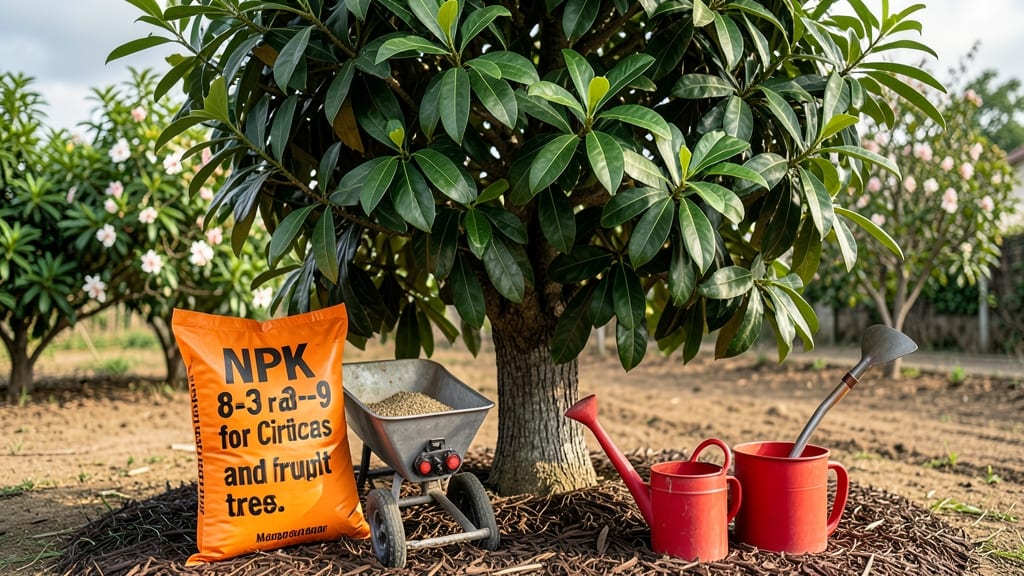
To fertilize mango trees at the right time means catching them just before flowering and again after harvest for faster fruit growth—and missing those windows can leave you with sparse or bitter fruit.
If you’ve ever watched your 🥭 tree put out leaves but no mangoes, the issue isn’t just water or sunlight—it’s timing. A well-timed feed in late winter (or early spring in cooler zones) kickstarts blooms, while a post-harvest boost in summer ensures next year’s crop.
Get it wrong, and you’ll waste fertilizer—or worse, burn the roots.
This guide breaks down the seasonal schedule for tropical and subtropical climates, including when to skip feeding entirely (hint: summer and fall are off-limits). We’ll also cover the best fertilizers for mango trees and how to spot over-fertilization before it’s too late.
Ready to turn your mango tree from a leafy bush into a fruiting powerhouse? Let’s get started with the exact months to feed—and when to hold back.
Best fertilization timeline for mango trees by season
Mango trees thrive when fertilized at the right time—too early or late, and you’ll stunt fruit production or burn delicate roots. The key is aligning fertilization with your tree’s natural growth cycles, which shift dramatically between tropical, subtropical, and temperate microclimates.
In frost-free zones (like Florida or Hawaii), your tree may need feeding year-round, while Zone 9b growers should focus on late winter to early spring. Let’s break down the exact month-by-month schedule to maximize your harvest.
For tropical climates, fertilization happens in short bursts—just before flowering and during early fruit development. In subtropical zones, you’ll add a light feed in late winter to kickstart growth after dormancy.
Meanwhile, temperate microclimates (like coastal California) require a more precise timing window to avoid winter stress. The goal? Boost flowering, support fruit set, and recover roots after harvest—without overloading the tree.
Let’s start with the critical window: February through April. This is when your mango tree shifts from dormancy (or slow growth) into active flowering. In tropical climates, apply a balanced fertilizer (like 6-6-6) in early February to stimulate bud formation.
For subtropical growers in Zone 9b, wait until late February—just as the days lengthen—to avoid shocking the tree with nutrients too early. Temperate microclimates should time their first feed with planting (if new) or early March for established trees.
By April, your tree should be in full flowering mode. Switch to a fertilizer with slightly higher potassium (like 8-3-9) to support fruit development. This is also when I recommend adding micronutrients—especially magnesium and zinc—to prevent leaf yellowing.
Pro tip: Mix a handful of Epsom salt (magnesium sulfate) into the soil around the drip line for a quick boost. Avoid heavy nitrogen here, or you’ll get lush leaves but no fruit!
Once fruits appear (typically May-July), stop fertilizing entirely. This isn’t neglect—it’s science. Your tree is now directing energy into fruit maturation, not new growth. Focus instead on deep watering (15–30 gallons per tree) and pest control.
Over-fertilizing now can lead to splitting fruit or bitter flavors. Save your fertilizer for next season’s prep.
After harvest, your tree enters a recovery phase
Signs your mango tree needs fertilizer (and when to avoid it)
Your mango tree might be silently begging for nutrients if you’ve noticed yellowing leaves or slow growth.
These are classic signs your tree needs fertilizer, but timing matters just as much as what you apply. Leaf color changes—especially pale green or yellow—often signal nitrogen deficiency, while stunted growth or small leaves can mean phosphorus or potassium shortages.
Pay attention to these visual cues before reaching for the fertilizer.
Don’t confuse nutrient needs with overwatering or poor drainage, though. If your tree’s soil stays soggy or roots appear mushy, fertilization won’t help—you’ll need to fix drainage first. Root health is the foundation, so always check soil moisture and texture before assuming fertilizer is the answer.
A simple soil test can reveal if your tree needs nitrogen, phosphorus, or potassium.
Timing is critical: Fertilize only during active growth phases (spring and early summer). Avoid fertilizing in winter or fall, as mango trees enter dormancy and won’t benefit. Over-fertilizing during dormant months can burn roots and harm the tree. Always apply fertilizer in early morning to prevent leaf burn from afternoon heat.
Watch for leaf curl or brown tips, which can indicate over-fertilization or salt buildup in the soil. If you’ve recently fertilized and see these symptoms, flush the soil with water to reduce salt concentration. Root damage from excess fertilizer is irreversible, so it’s better to under-fertilize than overdo it.
When in doubt, wait 2–3 months before reapplying nutrients.
Young mango trees (under 3 years old) need gentle feeding—use a balanced fertilizer (like 6-6-6) sparingly, about once every 3 months. Mature trees can handle slightly more (up to 2–3 lbs of fertilizer per year), but always split applications into 2–3 doses during the growing season.
Too much fertilizer too soon can stunt flowering and fruiting.
Another red flag: fewer flowers or fruit than usual. Mango trees need a mix of nutrients to produce blooms, and a deficiency in phosphorus or magnesium can halt flowering.
If your tree is flowering poorly, try a low-nitrogen, high-phosphorus fertilizer (like 3-12-6) to encourage blooming. Pair this with regular watering to support root growth.
Finally, check the soil pH—mango trees thrive in slightly acidic soil (pH 5.5–6.5). If your soil is too alkaline, nutrients like iron and manganese become unavailable, even if you’re fertilizing.
Test your soil annually and amend with sulfur or peat moss if needed. Healthy soil means your tree absorbs nutrients efficiently, reducing the need for frequent fertilization.