
Lawn
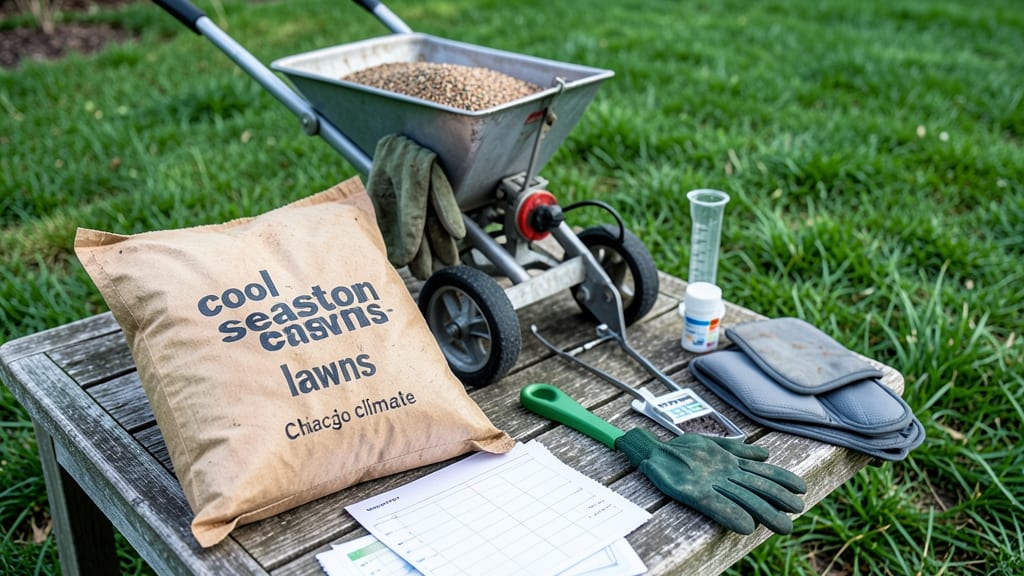
To fertilize your lawn in Chicago at the right time means feeding it when the grass is hungry but not yet stressed by heat or cold—typically in early spring and again in fall.
Picture this: You’ve just spent weeks shoveling snow, and now you’re eager to see that first green blade pop up. But if you fertilize too early, you’ll waste money on nutrients the soil can’t absorb yet.
Chicago’s 5b climate demands precision—too soon, and the fertilizer burns tender grass; too late, and you miss the growth window entirely.
Most lawns need their first feeding in late April or early May, once soil temperatures hit 55°F and stay there. That’s when roots wake up and start soaking up nutrients.
Then, in fall, a second feeding in September strengthens roots for winter, but skip it if frost is on the horizon.
Below, I’ll walk you through the exact schedule, soil prep tips, and how to pick the right fertilizer for Chicago’s unpredictable weather—so you get a lawn so green, your neighbors will ask for your secret.
Chicago’s ideal spring fertilization schedule for Fast lawn recovery
Spring in Chicago brings a golden opportunity to revive your lawn after winter’s harsh freeze-thaw cycles—but the 4-6 week window between late April and early June is where most homeowners go wrong. The key? Soil temperature thresholds and understanding how Chicago’s USDA Zone 5b climate affects grass growth.
Fertilizing too early risks burning tender new shoots, while waiting too long lets weeds steal nutrients. Let’s break it down by critical temperature zones and fertilization phases.
Your lawn’s recovery starts when soil temperatures hit 55°F (13°C)—the magic threshold where grass roots wake up from dormancy. In Chicago, this typically occurs around mid-April to early May, but don’t guess. Use a soil thermometer (just $10 at garden centers) to confirm.
Pro tip: Morning is best for testing—soil warms up during the day, giving false readings. If temps dip below 50°F (10°C) at night, wait another week.
Chicago’s unpredictable weather adds another layer. Rainfall patterns can delay or accelerate soil warming—after a wet spring, soil stays cooler longer. Pair your fertilization schedule with a 7-day weather forecast to avoid applying fertilizer right before a downpour (it washes away).
Aim for dry, mild days (55-75°F) with no rain in the forecast for 48 hours post-application.
⚠️ CRITICAL STEP LIST: Chicago Spring Fertilization Timeline
-
Step 1: Test Soil (Late March - Early April)
Use a soil test kit (pH 6.0-7.0 ideal). Chicago’s clay-heavy soil often needs gypsum or compost to improve drainage. Adjust pH if below 6.0 with lime.
-
Step 2: Early Spring Feed (Mid-April - Early May)
Apply high-nitrogen fertilizer (24-0-5) when soil hits 55°F. Use ½ lb per 100 sq ft for new lawns, 1 lb per 100 sq ft for established grass. Slow-release formulas (like Milorganite) prevent burn.
-
Step 3: Pre-Emergent Herbicide (Late April - Early May)
Apply pre-emergent (e.g., prodiamine) 2-3 weeks after fertilizing to block crabgrass. Chicago’s warm-season weeds germinate when soil reaches 60°F (16°C)—usually late April.
-
Step 4: Light Maintenance Feed (Late May - Early June)
Apply ½ lb per 100 sq ft of balanced fertilizer (10-10-10) to sustain growth. Avoid high nitrogen—it promotes thatch buildup in Chicago’s humid summers.
-
Step 5: Post-Fertilization Care
Water deeply (1 inch) 2-3 times weekly for 2 weeks post-feed. Mow at 3-4 inches height to shade roots and retain moisture—critical for Chicago’s hot, dry July.
Chicago’s microclimates (like lake-effect cooling near Lake Michigan) can shift your timeline by 1-2 weeks. If you’re near the lake, wait until early May for your first feeding—cooler air delays soil warming.
For inland areas, mid-April is often safe. Kentucky bluegrass (common in Chicago) responds fastest to early spring feeds, while tall fescue tolerates slight delays.
Pairing fertilizer with pre-emergent herbicides is non-negotiable in Chicago. Weeds like crabgrass and chickweed explode when soil hits 60°F (16°C)late April to early May.
Apply pre-emergent 2-3 weeks after fertilizing to avoid chemical conflict. Prodiamine (e.g., Barricade) controls weeds for 3-4 months, while pendimethalin (e.g., Scotts Halts Crabgrass) works for 2 months. Choose based on your lawn’s weed pressure history.
Over-fertilizing in spring is a Chicago homeowner’s worst enemy. Excess nitrogen leads to thatch buildup and fungal diseases like brown patch—common in Chicago’s hot, humid summers.
Stick to the ½ lb per 100 sq ft rule for new lawns and 1 lb for established grass. Organic options like alfalfa meal or fish emulsion release nutrients slowly, reducing burn risk.
Monitor your lawn’s color and growth rate after fertilizing. Dark green within 7-10 days means success; yellowing or wilting signals over-application or drought stress. Chicago’s unpredictable May rains can dilute nutrients—water deeply but infrequently (1 inch per week) to encourage deep root growth.
Avoid shallow watering, which promotes weak, shallow roots vulnerable to Chicago’s summer heat waves.
If your lawn shows pale spots or slow recovery after spring feeding, it may need aeration. Chicago’s clay soil compacts easily from foot traffic and freeze-thaw cycles. Rent a core aerator in late April to early May to improve nutrient absorption.
Fall fertilization for Chicago lawns: the secret to winter hardiness
Fall is the most critical time to fertilize your Chicago lawn, but many homeowners skip it. Cool temperatures and shorter days signal your grass to store nutrients for winter survival. A late summer/early fall feeding strengthens roots, preventing winter kill and ensuring a greener spring recovery.
Chicago’s USDA Zone 5b climate demands this prep—miss it, and you’ll struggle with patchy lawns next year.
Your fertilization window opens in late August and closes by mid-October. This timing aligns with when grass slows active growth but still absorbs nutrients. Apply too early, and you’ll fuel late-season weeds.
Too late, and your lawn won’t harden off before frost. The ideal window is September 1–15, when daytime highs hover around 70°F.
Slow-release fertilizers are my top recommendation for Chicago lawns. They provide steady nutrient release over 6–8 weeks, matching your grass’s fall hardening timeline. Look for 24-0-5 or 20-0-10 ratios—these prioritize nitrogen for growth and potassium for cold resistance.
Quick-release options (like 30-0-4 liquids) work in mid-September if you’re prepping for early snow, but they risk overstimulation if applied too soon.
Before fertilizing, test your soil—Chicago’s clay-heavy soils often need pH adjustment (6.0–7.0). Apply ½ lb of fertilizer per 100 sq ft using a broadcast spreader for even coverage.
Water lightly after application to activate granules, then deep-water weekly to encourage root growth. Avoid fertilizing if frost is forecasted within 48 hours—grass won’t absorb nutrients in cold soil.
Fall fertilization isn’t just about winter survival—it’s your lawn’s insurance policy. Grass fertilized in fall recovers 30% faster in spring and resists diseases like brown patch. Pair your feeding with aeration (late August) and overseeding with cold-hardy varieties like Tall Fescue for extra protection.
Skip this step, and you’ll spend spring fixing what fall prep could’ve prevented.
Pro tip: Mark your 2025 fall fertilization date now—Chicago’s first frost typically hits October 15, so aim for September 1 to maximize benefits. Store extra fertilizer in a cool, dry place to preserve potency.
With the right timing and product, your lawn will stay lush through winter and bounce back faster than neighbors who skipped fall care. 🌱