
Trees
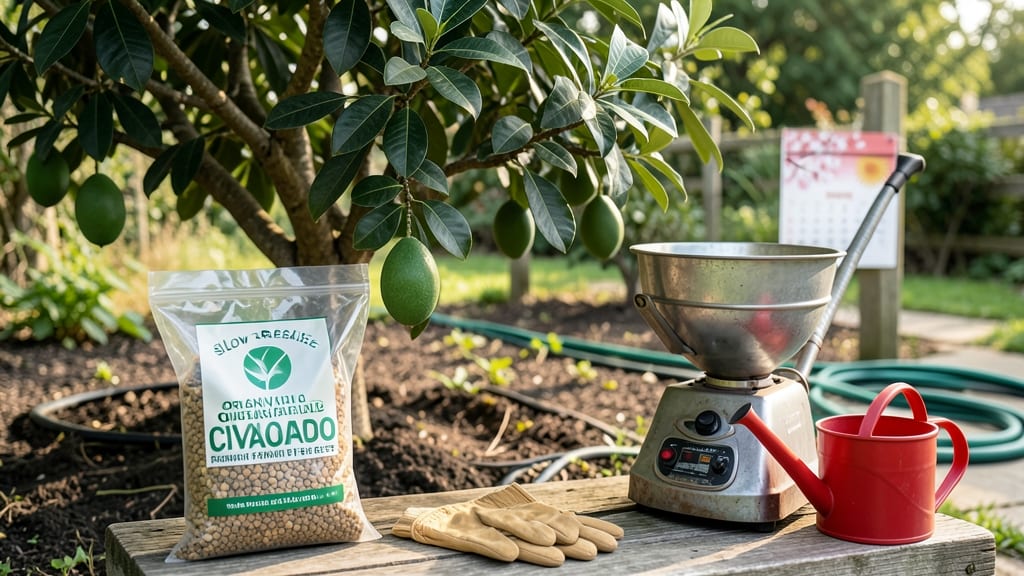
Fertilizing avocado trees in California at the right time—early spring and again in fall—is the secret to strong root growth and heavy fruit production 🥑.
Picture this: You’ve spent months nurturing your tree, only to watch it struggle with yellowing leaves or stunted growth because you fertilized at the wrong moment. California’s unique microclimates mean coastal and inland trees have different needs, and timing is everything.
In this guide, you’ll learn the exact months to feed your tree (with soil temperature cues), how to spot over-fertilization before it’s too late, and which fertilizers work best for your tree’s age and stage.
Whether you’re a first-time grower or a seasoned gardener, these spring and fall fertilization tips will keep your avocado tree thriving year-round.
Best fertilization schedule for California avocado trees: spring vs. fall timing explained
California avocado trees thrive when fertilized at the right times—spring and fall are critical windows that align with their natural growth cycles. March–April kickstarts vigorous growth, while September–October prepares trees for dormancy. Missing these windows can lead to stunted growth or poor fruit production, especially in California’s diverse microclimates.
Coastal areas like San Diego and Santa Barbara enjoy milder winters, allowing fertilization into late October, while inland zones like Sacramento or Fresno should stop by mid-September to avoid stressing roots before winter. Soil temperature is your best guide: fertilize when soil warms to 60°F+ in spring and cools to 70°F- in fall.
Here’s how coastal vs. inland zones differ in timing and approach:
| Climate Zone | Spring Fertilization Window | Fall Fertilization Window | Key Soil Temp Threshold | Signs of Over-Fertilization |
|---|---|---|---|---|
| Coastal (e.g., LA, San Diego) | Mid-March to early May | Late September to late October | 60°F+ (soil) | Yellowing leaves, leaf burn, salt crust |
| Inland (e.g., Sacramento, Fresno) | Late March to early April | Mid-September to early October | 65°F+ (soil) | Stunted growth, wilting, root rot |
| Desert (e.g., Palm Springs) | April to early May | October (light feeding only) | 70°F+ (soil) | Leaf scorch, excessive new growth |
Adjust timing by 1-2 weeks based on local frost dates and rainfall patterns.
Spring fertilization (March–April) should focus on nitrogen to fuel leaf and root growth. Use a balanced 6-6-6 or 8-3-9 fertilizer with added zinc and magnesium, which avocados crave. Apply half the recommended dose for young trees (under 3 years) to avoid shocking their roots.
Fall fertilization (September–October) shifts to potassium-heavy formulas (e.g., 5-10-10) to strengthen roots and prepare for winter. Coastal areas can extend this window into November, but inland zones must halt by October 15 to prevent late-season stress. Always water deeply after fertilizing to flush excess salts away from roots.
Watch for over-fertilization signs: brown leaf tips, salt buildup on soil, or excessive new growth (a red flag in late summer). Under-fertilized trees show yellowing leaves, weak stems, or small, sparse fruit.
Adjust by testing soil every 2–3 years—California’s varied soils (sandy vs. clay) drastically alter nutrient needs.
Pro tip: Mulch heavily (4–6 inches of wood chips) after fertilizing to retain moisture and regulate soil temperature. This is especially critical in drought-prone inland areas, where mulch can reduce water needs by 30–50% while protecting roots from temperature swings.
For container-grown avocados, fertilize every 4–6 weeks from spring to fall but reduce doses by 25%—roots in pots heat up faster and absorb nutrients quicker. Always flush soil with water every 2 months to prevent salt buildup, a common killer of potted avocado trees.
Timing isn’t just about months—it’s about reading your tree. A healthy avocado has dark green, leathery leaves and firm, glossy fruit. If yours looks leggy or sparse, it’s time to feed.
But if leaves curl or drop, you’ve overdone it. Balance is key in California’s unpredictable climate.
🌱
How to choose the right fertilizer for California avocado trees: organic vs. synthetic options
Selecting the right fertilizer for your California avocado tree depends on its age, growth stage, and your soil type. Avocados thrive with balanced nutrition, but sandy soils drain nutrients faster than clay, requiring different approaches.
Whether you prefer organic options like compost or synthetic blends, understanding nitrogen-phosphorus-potassium (NPK) ratios is key to avoiding over- or under-fertilization.
Young trees need more nitrogen (N) for leaf growth, while mature trees benefit from phosphorus (P) and potassium (K) for fruit production. California’s Mediterranean climate also means micronutrients like zinc and magnesium are often deficient, so choose fertilizers that address these gaps.
Let’s break down your options based on your tree’s needs and soil conditions.
| Fertilizer Type | Best For | NPK Ratio | Micronutrients | Application Tips |
|---|---|---|---|---|
| Synthetic (Citrus-Specific) | Mature trees, fruit production | 6-6-6 or 8-3-9 | Zinc, Magnesium | Apply every 6-8 weeks; water after |
| Organic (Compost/Fish Emulsion) | Young trees, soil health | 3-1-2 (varies) | All micronutrients | Mix into soil spring/fall; avoid leaf burn |
| Slow-Release Granules | All stages, drought-prone areas | 14-14-14 | Limited | Spread in early spring; lasts 3-4 months |
| Worm Castings | Sandy soils, root growth | 0-0-0 (trace nutrients) | Calcium, Iron | Top-dress annually; water deeply |
For sandy soils, organic options like worm castings or compost help retain moisture and nutrients, while clay soils benefit from synthetic blends to prevent compaction.
If your tree shows signs of yellowing leaves, it may need more iron or zinc—choose a fertilizer with added micronutrients or apply a foliar spray. Always test your soil first to avoid overloading it with nutrients.
Young avocado trees (under 3 years old) should start with a low-nitrogen fertilizer (e.g., 5-5-5) to encourage root development. Once established, switch to a balanced NPK ratio like 6-6-6 or a citrus-specific blend to support fruit-bearing.
In coastal California, where humidity is higher, opt for organic fertilizers to reduce salt buildup in the soil.
Avoid fertilizers high in salt or chloride, as these can damage roots. Instead, use fish emulsion or seaweed extract for organic options that also boost immunity. Always water your tree 24 hours before and after applying fertilizer to prevent root burn.
For mature trees, split applications into two doses per season—once in early spring and again in early fall—to align with natural growth cycles.
Remember, less is more with avocado trees. Over-fertilizing can lead to leaf burn, reduced fruit quality, and even tree death. Start with half the recommended dose and monitor your tree’s response.
If you notice excessive new growth with no fruit, cut back on nitrogen and focus on phosphorus and potassium.
With the right fertilizer and timing, your California avocado tree will reward you with vibrant foliage and abundant harvests for years to come. Happy gardening! 🌱🥑