
Orchid Care
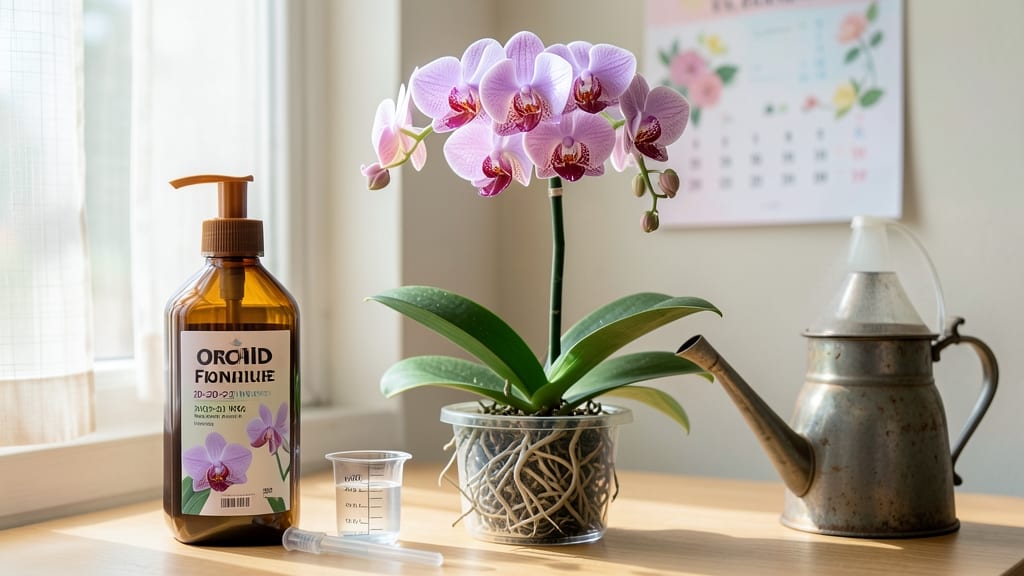
Should you fertilize orchids when they're blooming, or is that the worst time to feed them? The answer might surprise you — timing is everything for those delicate 🌸🌸🌸 roots.
Picture this: You’ve just watched your orchid burst into vibrant blooms, and now you’re wondering if now’s the right moment to add nutrients. The truth?
Fertilizing at the wrong stage can actually shorten that stunning display. But get the schedule right, and you’ll coax longer-lasting flowers and healthier growth between seasons.
Most gardeners miss the two critical windows for feeding orchids: spring, when new roots and shoots are pushing through, and early fall, when the plant preps for its next bloom cycle. Skip these periods, and you risk weak stems or sparse blooms next year.
Below, I’ll break down the exact months to fertilize (and when to pause), how often to feed different orchid types, and the simple adjustments you can make based on your home’s light and temperature. No guesswork — just peak performance for your plants.
Orchid fertilizing schedule by season: month-by-month guide
Timing your orchid fertilizer is like conducting an orchestra—miss the beat, and the whole performance falls flat. Orchids grow in natural cycles, and feeding them at the right time ensures lush foliage and prolonged blooms. Unlike annuals, orchids don’t need constant feeding; they thrive on seasonal precision.
Indoor orchids like Phalaenopsis (moth orchids) and outdoor varieties such as Cattleya both follow similar seasonal rhythms, but their needs shift with temperature and light changes.
Most gardeners make the mistake of fertilizing year-round, which can lead to root burn or salt buildup in the potting mix. Instead, focus on feeding during the plant’s active growth phases, typically spring and summer, when new leaves and flower spikes emerge.
In cooler months, orchids enter a resting phase, and feeding should be minimal or nonexistent. Let’s break down the ideal schedule month by month to keep your orchids thriving.
🌱 Comparison Table: When to Fertilize Orchids by Season
| Season | Months | Frequency | Fertilizer Type | Key Notes |
|---|---|---|---|---|
| Spring | March, April, May | Every 2 weeks | Balanced (20-20-20) | Boost new growth; reduce to half-strength in May |
| Summer | June, July, August | Every 3-4 weeks | Low-nitrogen (10-10-10) | Light feeding; avoid heat stress on roots |
| Fall | September, October | Every 4-6 weeks | Balanced or phosphorus-rich | Prep for blooming; reduce as temps drop |
| Winter | November, December, January | None | — | Resting phase; water sparingly |
| Indoor Adjustments | Year-round | Follow seasonal guide | Balanced or bloom booster | Extend summer feeding if lights are on 12+ hrs/day |
Spring is the golden window for orchid fertilization. As temperatures rise and daylight increases, your orchid will signal readiness with new pseudobulb growth (in Cattleya) or leaf emergence (in Phalaenopsis). Start fertilizing in March with a balanced 20-20-20 formula, applying it every 2 weeks at half-strength.
This mimics natural nutrient availability and prevents overfeeding. By May, switch to a lower-nitrogen formula to encourage flower bud formation.
Summer demands caution. While orchids continue growing, high temperatures and intense light can stress roots, making them vulnerable to fertilizer burn. Reduce feeding frequency to every 3-4 weeks and use a diluted solution (e.g., 5 drops per cup of water).
For outdoor orchids, pause fertilization during peak heat waves (July-August) unless they’re in shade-cloth-covered areas. Indoor orchids under grow lights can continue on a lighter schedule if they show no signs of stress.
Fall is a transitional phase where orchids prepare for blooming or dormancy. If your orchid is Phalaenopsis, it may produce a flower spike in late summer or early fall, signaling it’s time to shift to a phosphorus-rich fertilizer (e.g., 10-30-20) to support bloom development.
For Cattleya or Dendrobium, reduce feeding to every 4-6 weeks as growth slows. Outdoor orchids in USDA Zone 8+ may need one last light feed in September before cooler weather sets in.
Winter is the resting season for most orchids, and fertilizing during this time can do more harm than good. Without active growth, excess nutrients accumulate in the potting mix, leading to salt buildup and root damage. Instead, focus on minimal watering and bright, indirect light.
If your orchid is blooming (common with Phalaenopsis), a single light feed in December with a bloom booster can extend flower life, but avoid overdoing it. For outdoor orchids in cooler climates, pause all feeding until February.
Indoor vs. outdoor orchids follow the same seasonal rules, but indoor plants benefit from extended growing seasons thanks to artificial light and stable temperatures. If your home stays above 60°F year-round and orchids receive 12+ hours of light daily, you can lightly fertilize through September to maintain growth.
However, always monitor your orchid’s response: yellowing leaves or stunted growth are signs to pause feeding immediately. Outdoor orchids,
Signs your orchid needs fertilizer (and when to hold off)
Your orchid’s leaves and growth patterns speak volumes about its nutrient needs. If the leaves turn yellow or develop brown tips, it may be starving for nutrients—or suffering from over-fertilization.
Pay attention to new growth too: slow or stunted shoots are a cry for help, while sparse blooms suggest your orchid isn’t getting the right balance of nutrients.
Orchids are light feeders compared to other houseplants, so over-fertilizing is a common mistake. Too much fertilizer can burn roots or cause salt buildup in the potting mix, leading to crispy edges on leaves or a white crust on the surface.
Before reaching for the fertilizer bottle, check these key signs to decide whether your orchid is hungry or just resting.
Only fertilize during active growth phases (spring and summer). Hold off in fall and winter when orchids enter dormancy. Never fertilize a stressed plant—wait until new roots or leaves appear.
One of the most obvious signs your orchid needs fertilizer is slower-than-usual growth. Healthy orchids produce 2-3 new leaves every 3-4 months. If your plant’s growth has stalled or new leaves are smaller than usual, it’s time to feed.
Also, check the roots: silvery-green roots indicate healthy growth, while shriveled or black roots suggest nutrient deficiency or disease.
If your orchid’s blooms are sparse or flowers fall off prematurely, it might need a phosphorus boost (the middle number in NPK ratios). A 20-20-20 fertilizer or a bloom-specific formula can help encourage more flowers.
However, if blooms appear but fail to open, over-fertilization could be the culprit—reduce feeding immediately and flush the roots with room-temperature water.
Over-fertilizing can also cause root burn, which looks like dark, mushy roots or leaves curling inward. If you suspect this, repot your orchid in fresh orchid bark mix and rinse the roots thoroughly.
Avoid fertilizing for at least 4-6 weeks to let the roots recover. Always dilute fertilizer to half-strength and water before applying to prevent salt buildup.
To keep your orchid thriving, monitor its growth cycle and adjust feeding accordingly. In spring and summer, fertilize every 2-4 weeks with a balanced formula. In fall and winter, skip fertilizer entirely unless you notice new root or leaf growth.
With the right balance, your orchid will reward you with lush foliage and stunning blooms for years to come.