
How To
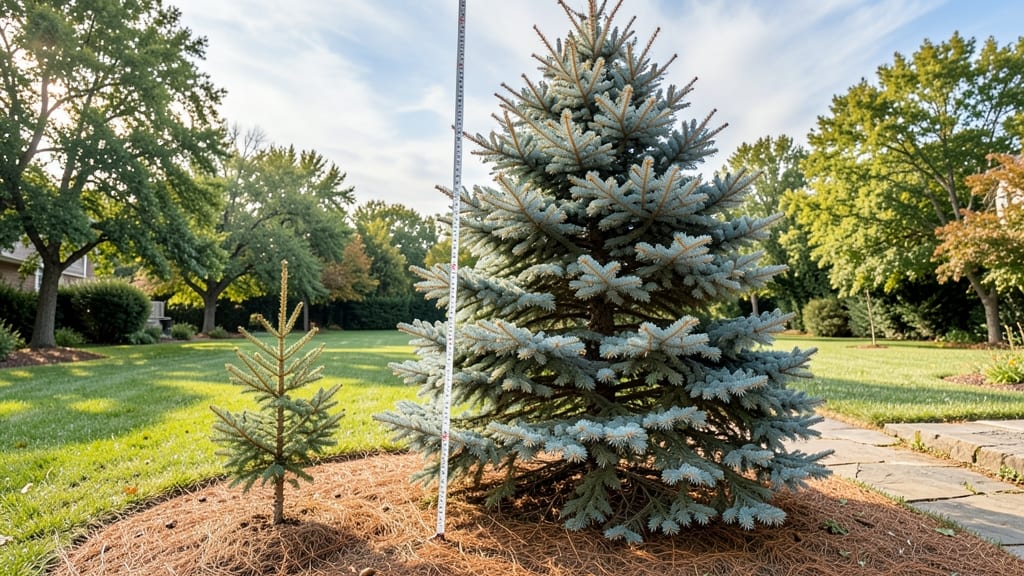
A Colorado Blue Spruce 🌲 can grow between 30 and 60 feet tall at maturity, depending on its variety and growing conditions—making it a stunning but space-hungry addition to any landscape.
If you're dreaming of adding one to your yard, you might be surprised by how quickly it reaches those heights. A standard Colorado Blue Spruce can grow 1 to 2 feet per year in ideal conditions, so planning for its future size is key before planting.
This evergreen beauty thrives in full sun and well-draining soil, but its growth rate slows as it matures. Dwarf varieties, like 'Conica,' stay under 15 feet, while the towering 'Glauca' can stretch toward the sky—so choosing the right type for your space is the first step to happy gardening.
Below, I’ll break down the height ranges for different varieties, how to control growth, and the best spots to plant yours for years of lush, blue-green foliage.


Colorado Blue Spruce mature height by variety: what to expect
The Colorado Blue Spruce (Picea pungens 'Glauca') is one of the most iconic evergreens in North American landscapes, prized for its striking silver-blue foliage and majestic presence. But before you plant, understanding the mature height of each variety is crucial to avoid overcrowding or planting in unsuitable spaces.
Some varieties can reach towering heights of 60 feet, while others stay compact enough for small yards—each with its own landscape impact and care requirements.
Whether you're planning a backyard focal point or a windbreak hedge, choosing the right variety ensures your Colorado Blue Spruce thrives without becoming a maintenance nightmare.
Below, I break down the mature heights, spread, and landscape applications for the most popular varieties, complete with visual comparisons to help you visualize their scale.
Pro Tip: Always check the spread of a variety—some Colorado Blue Spruces grow wider than they do tall, which can drastically change how they fit into your design. For example, a 30-foot-tall tree with a 15-foot spread will occupy a much larger footprint than a narrow, columnar variety of the same height.
| Variety | Mature Height | Spread | Growth Rate | Landscape Use | Size Comparison |
|---|---|---|---|---|---|
| 'Glauca' (Standard) | 40–60 ft | 12–18 ft | 1–2 ft/year | Specimen tree, windbreak | Taller than a 3-story house |
| 'Conica' (Dwarf) | 10–15 ft | 6–8 ft | 3–6 in/year | Container planting, small yards | Slightly taller than a minivan |
| 'Fastigiata' (Columnar) | 30–40 ft | 8–12 ft | 1–1.5 ft/year | Narrow hedges, urban gardens | Taller than a basketball hoop |
| 'Moerheimii' (Semi-Dwarf) | 20–30 ft | 10–15 ft | 1 ft/year | Foundation planting, medium yards | Taller than a garage door |
| 'Fat Albert' (Dwarf) | 8–12 ft | 6–10 ft | 4–6 in/year | Rock gardens, patio accents | Height of a tall refrigerator |
The 'Glauca' variety is the classic Colorado Blue Spruce, often reaching 60 feet tall with a broad, pyramidal shape. This makes it ideal for large landscapes or as a specimen tree in open spaces.
Imagine a tree taller than your three-story house—that’s the kind of statement this variety makes. However, its 12–18-foot spread means it needs plenty of room to avoid shading out nearby plants or structures.
For smaller spaces, the 'Conica' variety is a game-changer. Often called the "Dwarf Alberta Spruce," it tops out at just 10–15 feet but grows wide, making it perfect for containers or urban gardens.
Its slow growth rate (3–6 inches per year) means you won’t outgrow it quickly. Picture a tree slightly taller than a minivan—compact yet striking.
If you love the color and texture of Colorado Blue Spruce but need a narrower silhouette, the 'Fastigiata' variety is your best bet. This columnar form grows 30–40 feet tall but only 8–12 feet wide, making it ideal for urban gardens or as a privacy screen.
Think of it as a tall, slender tower—perfect for tight spaces where width is limited.
The 'Moerheimii' variety strikes a balance between the towering 'Glauca' and the dwarf varieties. With a mature height of 20–30 feet and a 10–15-foot spread, it’s versatile enough for medium-sized yards or as a foundation planting.
Its growth rate of 1 foot per year means it matures more quickly than the standard variety, making it a great choice if you want faster results.
Lastly, the 'Fat Albert' variety
How fast do Colorado Blue Spruce grow? Growth rate by age and conditions
When you plant a Colorado Blue Spruce, its growth rate varies dramatically between its juvenile and mature stages. In the first 3 years, these trees grow surprisingly fast—adding 1-3 feet per year—but this slows as they mature.
Understanding this growth pattern helps you plan spacing and maintenance from day one.
The standard Colorado Blue Spruce can reach 30-60 feet tall at maturity, but its growth rate isn't steady. Young trees grow 12-24 inches annually in ideal conditions, while older specimens may only add 6-12 inches per year.
This shift happens around age 10-15, when the tree focuses on width and needle density over height.
- 1 Year 1-3: 1-3 ft/year (fastest growth phase)
- 2 Years 4-10: 6-18 in/year (slower but steady)
- 3 Years 11+: 3-12 in/year (focus on width, not height)
- 4 Mature Height: 30-60 ft (varies by variety)
- 5 Dwarf Varieties: 10-15 ft (e.g., 'Glauca Conica')
Several environmental factors influence how quickly your Colorado Blue Spruce grows. Full sun exposure (6+ hours daily) is non-negotiable—trees in partial shade may grow 20-30% slower. Well-draining, slightly acidic soil (pH 5.0-7.0) also boosts growth, while compacted or waterlogged soil can stunt development by up to 50%.
Climate plays a huge role too. In USDA Zones 3-7, these spruces thrive, but colder zones (Zone 3) may see slightly slower growth due to shorter growing seasons.
Conversely, Zone 7 trees can grow 10-15% faster thanks to longer warm periods. Wind exposure also matters—trees in open landscapes develop stronger trunks but may grow taller to reach sunlight.
To optimize growth, focus on seasonal care. In spring, apply a balanced fertilizer (10-10-10) and water deeply once weekly. During summer, reduce watering to every 5-7 days to prevent root rot, and mulch around the base to retain moisture.
In fall, avoid fertilizing—let the tree prepare for dormancy. Pruning should be minimal; only remove dead or crossing branches to maintain shape.
If you're aiming for faster growth, prioritize young trees (under 5 years old) and ensure they have optimal conditions. Older trees grow slower naturally, but proper care can still encourage healthy development.
For controlled growth, consider dwarf varieties like 'Glauca Conica'—they mature at just 10-15 feet while maintaining the iconic blue hue.