
Trees
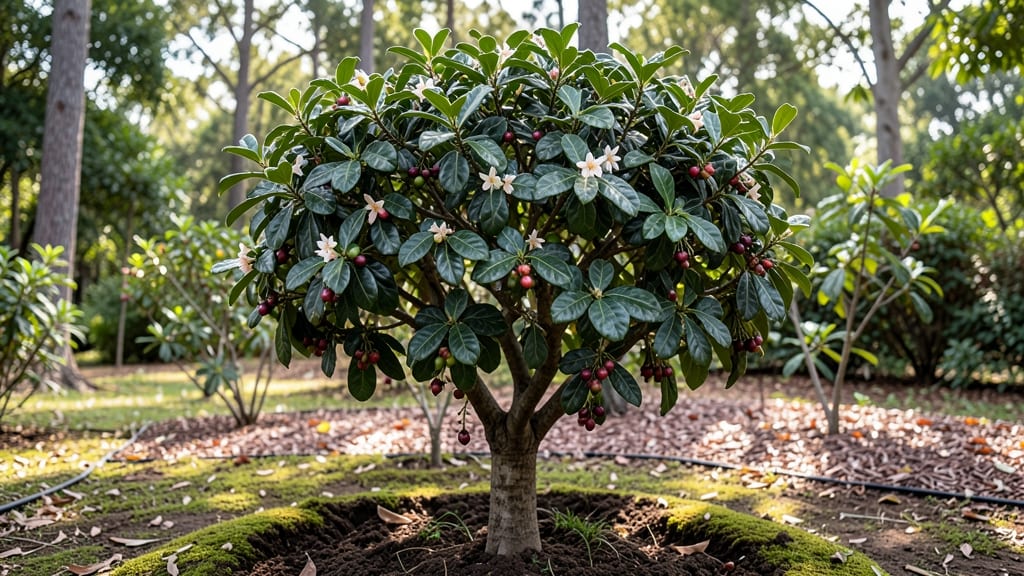
Coffee trees grow anywhere from 10 feet to towering 40 feet tall, depending on the variety and growing conditions—so if you're planning to grow ☕ your own beans, space and variety choice matter more than you might think.
Picture this: a dwarf Arabica in a container on your patio, barely reaching your waist, versus a wild Robusta tree in the tropics stretching taller than a two-story house.
The difference isn’t just about aesthetics—it shapes how you prune, where you plant, and even whether you’ll need a ladder to harvest.
In this guide, we’ll break down the exact height ranges for the most common coffee varieties, how growth stages affect size, and the simple tricks to keep your tree manageable—whether you’re working with 5 feet of space or a full backyard.
You’ll also discover how climate, pruning, and container gardening can turn a 40-foot giant into a neatly trimmed bush or keep a dwarf variety from outgrowing its pot. Let’s get started.


Coffee tree height by variety: dwarf to giant coffee plants explained
Choosing the right coffee variety isn't just about flavor—it's about space. Some coffee plants stay compact enough for container gardening, while others grow into towering shade trees that dominate your landscape.
The height differences between Arabica and Robusta varieties can be dramatic, and even within the same species, some cultivars stay under 6 feet while others reach 40 feet. Understanding these variations helps you pick the perfect coffee plant for your backyard or patio.
Most commercial coffee trees belong to two primary species: Coffea arabica (Arabica) and Coffea canephora (Robusta). While both can grow tall, Arabica varieties often produce smaller, more manageable trees, making them ideal for home gardeners.
Robusta, on the other hand, tends to grow taller and faster, which can be both an advantage and a challenge depending on your growing conditions. Let’s break down the height ranges you can expect from the most popular varieties.
Comparison Table: Coffee Tree Heights by Variety
If you're limited on space, dwarf Arabica varieties like 'Nana' are your best bet. These stay under 6 feet and thrive in containers, making them perfect for patios or balconies. They require the same care as larger varieties but won’t overwhelm your garden.
For example, I’ve grown 'Nana' in a 15-gallon pot for years, and it produces enough cherries for a few cups of coffee annually.
For those with more room, Bourbon and Typica varieties strike a balance. These Arabica cultivars reach 10-20 feet and are well-suited for backyard gardens in warmer climates. They grow at a moderate pace, allowing you to shape them with pruning if needed.
I once grew a Typica in my Florida garden, and within three years, it became a stunning shade tree while still producing high-quality beans.
How coffee tree height changes through growth stages: from seedling to maturity
Watching a coffee tree grow from a tiny seedling to a towering shade provider is one of the most rewarding experiences for any gardener. The journey from seed germination to mature height involves distinct stages, each with its own growth patterns and care requirements.
Understanding these stages helps you anticipate space needs and adjust cultivation practices accordingly.
Most coffee trees start small—often just 1-2 inches tall after germination—but their vertical growth accelerates dramatically within the first three years. By maturity, some varieties can reach 30-40 feet, while others remain manageable as shrubs.
The key to controlling height lies in recognizing these growth phases and responding with appropriate pruning and training techniques.
| Growth Stage | Height Range | Timeframe | Key Growth Features |
|---|---|---|---|
| Seedling | 1-2 inches | 0-6 months | Delicate leaves, slow root development |
| Juvenile | 3-10 feet | 6-24 months | Rapid vertical growth, first flowering possible |
| Mature | 15-40 feet | 3-7 years | Full canopy, peak coffee production |
| Old Growth | 40+ feet | 7+ years | Slower growth, increased pruning needs |
The seedling stage (0-6 months) is where your coffee tree's foundation is built. During this phase, growth is slow but critical—focus on providing consistent moisture and partial shade to protect young stems.
Transplanting too early can stunt root development, so wait until your seedling reaches 6-12 inches tall before moving it to its permanent spot.
In the juvenile phase (6-24 months), expect dramatic height increases, especially if your coffee tree receives optimal sunlight and nutrients. This is when many gardeners make the mistake of letting trees grow unchecked—leading to unmanageable heights later.
Strategic pruning during this stage can redirect energy toward bushier growth rather than vertical expansion.
By the time your coffee tree reaches maturity (3-7 years), its height becomes a defining feature of your landscape. Most varieties will have reached their maximum height potential by this point, with some Arabica varieties topping out around 20-30 feet and Robusta types pushing 30-40 feet.
This is also when coffee production peaks, so maintaining tree health becomes even more critical.
Climate plays a surprising role in coffee tree height development. Trees grown in tropical highlands often remain shorter due to cooler temperatures and higher altitudes, while those in lowland equatorial regions can grow significantly taller.
If you're cultivating coffee in a cooler microclimate, expect slightly reduced height potential compared to tropical standards.
Pruning impacts height more than most gardeners realize. Regular selective pruning can maintain a coffee tree at a manageable height while encouraging denser foliage and better fruit production. For container-grown coffee trees, pruning is essential to prevent roots from becoming root-bound—a condition that stunts overall growth.