
Size
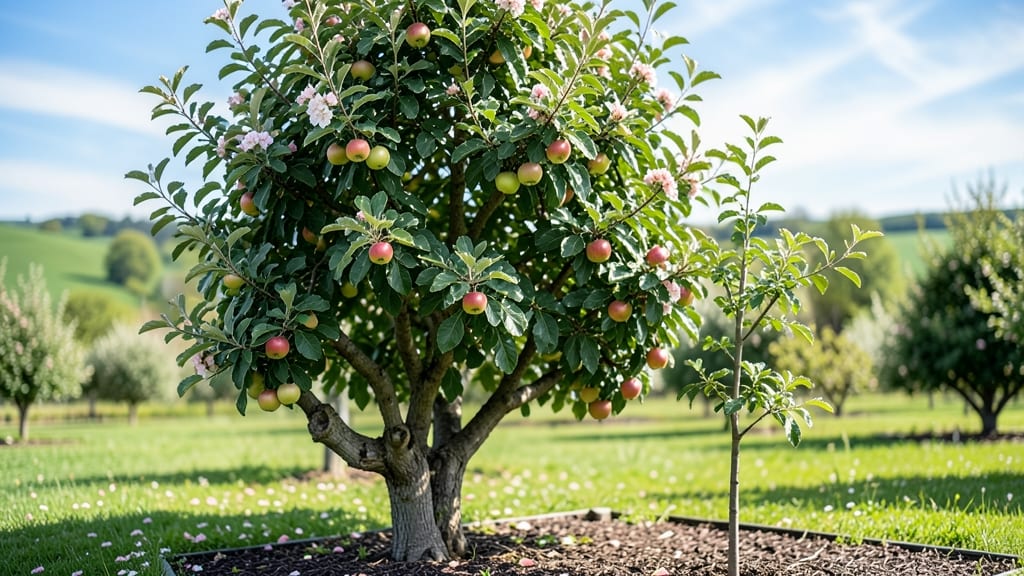
Apple trees can grow how tall can apple trees grow anywhere from 8 feet to over 30 feet, depending on the variety and rootstock you choose—so picking the right size for your space is the first step to avoiding a backyard jungle.
Picture this: a 20-foot standard tree towering over your patio, its branches just brushing the roof, while a dwarf variety sits neatly in a pot on your balcony. The difference isn’t just aesthetics—it’s about fruit access, pruning effort, and even how much shade you’ll get.
Most home gardeners underestimate how much height affects long-term care, and that’s where mistakes happen.
Whether you’re working with a small urban yard or a spacious rural plot, the right apple tree height balances growth potential with manageable upkeep. Below, we’ll break down dwarf, semi-dwarf, and standard sizes, how rootstock shapes their height, and the pruning secrets that keep even the tallest trees in check.
You’ll also learn how to match your space to the tree—because a 15-foot semi-dwarf might be perfect for your driveway, while a 6-foot dwarf thrives in a container. Let’s get your apple tree growing the right way, the first time.


Apple tree height variations: dwarf, semi-dwarf, and standard sizes explained
Apple trees come in three distinct height categories—dwarf, semi-dwarf, and standard—each with unique growth patterns and care requirements. The size you choose depends on your space, pruning commitment, and fruit production goals.
Most gardeners overlook how rootstock determines these heights, but it’s the foundation of your tree’s future size and productivity.
Dwarf apple trees typically reach 6 to 12 feet at maturity, making them ideal for small backyards or even large containers. Semi-dwarf varieties grow 12 to 20 feet, offering a balance between manageability and fruit yield.
Standard apple trees can tower 20 to 40+ feet, requiring significant space but producing larger harvests over longer lifespans.
The rootstock you choose is the single biggest factor in your apple tree’s height. For example, the M.9 rootstock produces dwarf trees, while MM.106 creates semi-dwarf varieties. Standard trees often grow from seedling rootstock or vigorous types like MM.104, which can reach 30+ feet without intervention.
Dwarf varieties like 'Liberty' or 'Honeycrisp' (on M.9 rootstock) mature quickly but require annual pruning to maintain shape and productivity. Their compact size makes them perfect for urban gardens or patios, though they may produce slightly smaller fruit.
Semi-dwarf trees, such as 'Fuji' or 'Gala' on MM.106, offer a middle ground with higher yields per tree and easier pruning than standards.
Standard apple trees, like the classic 'Granny Smith' or 'Golden Delicious', dominate landscapes but need 15+ feet of clearance and regular pruning to prevent overgrowth. Their deep root systems also make them more drought-resistant, but their size limits placement in most suburban yards.
If you love heirloom varieties, standard trees deliver the largest fruit and longest lifespans.
Height isn’t just about space—it affects fruit production timing and pruning effort. Dwarf trees bear fruit in 2–3 years, while standards may take 5–7 years to mature.
Semi-dwarfs strike a balance, producing fruit in 3–4 years with manageable growth. Always check the rootstock compatibility with your chosen cultivar to avoid mismatches that stunt growth.
For container growing, stick to dwarf varieties like 'Columnar apples' (e.g., 'Wijcik' or 'Urban Apple'), which can thrive in 15-gallon pots with proper rootstock. Semi-dwarfs need in-ground planting with at least 8–10 feet of space between trees, while standards require 20+ feet and professional pruning for safety and health.
Remember: Pruning young trees shapes their future height. Even dwarf trees can grow taller if not pruned correctly, while over-pruning standards can reduce their natural vigor. Start with open-center pruning for dwarfs and central leader pruning for standards to encourage strong, balanced growth.
🌱
How to choose the right apple tree height for your garden space
Choosing the right apple tree height starts with understanding your space constraints. A dwarf apple tree (6–12 feet) fits urban patios, while standard varieties (20–30+ feet) need rural yards.
My first garden had a Liberty apple tree on a M.9 rootstock, and it thrived in a 5x5-foot space—proof that size doesn’t limit productivity.
For city gardens, container-grown dwarfs are ideal—they yield fruit without sprawling. In rural areas, semi-dwarf trees (12–18 feet) strike a balance between manageable height and high yields. Always measure your space and account for mature canopy spread, which can exceed height by 50%.
- 1 Dwarf Trees (6–12 ft): Perfect for containers or small yards. Use M.9 or B.9 rootstock for compact growth. Example: 'Red Delicious' on M.9.
- 2 Semi-Dwarf Trees (12–18 ft): Ideal for suburban gardens. Spacing: 10–15 feet apart. Rootstock: M.7 or MM.106. Example: 'Fuji' on MM.111.
- 3 Standard Trees (20–30+ ft): For large properties with full sun. Spacing: 20–25 feet apart. Rootstock: seedling or MM.106. Example: 'Granny Smith' on seedling.
- 4 Sunlight/Wind Check: Dwarf trees need 6+ hours of sun; standards tolerate partial shade. Windbreaks are critical for standard trees—plant near fences or hedges.
Assess your garden’s sunlight first. Dwarf trees thrive in full sun (6+ hours/day), while standard varieties tolerate partial shade but produce fewer apples. My urban balcony gets 4 hours of morning sun—ideal for a potted 'Honeycrisp' on a B.9 rootstock.
Always place trees where they’ll get unobstructed sunlight for at least half the day.
Urban gardeners should prioritize dwarf or semi-dwarf trees in large containers (15–20 gallons). Use a well-draining mix of 50% potting soil, 30% compost, and 20% perlite. In rural areas, standard trees need 20+ feet of spacing to avoid root competition and disease spread.
I once planted two standard 'Gala' trees 18 feet apart—within 3 years, their canopies overlapped, reducing airflow and increasing apple scab risk.
For a quick decision, ask: "Do I have space for a ladder?" If not, choose dwarf or semi-dwarf. Need high-volume fruit? Opt for semi-dwarf with pollination partners (e.g., plant a 'Honeycrisp' and 'Pink Lady' together).
Always check rootstock compatibility with your climate—M.9 rootstock struggles in hot, humid zones like Florida.
Pro tip: Sketch your garden layout. Mark mature tree heights, canopy spreads, and sunlight paths. My backyard sketch revealed a 10-foot gap between my shed and fence—perfect for a semi-dwarf 'McIntosh'. Now I harvest 50+ apples yearly without ladder struggles! 🍏