
Plants
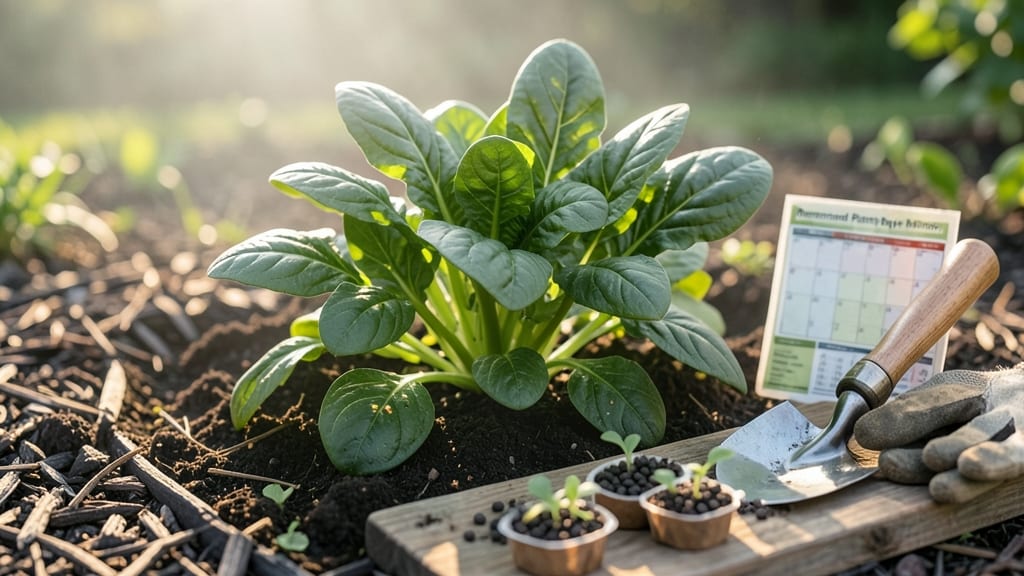
To plant spinach in Missouri at the perfect time 🥬, aim for early spring (March) and late summer (August)—just as soil warms but before summer’s heat triggers bolting.
Missouri gardeners know spinach can be finicky—plant too early, and you risk bolting; too late, and frost ruins your harvest. But timing it just right ensures tender, prolific greens all season long.
Here’s the key: spinach thrives in cool weather, so seed it 4-6 weeks before your last frost (usually mid-April) for a spring harvest, then again in late summer for a fall crop before the first frost hits in October.
Below, I’ll break down the exact months by region, how to avoid bolting in Missouri’s heat, and simple tricks to extend your harvest from March through November.
Missouri spinach planting calendar: exact months by region
Missouri's diverse climate zones mean your spinach planting timeline should vary whether you're in St. Louis, Kansas City, or Columbia. The key is planting when soil temperatures stay between 40°F and 75°F—too cold causes slow growth, and too warm triggers bolting.
Let's break down the exact windows for Missouri's USDA zones 5b-7a.
For northern Missouri (Kansas City area, Zone 5b-6a), your last frost typically arrives April 1-15, while southern areas like St. Louis (Zone 6b-7a) see frost depart by March 20-April 5.
This means your planting windows shift by 2-3 weeks between regions. Understanding these differences ensures you avoid the two biggest spinach mistakes: frost damage and premature bolting.
Here's your region-specific planting calendar with exact month breakdowns:
Notice how St. Louis gardeners can start planting 2-3 weeks earlier than their northern counterparts? This is why checking your local frost dates is critical. For example, if you're in Kansas City and plant on March 1, you might encounter soil temperatures below 40°F, causing stunted growth.
Wait until March 15 instead.
For fall plantings, aim to have your spinach mature 8-10 weeks before your region's first frost. In St. Louis (Zone 7a), this means planting between August 1 and August 31 to harvest before October 10.
In Kansas City (Zone 5b), shift your fall window to August 15-September 15 to avoid early frosts.
Pro tip: Missouri's unpredictable spring weather can make timing tricky. If you're in Zone 5b-6a, consider using row covers to extend your spring planting window by 2-3 weeks. This creates a 30-45 day buffer against late frosts while keeping soil temperatures ideal for germination.
One common mistake is planting spinach too early in cold soil, which leads to poor germination. A simple soil thermometer (under $10) will show you when temperatures consistently stay above 40°F. For most Missouri regions, this happens between mid-March and early April, depending on your zone.
Remember that fall plantings often yield the most tender spinach in Missouri. The cooler temperatures of September-October prevent bolting, giving you 45-60 days of perfect harvest conditions. This is why my St. Louis garden produces the best spinach in October—just before the first hard frost.
For gardeners in Zone 7a (southern Missouri)
How to avoid bolting: spinach’s #1 enemy in Missouri’s heat
Missouri’s unpredictable spring warmth turns spinach into a bolting disaster if you’re not careful. When soil temperatures creep above 70°F (21°C), spinach shifts from leaf production to flower formation—ruining your harvest. The key? Understanding heat triggers and acting before they kick in.
Bolting happens when spinach senses long daylight hours and warm soil. In Missouri, this typically starts in late April to early May, but heatwaves can push it earlier. The worst offenders? 'Tyee' and 'Space' varieties bolt fastest in heat, while 'Bloomsdale Long Standing' holds out slightly longer.
⚠️ WARNING: Missouri’s Heat Trap Spinach bolts when soil temps hit 70°F+ for 3+ days. Missouri’s spring transitions (March-April) are especially risky—cool mornings fool you, but afternoon heat triggers bolting. Test soil temps with a thermometer before planting.
If it’s above 60°F (15°C), delay planting or use shade cloth. Fall plantings (August-September) are safer because days shorten before heat peaks.
Your first defense is shade solutions. Use 30-50% shade cloth to block afternoon sun (1 PM–6 PM). This keeps leaf temps 10°F cooler than full sun, delaying bolting by 2-3 weeks.
For raised beds, try black plastic mulch—it warms soil faster but reflects light, creating a cooler microclimate for roots.
Variety selection makes a huge difference. Heat-tolerant types like 'Corvair' and 'Giant Winter' bolt 10-14 days later than standard varieties. For Missouri’s climate, I recommend 'Bloomsdale Long Standing' (semi-savoy, slow to bolt) or 'Tyee' (flat-leaf, but plant in partial shade).
Avoid 'Baby’s Leaf Hybrid'—it bolts in 50°F+ soil.
Watering strategically also buys time. Deep watering every morning (1 inch total) keeps soil cool and prevents stress-induced bolting. Mulch with 2-3 inches of straw to maintain even moisture—dry soil speeds up bolting. In Missouri’s humid summers, water at the base of plants to avoid fungal issues.
If your spinach starts bolting, harvest immediately. Cut leaves at the base—even bolted plants produce edible (if bitter) greens. For next year, plant late summer (August) for a fall harvest, when days shorten naturally. With these tricks, you’ll extend spinach season by 4-6 weeks in Missouri’s heat! 🌱