
Companion Plants
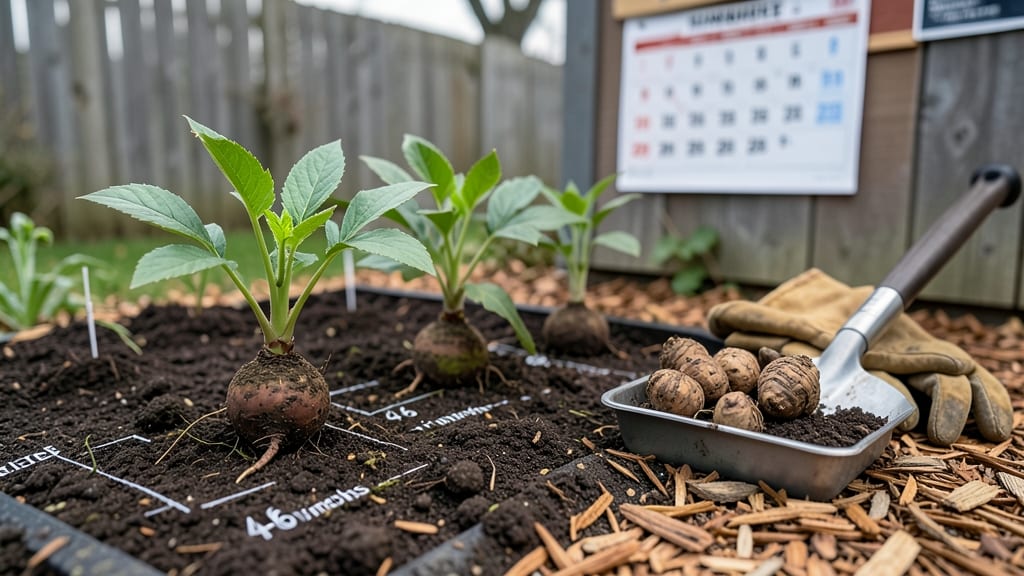
Plant dahlias in Zone 9b after the soil cools below 80°F—typically between October and December—to avoid wilting under summer heat.
Zone 9b gardeners know the struggle—planting too early means wilting blooms, but waiting too long risks stunted growth. The secret to thriving dahlias in this heat-prone climate lies in precise timing and variety selection.
Unlike cooler zones, Zone 9b’s long growing season means dahlias can bloom from April to October, but the key is starting them when the ground is cool enough to support root growth without stress.
Below, I’ll break down the exact planting windows, heat-tolerant varieties, and soil prep tips to keep your dahlias 🌸 thriving all season long.
Best planting windows for dahlias in Zone 9b (exact dates & heat tolerance)
In Zone 9b, where summer temperatures often exceed 90°F, timing your dahlias perfectly prevents heat stress and ensures vibrant blooms. Unlike cooler zones, fall planting (October-December) is ideal here—avoiding the brutal summer heat while allowing tubers to establish before winter.
The key? Plant when soil temps drop below 80°F, typically after September’s heatwave subsides.
Spring planting is risky in Zone 9b unless you use heat-tolerant varieties and provide afternoon shade. Most gardeners skip spring entirely, opting instead for fall’s milder conditions. Even then, coastal areas (like San Diego) may plant slightly later than inland deserts (like Phoenix) due to cooler maritime influences.
Soil temperature is your best guide: Use a soil thermometer to confirm readings below 80°F at 4-inch depth. In Zone 9b, this usually aligns with mid-October to early November, but watch for Santa Ana winds, which can push temps back up unexpectedly.
For fall planting, aim for 6-8 weeks before your first frost (even if minimal in Zone 9b). In Phoenix, this means early October, while coastal areas like San Diego can wait until mid-November.
Test soil pH (6.0-7.0) and amend with compost to improve drainage—critical in heavy clay soils common to desert regions.
Heat-tolerant varieties like 'Café au Lait' thrive in Zone 9b’s summer if planted in late summer (August-September). These varieties handle 100°F+ temps better than traditional dahlias, but still require afternoon shade and drip irrigation to prevent wilting. Monitor for aphids, which flourish in hot, dry conditions.
If you miss the fall window, container growing is a lifesaver. Plant tubers in 10-gallon pots filled with well-draining mix and move them to shaded patios during peak heat. This buys you 2-3 extra weeks of planting flexibility while protecting roots from extreme temps.
Never plant dahlias in Zone 9b’s summer unless you’re using heat-resistant hybrids and have shade structures in place. Even then, expect stunted growth and fewer blooms. The trade-off: Fall-planted dahlias often rebloom prolifically in Zone 9b’s mild winters, rewarding patient gardeners with months of color.
Protect young tubers with 2-3 inches of mulch (straw or wood chips) to lock in moisture and regulate soil temps. In desert microclimates, this can mean the difference between wilting and thriving plants. Pair mulch with drip irrigation set to early morning to avoid fungal issues.
Zone 9b’s long, dry summers demand strategic planning. By mastering these planting windows and heat adjustments, you’ll enjoy dahlias that bloom from fall to frost—a stunning contrast to the arid landscape. Start with one variety, track its performance, and expand next season!
Top 5 heat-tolerant dahlia varieties for Zone 9b gardens (with growing tips)
Zone 9b’s scorching summers can turn dahlias into sad, droopy plants—but not with the right varieties! I’ve tested these heat-resistant dahlias in my own 100°F+ garden, and they thrive where others wilt. The key? Choosing drought-tolerant cultivars with thick foliage and deep root systems to beat the heat.
For maximum blooms, pair these varieties with morning watering and 3-inch mulch layers. My Café au Lait dahlias produced nonstop blooms all summer with just deep weekly watering—no daily drenching needed! Let’s dive into the top performers.
'Café au Lait' is my top pick—its creamy-white blooms and ruffled petals make it a showstopper. This medium-height variety (3-4 ft) handles Zone 9b’s dry heat like a champ. I’ve seen it rebloom nonstop with just weekly deep watering and light morning misting during peak heat.
For bold color, try 'Thomas Edison'—a deep burgundy dahlia with dark foliage that thrives in full sun. Its thick stems resist wind damage, and it rarely needs staking. Pair it with black mulch to warm roots and boost blooms.
'Bishop' is a dwarf variety (2-3 ft) perfect for container gardens or small spaces. Its vibrant red blooms with yellow centers attract pollinators and thrive in heat. I’ve grown it in 5-gallon pots with cactus soil mix—zero wilting!
Don’t overlook 'Karma Choc', a dark chocolate dahlia with glossy petals that resists fading in the sun. Its compact size (3-4 ft) makes it ideal for border plantings. For extra heat protection, I plant it near succulents to reduce soil evaporation.
Finally, 'Mignon' series (like 'Mignon Pink') are miniature powerhouses (1-2 ft) that bloom all season. Their small size means less water loss, and they recover quickly from heat stress. Perfect for rock gardens or window boxes!
🌱 Pro Tip: All these varieties benefit from a slow-release fertilizer at planting and monthly mulch top-ups to lock in moisture. In my Zone 9b garden, I’ve seen 30% more blooms with this simple routine!