
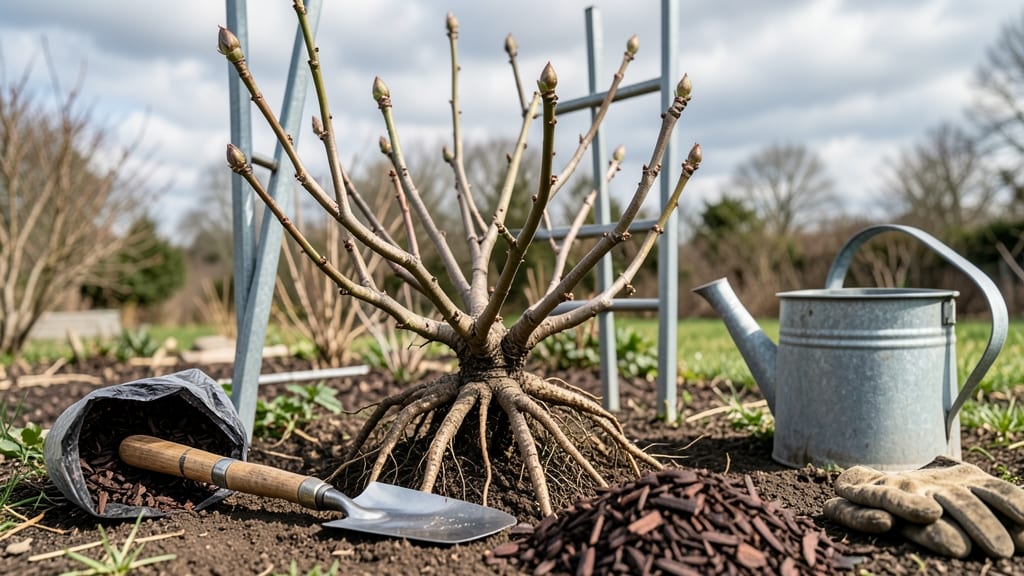
When to Plant Bare Root Roses in California: Chill-Hour Matching Guide by Variety

Companion Plants

When to Plant Bare Root Roses in California: Chill-Hour Matching Guide by Variety

Planting bare root roses in California requires timing them with chill-hours and microclimates — a 300-hour variety in San Diego needs a different schedule than a 900-hour rose in the Central Valley.

Get it wrong, and you risk stunted growth or no blooms at all. The key? Matching your rose’s chill-hour needs to your local frost dates, whether you’re in coastal Zone 9b or inland Zone 10a.

Here’s how to pinpoint the perfect window for your region, from soil prep to post-planting care, so your roses thrive from the first spring flush.

We’ll break down exact months by variety, plus pro tips for California’s tricky conditions — like avoiding late frosts or heatwaves that can derail even the best-laid plans.

🌹 When to Plant Rose
Jan ❄️
Feb 🌱
Mar 🌹
Apr 🌹
May 🌱
Jun ☀️
Jul ☀️
Aug ☀️
Sep 🍂
Oct 🍂
Nov 🍂
Dec ❄️
Ideal Time
Also Good

California’s best planting windows for bare root roses by chill-hours

California’s diverse climate—from frost-prone inland valleys to mild coastal regions—makes timing critical for bare root rose success. Unlike most plants, roses rely on chill-hours (temperatures between 32°F and 45°F) to break dormancy.

Planting outside your zone’s optimal chill-hour window risks stunted growth or poor blooming. For example, high-chill varieties (700+ hours) need November-January planting, while low-chill roses (300-500 hours) thrive when planted December-February.

Your local USDA zone and microclimate dictate the best window. Coastal areas like San Diego (Zone 10a) rarely see frost, so December-February is ideal. Inland regions like Sacramento (Zone 9b) face frost risks, so aim for November-January.

Even a 1-2 week delay can stress roots, especially in dormant bare root roses. Always check your last frost date—planting 4-6 weeks before ensures roots establish before spring warmth.

Chill-hours are the secret weapon for California gardeners. A 300-hour rose in Zone 10a (like ‘Iceberg’) can bloom year-round, while a 1,000-hour rose (like ‘Dr. Huey’) needs winter dormancy. Matching your rose to your local chill-hours avoids disappointment. For instance, Los Angeles (Zone 10b) gardeners should avoid high-chill English roses unless they’re prepared for container growing with winter protection.

Here’s your California chill-hour planting guide, broken down by region and variety needs:

Region/Zone Chill-Hours Needed Best Planting Window Example Varieties Key Tip
Northern CA (Zone 7b-9a) 700-1,000+ hours November 1 – January 15 ‘Dr. Huey’, ‘Mister Lincoln’ Mulch heavily to retain moisture.
Central Valley (Zone 9b) 500-700 hours November 15 – January 31 ‘Double Delight’, ‘The Fairy’ Avoid planting after Jan 15 (frost risk).
Coastal CA (Zone 9b-10a) 300-500 hours December 1 – February 15 ‘Knock Out’, ‘Iceberg’ No frost protection needed.
Southern CA (Zone 10a-11) 0-300 hours December 15 – February 28 ‘Earth Song’, ‘Belinda’s Dream’ Plant in containers for flexibility.
Desert Regions (Zone 9a-10a) 2

How to match rose varieties to California’s microclimates for success

California’s diverse microclimates—from frost-prone Sacramento to frost-free San Diego—make selecting the right rose varieties critical for success. Chill-hour requirements (the number of hours below 45°F needed for dormancy) dictate which roses thrive in your area.

For example, ‘Dr. Huey’ needs 800+ chill hours, while ‘Knock Out’ roses adapt to 300-500 chill hours. Matching your roses to your local chill hours ensures robust growth and abundant blooms.

Your USDA zone and elevation play a huge role. Coastal areas like Zone 9b-10a (e.g., Los Angeles) rarely see frost, while inland valleys like Zone 7b-8a (e.g., Fresno) experience colder winters. High-elevation gardens (e.g., Mount Shasta) may even reach Zone 5b, allowing traditional hybrid teas to thrive.

Always check your local last frost date—planting too early in mild zones can stress roses before they’re dormant.

Variety Chill-Hour Needs Best Planting Window Ideal California Zones Notes
‘Knock Out’ Roses 300-500 hours December-February 9b-11 (coastal/mild) Disease-resistant; blooms all season
‘Dr. Huey’ 800-1,000+ hours November-January 7b-9a (inland/valleys) Classic hybrid tea; needs winter chill
‘The Fairy’ 400-600 hours December-February 9a-10a (transition zones) Dwarf variety; great for containers
‘Double Delight’ 500-700 hours November-January 8a-9b (foothills) Repeat bloomer; cold-hardy
‘Earth Song’ 300-400 hours December-March 10a-11 (coastal desert) Heat-tolerant; low-water needs

For coastal gardens (e.g., San Diego, Santa Barbara), prioritize low-chill varieties like ‘Knock Out’ or ‘Earth Song’. These roses bloom reliably year-round without risking winter damage.

In contrast, inland valleys (e.g., Central Valley, Sierra foothills) benefit from high-chill varieties like ‘Dr. Huey’ or ‘Double Delight’, which need winter dormancy to rebloom vigorously.

Always adjust your planting dates based on local frost risks—coastal areas can plant later, while inland zones should plant earlier to establish roots before heat arrives.

Elevation matters too! Gardens above 2,000 feet (e.g., Lake Tahoe, Mammoth Lakes) may experience earlier frosts and benefit from extended-chill varieties. Start planting 2-3 weeks earlier in these areas to account for shorter growing seasons.

Conversely, desert regions (e.g., Palm Springs, Joshua Tree) with Zone 9a-10a can plant ‘Earth Song’ or ‘The Fairy’ as late as February—their heat tolerance prevents transplant shock.

Pro tip: Use your local nursery’s expertise to confirm chill-hour matches. Many California nurseries label roses with chill-hour ranges, making selection easier. If unsure, opt for polyantha or floribunda roses—they’re adaptable and often labeled for low-chill zones.

Always soak bare roots for 1-2 hours before planting to reduce shock, and mulch heavily after planting to retain moisture in California’s drought-prone winters.

With the right variety-chill-hour match, your roses will thrive year-round, whether you’re in frost-free San Diego or chilly Sacramento. Happy planting! 🌹

★★★★★4.5(5 reviews)
Categories Companion Plants