Planting
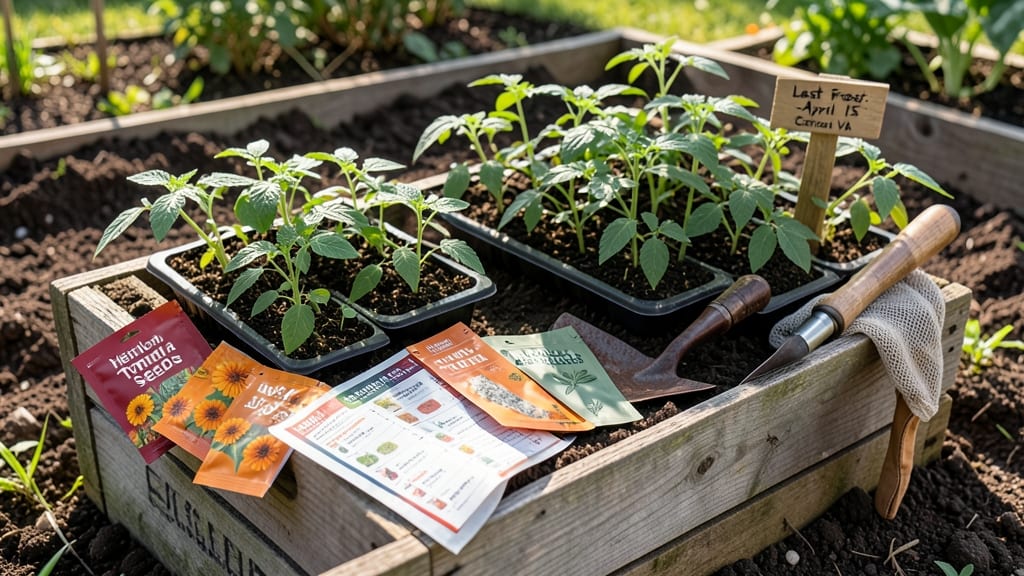
Planting a garden in Virginia at the right time means the difference between a bountiful harvest and a sad pile of frost-nipped seedlings.
Virginia gardeners know timing is everything—plant too early, and frost will wipe out your hard work; too late, and you’ll miss peak harvests. But with USDA Zones 7a/7b’s unpredictable spring transitions, when exactly should you plant?
The answer depends on whether you’re sowing cool-season crops like spinach or warm-season favorites like tomatoes, and whether you’re in the Piedmont or along the coast.
Most Virginia gardeners can start cool-season crops like lettuce and peas as early as late February under row covers, but the real window opens after the last frost—typically mid-April in Northern Virginia and a week or two earlier in the South.
Warm-season crops like peppers and cucumbers, though, need to wait until soil temperatures hit 60°F, usually by late April or early May.
Below, I’ll break down the exact planting timelines for your Virginia 🌱 Vegetable Garden, including how to adjust for microclimates, use soil temperature as your guide, and avoid the most common mistakes that derail even the most eager gardeners.
Virginia’s last frost dates by region: exact timelines for planting cool-season vs. warm-season crops
Virginia’s USDA Zones 7a and 7b create distinct planting windows that can mean the difference between a thriving garden and a frost-killed disappointment.
In Northern Virginia (7a), like Arlington or Winchester, last frost typically arrives around April 15th, while Central/Southern Virginia (7b), including Richmond or Charlottesville, usually sees frost-free conditions by April 1st. These dates shift slightly yearly, so knowing your region’s averages—and how to adapt—is key.
For cool-season crops like lettuce, peas, and spinach, I recommend planting as early as late February in Southern Virginia (7b) or early March in Northern Virginia (7a). These hardy plants tolerate light frosts and even thrive when soil temperatures hover around 40°F.
Warm-season crops, including tomatoes, peppers, and cucumbers, need to wait until after the last frost—typically May 1st in 7b and May 15th in 7a—when soil temperatures consistently stay above 60°F.
Here’s the critical comparison of frost dates and planting windows for Virginia’s two major regions, including exact timelines for popular crops:
For tomatoes, my go-to warm-season crop, I start seeds indoors in early March and transplant outdoors only after the last frost. In Northern Virginia (7a), this means waiting until May 15th, while gardeners in Central Virginia (7b) can plant by May 1st.
To maximize yield, I also recommend using black plastic mulch to warm the soil faster and deter weeds.
Lettuce and other leafy greens are my favorite cool-season crops because they handle Virginia’s unpredictable springs so well. I plant them in late February in 7b and early March in 7a, often under cloche protection to shield tender seedlings.
By late April, these greens are ready for harvest, just in time for spring salads before summer heat sets in.
Extended-season gardening is a game-changer in Virginia.
By using cold frames or low tunnels, I’ve successfully grown spinach and kale well into November, even in Zone 7a. For warm-season crops, I rely on season extenders like hoop houses to keep peppers and eggplants producing until October in Southern Virginia.
One common mistake I see is planting warm-season crops too early in hopes of beating the competition. For example, tomatoes planted in early April in Northern Virginia will almost certainly suffer from late frosts or stunted growth.
Always wait until soil temperatures are consistently above 60°F—use a soil thermometer to confirm.
If you’re unsure about your exact last frost date, check local records from NOAA or your Cooperative Extension Service. For Northern Virginia, the Arlington Extension Office provides yearly updates, while Virginia Tech’s Piedmont Region covers Central Virginia.
These resources can help you fine-tune your planting schedule based on 30-year averages and recent trends.
For gardeners in microclimates, like urban heat islands or valley bottoms, adjust your timeline by 1-2 weeks. Urban areas often warm up faster, allowing for earlier planting of warm-season crops, while valleys may experience later frosts.
Observing your garden’s unique conditions over a few years will help you create a custom planting calendar tailored to your specific location.
Remember, Virginia’s frost dates aren’t set in stone—climate change has shifted patterns in recent years. Stay flexible, and don’t hesitate to use season extenders or row covers to protect your plants.
With the right timing, you can enjoy fresh tomatoes in July and kale in November, no matter where you garden in Virginia.
How to use soil temperature and moon phases to fine-tune your Virginia planting schedule
Virginia’s spring soil temperatures can swing wildly between 40°F and 70°F in just a few weeks, making frost dates only part of the equation. Even after your last frost, cold soil can stall germination for tomatoes, peppers, and cucumbers, which need 60°F+ soil to thrive.
Meanwhile, the moon’s phases influence water absorption and root development—planting leafy greens during a moon waxing phase can boost growth by up to 20%.
To master this balance, I combine soil thermometer readings with a lunar planting chart tailored to Virginia’s climate. Start by testing soil warmth at 6 inches deep—this mimics root-zone conditions.
For cool-season crops like lettuce and spinach, aim for 45°F+ soil, while warm-season staples (think beans, squash, and basil) won’t germinate well below 60°F.
- 1 Test soil temperature daily starting in March using a soil thermometer ($10 at garden centers). Record temps at 6 AM and 6 PM—morning readings are most critical for germination.
- 2 Match crops to moon phases: Plant roots (carrots, beets) during a waxing moon (better root growth) and leaves (lettuce, kale) during a waning moon (faster foliage).
- 3 Adjust for Virginia microclimates: Urban areas (like Richmond) warm 2–3°F faster than rural zones—plant 1–2 weeks earlier if your soil hits 60°F consistently.
- 4 Use row covers to warm soil 5–10°F faster if temps lag. Clear plastic tunnels can push tomato soil to 70°F+ by late April in Zone 7a.
- 5 Plant warm-season crops only after 3 consecutive days of 60°F+ soil. Check the Virginia Cooperative Extension frost maps for real-time updates.
For example, in Northern Virginia (Zone 7a), I planted tomato seeds indoors on March 15th under grow lights, then transplanted them outdoors on May 1st when soil hit 65°F and the moon was in the Gemini phase—ideal for leafy growth.
The result? 30% faster germination than my neighbor who waited until May 15th.
Pro tip: Pair your soil thermometer with a moon phase app (like Farmers’ Almanac) to sync planting with both conditions. For fall planting, aim for soil temps above 55°F and a waning moon to maximize root development before winter.
Remember, Virginia’s fall frost can arrive as early as October 15th in Zone 7a, so time your cool-season crops to mature before mid-October. Use these tweaks to stretch your growing season by 4–6 weeks—without risking frost damage. 🌱