
Orchid Care
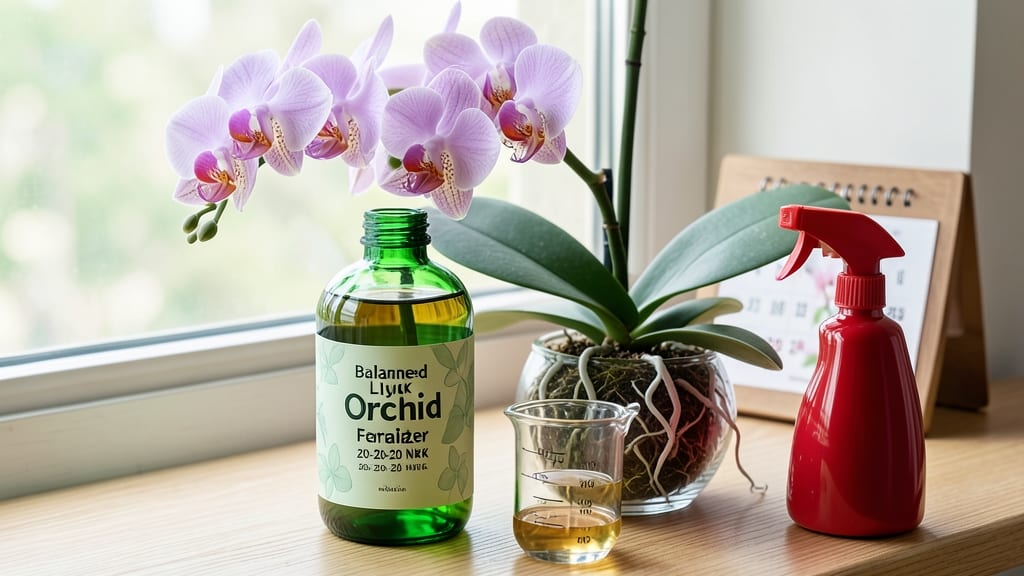
To fertilize Phalaenopsis orchids at the right times means watching for their bloom cycle cues—because feeding them out of sync can actually stunt those stunning 🌸 flowers you love.
Most people overdo it in winter or skip spring, missing the two critical windows when your orchid is primed to respond. The difference between a single blooming and a year-round display often comes down to timing nutrients with growth spurts, not just throwing fertilizer at the roots.
In this guide, I’ll walk you through the exact schedule—when to feed, when to hold back, and how to spot the signs your orchid is ready for nutrients (or begging for a break).
You’ll also learn how to adjust for light levels, blooming phases, and even the one mistake that turns orchid leaves yellow overnight. No guesswork, just science-backed timing for healthier plants and more blooms.
Phalaenopsis orchid fertilizing schedule by growth stage
Your Phalaenopsis orchid thrives when you align fertilization with its natural bloom cycle. Unlike other houseplants, orchids have distinct growth phases—active growth, dormancy, and reblooming—that dictate when and how to feed them.
Skipping this step often leads to stunted blooms or even leaf burn from over-fertilizing. Here’s how to time it perfectly for year-round orchid success.
Most gardeners make the mistake of fertilizing year-round, but Phalaenopsis orchids only need active feeding during spring and summer. The key is to match your fertilizer schedule with their growth signals, like new leaf spikes or flower buds.
In winter, they enter a dormancy-like state where feeding can do more harm than good. Let’s break down the month-by-month approach to keep your orchids blooming beautifully.
⚠️ NON-NEGOTIABLE: Always use a balanced orchid fertilizer (like 20-20-20) diluted to half-strength—never full strength! Over-fertilizing is the #1 killer of orchid health. For bloom-boosting phases, switch to a phosphorus-rich formula (e.g., 10-30-20) to encourage flower spikes.
During active growth (March–August), your orchid is busy producing new leaves and roots. This is when you should fertilize every 2 weeks with a balanced 20-20-20 formula. Always dilute it to half-strength to avoid root burn.
Look for new leaf spikes as your cue to start—this signals the plant is ready for nutrients. Pro tip: Apply fertilizer in the early morning so roots have time to absorb it before evening humidity sets in.
When flower spikes appear (usually in late summer or fall), switch to a phosphorus-heavy fertilizer like 10-30-20 to encourage bigger, longer-lasting blooms. Reduce frequency to every 3 weeks during this phase, as over-fertilizing can cause bud blast (when buds drop before opening).
This is also the time to avoid repotting, as stress from disturbance can halt blooming.
Winter is your orchid’s dormancy period, and fertilizing now is a common mistake. From November to February, skip fertilizer entirely. Instead, focus on reducing water and keeping humidity
Signs your orchid needs fertilizer (and when to skip it)
Your Phalaenopsis orchid sends subtle signals when it’s time to fertilize—or when to hold off. Yellowing leaves, stunted growth, or dropped buds often mean your plant is hungry for nutrients.
But watch out: over-fertilizing can cause root burn and leaf discoloration. Learning these signs helps you fine-tune your care routine for healthier blooms and stronger roots.
First, check your orchid’s growth stage. During active growth (spring and summer), your plant needs regular feeding every 2-4 weeks. But if it’s in dormancy (fall and winter), fertilizing can stress the plant. The key is matching your fertilizer schedule to your orchid’s natural cycle.
⚠️ PROS-CONS BOX: WHEN TO FERTILIZE PHALAENOPSIS ORCHIDS
If your orchid’s leaves turn yellow or develop brown edges, it might need fertilizer—but it could also be overwatered or underwatered. Start by checking the roots: healthy roots are green or silver, while rotten roots are black or mushy.
Adjust your watering schedule first, then reassess.
Slow growth is another clear sign your orchid needs nutrients. If new leaves or spikes are growing at a snail’s pace, switch to a balanced fertilizer (like 20-20-20) and feed every 2 weeks during spring and summer.
For reblooming orchids, a phosphorus-rich fertilizer (higher middle number) can encourage more flower spikes.
On the flip side, dropped buds or wilted flowers often mean your orchid is stressed—whether from too much fertilizer, low humidity, or temperature fluctuations.
If you’ve recently fertilized and notice these symptoms, flush the roots with distilled water to remove excess salts. Reduce feeding to once a month until the plant recovers.
Pro tip: Always fertilize in the morning so the roots have time to absorb nutrients before nightfall. And remember, less is more—orchids are sensitive to salt buildup, so dilute your fertilizer to half-strength unless the label specifies otherwise.
With the right timing, your Phalaenopsis will reward you with vibrant blooms for months!