
How To
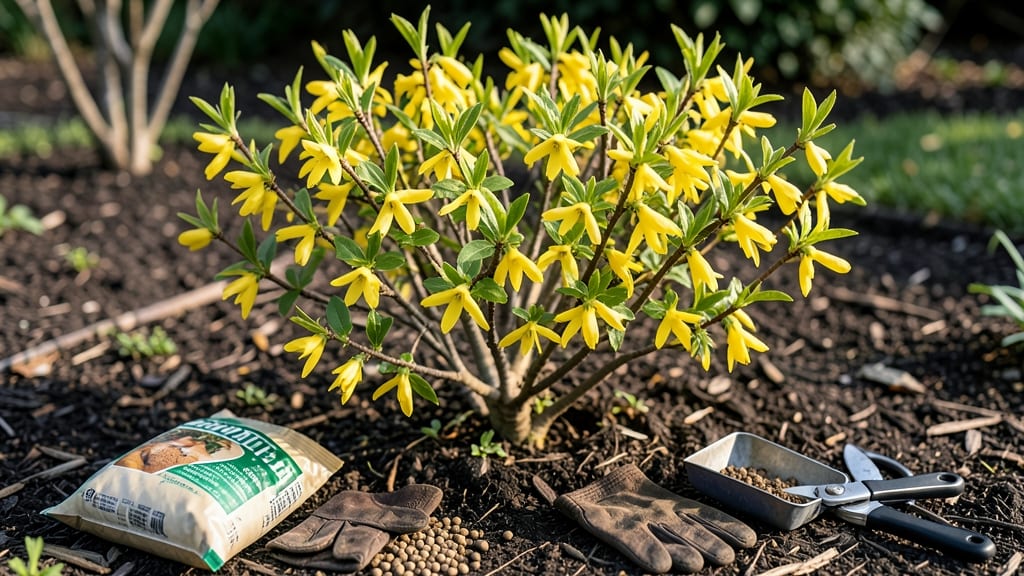
Fertilizing forsythia at the right time—early spring and late fall—sets the stage for showstopping blooms and healthier growth all season.
Picture this: your 🌸 forsythia bursts into vibrant yellow in late winter, but the next year’s flowers are sparse or weak. That’s often a sign you missed the critical fertilization windows.
Timing isn’t just about when—it’s about giving your shrub the nutrients it needs before it starts pushing new growth.
Most gardeners focus only on spring feeding, but a second boost in fall can strengthen roots for winter resilience. I’ll walk you through the exact months to fertilize, the best types of fertilizer for your forsythia, and how to avoid common mistakes that leave your shrub looking lackluster.
By the end, you’ll know not just when to fertilize, but how to do it for maximum impact—so your forsythia becomes the star of your landscape every spring.
Spring fertilizing schedule for forsythia: the critical 2-Week window
Your forsythia’s bold yellow blooms start with a two-week window in late winter/early spring—this is when roots wake up and prepare for the growing season. Missing this timing can mean smaller flowers or even no blooms at all.
The key is feeding your shrub when it’s most hungry but before buds fully open.
Think of spring fertilization as a growth jumpstart. Forsythia thrives when you give it nutrients right after dormancy but before new leaves appear. This 2-week window typically falls between mid-February and early March in most USDA zones (5-8), aligning with when soil temperatures rise above 40°F.
Timing this correctly ensures your shrub has energy for both leaf production and flowering.
Before you even think about fertilizer, prep your soil. Forsythia prefers well-draining, slightly acidic soil (pH 6.0-7.0).
Start by raking away old mulch and testing your soil’s pH. If it’s too alkaline, mix in sulfur or peat moss to lower the pH. For compacted soil, work in 2-3 inches of compost to improve aeration and nutrient availability.
Now for the fertilizer showdown: organic vs. synthetic. Both work, but organic options (like composted manure or bone meal) release nutrients slowly, feeding roots for weeks. Synthetic fertilizers (like 10-10-10) provide an immediate nutrient boost but require more frequent applications.
For most gardeners, a half-and-half approach works best—start with organic matter, then top-dress with synthetic in early spring.
Here’s how to apply it right: Spread ½ cup of balanced fertilizer (like 10-10-10) around the drip line (where branches extend), not the trunk. Water deeply to activate nutrients and prevent root burn.
For organic options, mix 2-3 inches of compost into the top 6 inches of soil instead. Avoid getting fertilizer on leaves—this can cause leaf scorch.
Watch for these over-fertilizing red flags: Yellowing leaves, leaf drop, or excessive new growth with few flowers. These signs mean you’ve given your forsythia too much nitrogen.
If this happens, flush the soil with water and hold off on fertilizing for 6-8 weeks. Your shrub needs a balanced diet, not a fast-food binge of nutrients.
Pro tip: Pair fertilization with pruning. After feeding in spring, wait until right after blooming (late May/June) to prune last year’s stems. This encourages bushier growth and more flowers next year. Just remember—never prune in fall or winter, as this removes next year’s flower buds.
For container-grown forsythia, cut fertilizer amounts in half since pots have limited soil volume. Also, water more frequently to prevent nutrient buildup. If your forsythia is younger than 3 years old, skip spring fertilization entirely—focus on establishing roots instead.
Older shrubs (5+ years) can handle a second light feeding in early summer if they look hungry.
Timing your forsythia’s spring feed isn’t just about blooms—it’s about long-term health. When done right, your shrub will reward you with vibrant yellow cascades for decades. Mark your calendar for that 2-week window in early spring, and your forsythia will thank you with show-stopping color every year. 🌸
Fall fertilization secrets: why most gardeners miss this second boost
While most gardeners focus on spring feeding for their forsythia, a well-timed fall fertilization can work wonders for next year’s blooms. This often-overlooked step helps strengthen roots before winter dormancy, ensuring your shrub wakes up ready to shine in late winter.
The key? A slow-release fertilizer applied in the right window—typically 6-8 weeks before your first frost.
Fall feeding isn’t just about nitrogen—it’s about giving your forsythia a micronutrient boost too. Plants like iron, zinc, and manganese help them store energy for spring growth.
Without these, your shrub might struggle to produce vibrant yellow blooms or develop weak stems. Think of it as a pre-winter vitamin shot for your forsythia’s health.
Here’s the catch: not all climates benefit from fall fertilization. In warmer zones (USDA 8+), where frosts are rare, a light feeding can even encourage late-season growth.
But in colder regions, focus on root protection rather than new growth. The right approach depends on your local frost dates and soil conditions.
Fall Fertilization Pros & Cons
✅ PROS
- Stronger roots for spring
- Better bloom quality next year
- Slow-release feeds gradually
- Micronutrients boost winter storage
❌ CONS
- Risk of late growth in warm climates
- Over-fertilizing can harm roots
- Wrong timing reduces winter hardiness
- Not needed in drought-prone areas
For slow-release options, look for fertilizers labeled for shrubs and flowering plants, like 10-10-10 or 12-12-12 blends. Apply half the recommended dose in early fall, then top-dress with compost or aged manure to improve soil structure.
Avoid synthetic fertilizers high in nitrogen—they can encourage tender growth that won’t survive winter.
In cooler climates (USDA 6 or below), time your fall feeding for late September to early October. This gives roots time to absorb nutrients before the ground freezes.
Water thoroughly after applying fertilizer to help it penetrate the soil. For warmer climates, a light feeding in early November can still benefit established shrubs without risking frost damage.
Don’t forget to mulch after fertilizing! A 2-3 inch layer of organic mulch (like shredded bark or leaves) insulates roots and retains moisture. This simple step amplifies the benefits of your fall feeding, ensuring your forsythia enters dormancy with a full “gas tank” for next spring’s spectacular display.
🌿