
Trees
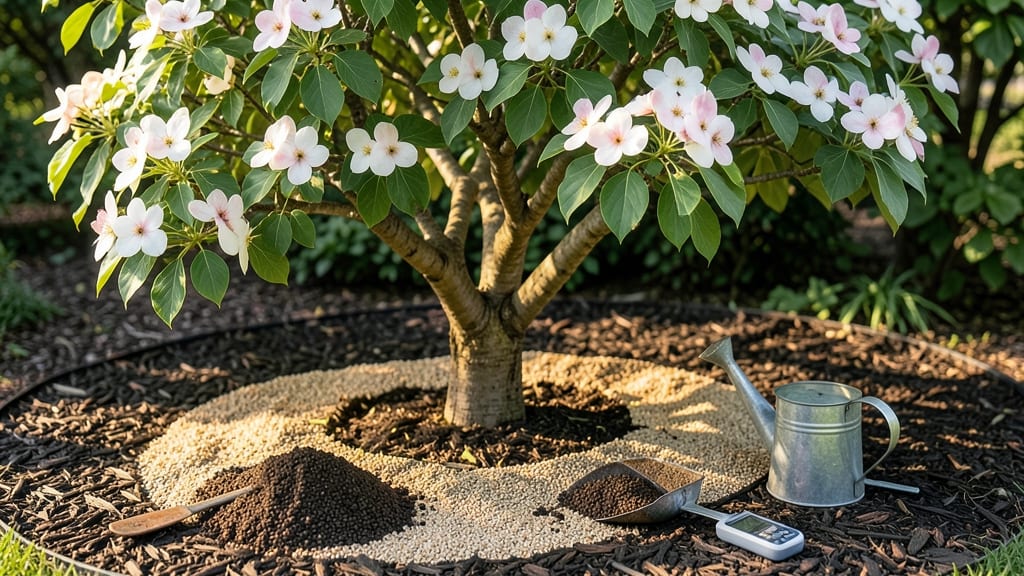
Fertilizing flowering trees at the right time—just after blooms fade but before summer heat—can double your blooms next season 🌸.
Struggling to get your flowering trees to burst into vibrant, long-lasting blooms? The secret often lies in timing—fertilizing at the wrong time can actually reduce flowers while the right approach transforms your garden into a showstopper.
In Zone 6a, late spring is the sweet spot: after petals drop but before the heat of summer. This gives roots time to absorb nutrients without stressing the tree, setting it up for a bigger, better show next year.
Below, I’ll break down the exact timing, the best fertilizers for blooms, and the three mistakes that kill flowering trees—so you can skip the guesswork and get results.
Best late spring fertilization timeline for flowering trees
Timing your late spring fertilization is the game-changer for flowering trees like azaleas, magnolias, and dogwoods. Most gardeners mistakenly fertilize too early, which can actually reduce blooms by encouraging leafy growth over flowers.
The ideal window opens after peak blooms fade but before summer heat sets in—typically late May to early June in most USDA zones.
This 6-week window gives your trees time to recover from flowering while still benefiting from nutrients before the stress of summer. For example, my dogwood always blooms in early May, so I wait until mid-June to fertilize—just as new leaves fully mature.
The key is avoiding nutrient overload when roots are already working hard to support blooms and foliage.
Here’s why late spring works best: After flowering, trees have already allocated energy to bud formation and blooms. A light feeding now supports root growth and next year’s flower buds without overstimulating weak, heat-stressed foliage. Think of it as giving your tree a post-bloom energy boost for long-term vigor.
For azaleas and rhododendrons, I always switch to an acid-loving fertilizer (like 16-4-8) after blooms fade. These trees thrive in slightly acidic soil (pH 4.5-6.0), and their roots are sensitive to alkaline conditions.
Test your soil first—if pH is above 6.5, amend with sulfur or peat moss before fertilizing.
My magnolias get a balanced 10-10-10 fertilizer in early June, timed with their new leaf flush. The goal here is to support both root development and next year’s large, fragrant blooms.
I avoid high-nitrogen fertilizers, which can lead to excessive leaf growth at the expense of flowers. Instead, I focus on phosphorus and potassium to strengthen the tree’s structural integrity.
Dogwoods are particularly sensitive to summer stress, so I use a low-nitrogen formula (5-10-10) in mid-June. The secret is to fertilize when daytime temps consistently exceed 75°F—this signals the tree to shift energy from blooms to root and stem growth. I also water deeply the day before applying fertilizer to ensure nutrients reach the root zone efficiently.
One common mistake is fertilizing too late in summer, which can stimulate tender new growth that’s vulnerable to fall frosts or pests. I stop fertilizing by mid-July to give my trees time to harden off before winter.
For container-grown flowering trees, reduce fertilizer amounts by half since roots are more confined and prone to nutrient burn.
Pro tip: Pair your late spring feeding with a 2-3 inch layer of mulch. This retains moisture, regulates soil temperature, and slowly releases nutrients as it breaks down.
I use pine bark mulch for acid-loving trees and hardwood mulch for others. Just keep mulch 3-4 inches away from the trunk to prevent rot.
Watch for these post-fertilization signs: Healthy new leaves should appear within 3-4 weeks, and roots will grow more vigorously. If you see yellowing leaves or leaf scorch, you’ve overdone it—flush the soil with water and reduce future applications.
For organic options, try composted manure or worm castings mixed into the top 6 inches of soil.
Remember, the best fertilization schedule is one that aligns with your tree’s natural growth cycle. By feeding after blooms fade, you’re essentially giving your flowering trees a second wind to prepare for next year’s spectacular show—without the stress of summer heat. Your future blooms will thank you!
How to choose the right fertilizer for flowering trees
Selecting the perfect fertilizer for flowering trees isn't just about throwing down any old bag of nutrients—it's about understanding how phosphorus and potassium directly fuel bloom production. Too much nitrogen?
Your tree will focus on leaves instead of flowers. Too little phosphorus? Those showstopping blooms will stay small and sparse. Let's break down how to choose wisely.
First, consider the NPK ratio—the three numbers on fertilizer bags. For flowering trees, aim for a balanced 10-10-10 or a low-nitrogen, high-phosphorus formula like 5-10-10. The middle number (phosphorus) is your bloom booster, while the last number (potassium) strengthens root health and disease resistance.
Organic options like fish emulsion or bone meal provide phosphorus naturally, while synthetic blends offer precise control.
Now, let's compare your options with this quick pros-cons guide to help you decide:
Organic Fertilizers
- Improves soil health long-term
- Slow-release nutrients reduce burn risk
- Enhances microbe activity in soil
- Slower results than synthetics
- May contain weeds/seeds (compost)
- Higher cost per nutrient unit
Synthetic Fertilizers
- Precise NPK ratios for blooms
- Fast-acting for quick results
- No weed seeds or pathogens
- Can burn roots if overapplied
- Requires frequent reapplication
- May deplete soil over time
Hybrid Options
- Balances speed and soil health
- Often slow-release formulas
- Good for transition periods
For azaleas and rhododendrons, I recommend organic options like cottonseed meal (high in nitrogen but gentle) or greensand (potassium-rich). Meanwhile, magnolias and crape myrtles thrive with synthetic 10-10-10 blends applied in early spring.
Always pair your fertilizer with a 2-3 inch layer of mulch to lock in moisture and nutrients.
Pro tip: Test your soil first! A pH between 6.0-7.0 is ideal for most flowering trees. If your soil is too acidic (common with azaleas), add lime before fertilizing.
For alkaline soils, sulfur or peat moss can help. The right pH + fertilizer combo is what turns ho-hum blooms into garden-worthy masterpieces.
Remember, less is often more with flowering trees. Over-fertilizing can lead to leafy growth at the expense of flowers, so start with half the recommended dose and monitor your tree's response. With the right fertilizer and timing, you'll be rewarded with bigger, brighter blooms year after year. 🌸