
Plants
Planting tomatoes in Pennsylvania at the right time means the difference between a bountiful harvest and a frost-killed disappointment.
Pennsylvania’s unpredictable spring weather can turn a thriving tomato harvest into a frost-killed disappointment—unless you plant at the exact right time.
Timing isn’t just about the calendar; it’s about avoiding late frosts, maximizing heat tolerance, and aligning with your specific growing zone.
In this guide, I’ll break down the ideal planting windows for Pennsylvania’s zones 5-7, share proven strategies to hedge against late frosts, and reveal the three biggest mistakes gardeners make when timing their tomato plantings.
Pennsylvania planting zones: exact tomato transplant deadlines by region
Pennsylvania spans USDA Hardiness Zones 4 through 7, meaning your tomato transplant deadlines can vary by up to 3 weeks depending on where you live. The Keystone State’s microclimates—like warmer valleys versus cooler mountain areas—make these deadlines especially critical.
For example, Pittsburgh (Zone 6a) typically has a later last-frost date than Philadelphia (Zone 7a), but both face unpredictable spring swings.
To pinpoint your exact window, I recommend checking the NOAA Climate Data for your county or using Penn State Extension’s local frost date maps. These resources account for historical averages while giving you real-time adjustments.
For instance, in Zone 5 (central PA), gardeners often wait until May 10-20 for transplants, while Zone 7 (southeastern PA) gardeners can start as early as April 15—but always verify with your personal frost-free date.
Here’s the non-negotiable rule: Never transplant tomatoes outdoors until soil temperatures hit at least 60°F and nighttime temps stay above 50°F consistently. Cold soil stunts root growth, leaving plants vulnerable to blossom-end rot and fungal diseases.
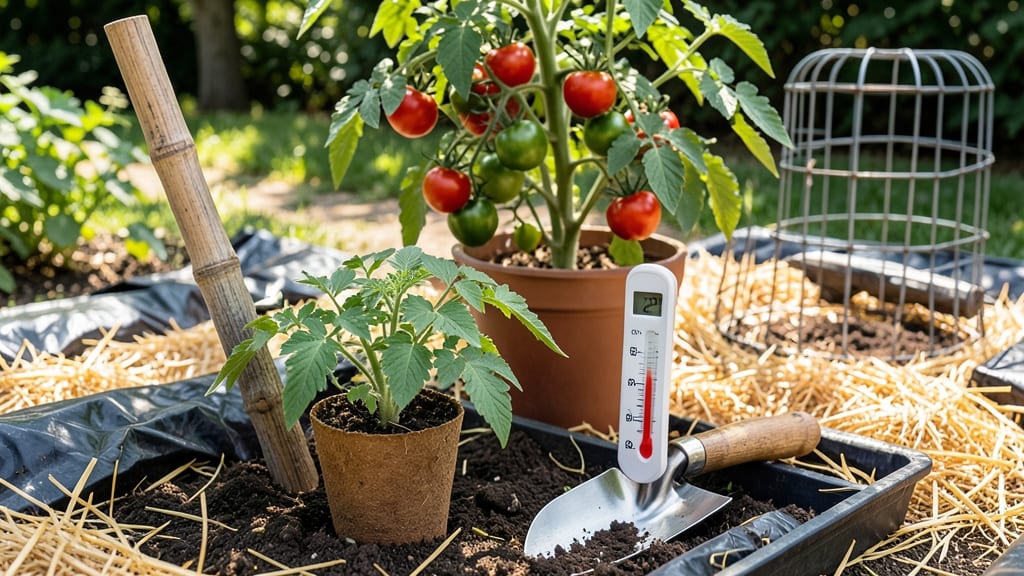
Use a soil thermometer to confirm—most garden centers sell them for under $15.
Direct sowing (planting seeds outdoors) gives you a 2-week buffer compared to transplants, since seedlings can handle slightly cooler soil. However, seeds need 70°F soil to germinate reliably.
In Zone 4 (northwest PA), this often means waiting until late May for direct sowing, while Zone 6 (statewide average) allows for mid-April starts with row covers.
Microclimates in Pennsylvania can shift your transplant window by up to 2 weeks. For example, valleys and riverbanks (like the Lehigh Valley) often warm up faster than hilly or forested areas.
To account for this, I recommend planting a test row of heat-loving basil in early April—if it thrives, your tomatoes are likely safe to follow. Conversely, if your neighbor’s garden (even just a mile away) has different frost patterns, don’t assume your timeline matches theirs.
Pro tip: Subscribe to your local CoCoRaHS weather station alerts or join Pennsylvania gardening groups on Facebook. These communities often post real-time frost warnings
How to adjust tomato planting for Pennsylvania’s unpredictable weather patterns
Pennsylvania’s unpredictable spring frosts can devastate tomato plants if you’re not prepared. Even in zone 5-7, late frosts after April 15th are common—especially in valleys like Pittsburgh or State College.
The key isn’t just planting at the "right time" but hedging against risks with smart strategies. I’ve learned this the hard way after watching my ‘Better Boy’ plants wilt overnight in 2022.
Most gardeners focus on last-frost dates, but true success comes from a 3-step risk assessment: 1) choosing frost-tolerant varieties, 2) using protective gear, and 3) extending your growing season.
In zone 4-5 (north PA), this means starting 6-8 weeks indoors by March 1st and having backup plans for row covers or cold frames. Even in zone 6-7, a sudden cold snap can turn your garden into an icebox.
Numbered Highlights: Your PA Tomato Planting Survival Guide
Plant ‘Celebrity’ or ‘Mountain Merit’ 6-8 weeks indoors by March 1st (zones 4-5). These handle 45°F starts better than heirlooms.
After last frost, cover seedlings with floating row covers until plants hit 12 inches tall. Removes need for cold frames in zones 6-7.
Lay black plastic 2 weeks before transplanting to warm soil to 60°F+. Adds 2-3 weeks of growing time in cool zones.
Let me share what happened to my neighbor Mark in Erie (zone 5). He planted ‘Early Girl’ tomatoes on May 1st—right after his local frost advisory lifted. By May 10th, a 32°F night hit, and his entire crop turned to mush.
The fix? He now starts ‘Stupice’ tomatoes indoors by April 1st and uses mini hoop tunnels until June 1st. His yield doubled in 2023.
For zone 6-7 gardeners (like those in Philadelphia or Lancaster), the window is wider, but don’t get complacent. Even here, late-May frosts occur every 5-7 years. My ‘Sungold’ cherry tomatoes in 2021 survived until July 1st because I planted on May 20th and used straw mulch to insulate roots.
The secret? Monitor NOAA frost predictions and have row covers ready.
Pro tip: If you’re in zone 4, consider container growing with 5-gallon pots. You can move them to garages or porches at night if frost is forecasted.
I tested this with ‘Tiny Tim’ tomatoes last year—saved my entire crop by wheeling pots indoors during a 28°F snap in April.
Remember, soil temperature matters more than air temperature. Use a soil thermometer—tomatoes need 60°F+ soil to thrive. If your ground is still 50°F in May, wait.
I’ve seen gardeners rush planting and end up with blossom-end rot from slow root growth in cold soil. Patience here means bigger, healthier plants later.