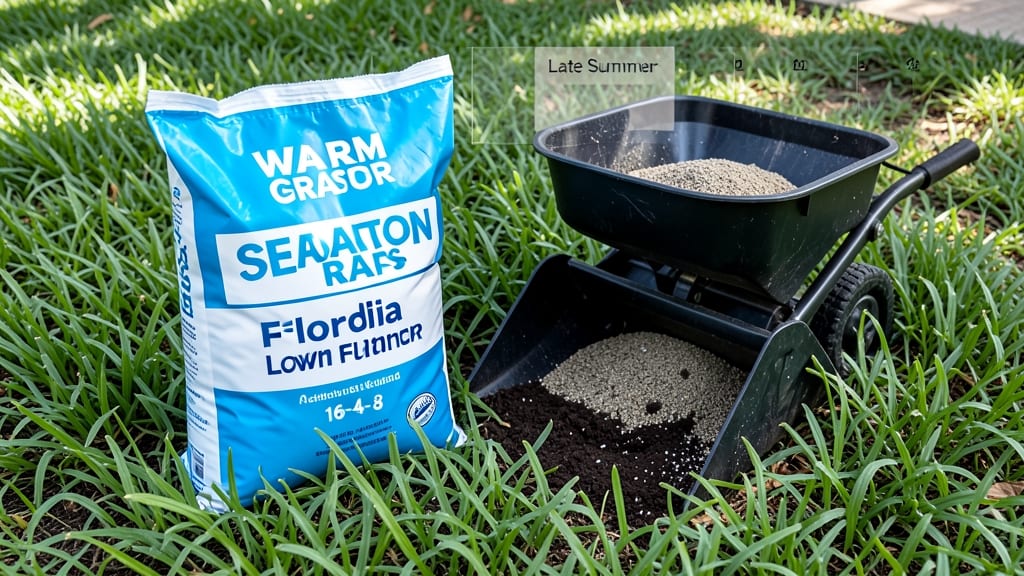
Fertilizing your Florida lawn at the right time can mean the difference between a vibrant green carpet and a patchy, struggling yard 🌱.
Florida’s scorching summers and unpredictable rain can turn your lawn care routine into a guessing game—especially when it comes to fertilizing. Get the timing wrong, and you risk burning your grass or wasting money on ineffective treatments.
But master the schedule, and you’ll unlock a lush, green lawn that stands out in your neighborhood.
In this guide, I’ll break down the best months to fertilize your Florida lawn, whether you’re dealing with warm-season grasses like St. Augustine or cool-season types like ryegrass.
You’ll learn how to avoid the costly mistakes most homeowners make—like fertilizing during droughts or peak summer heat—and when a light touch is better than a heavy hand.
Ready to transform your lawn into the envy of the neighborhood? Let’s dive into the science-backed schedule that keeps Florida grass thriving year-round, without the burn or the waste.
🧪
Synthetic
Fast-acting chemical fertilizer
✓ Quick results
✓ Precise NPK
✗ Can burn plants
BEST
🍃
Organic
Natural, slow-release nutrients
✓ Soil health
✓ Safe for edibles
✓ Long-lasting
⏰
Slow-Release
Feeds over 2-3 months
✓ Less frequent
✓ Even feeding
✗ Higher cost
Florida’s ideal fertilizing schedule by season: month-by-month breakdown
Fertilizing your Florida lawn isn’t a one-size-fits-all task—it’s a seasonal science that balances grass type, climate zones, and weather patterns. Cool-season grasses like tall fescue thrive in mild temperatures, while warm-season types like St. Augustinegrass dominate when heat peaks.
Florida’s North vs. Central/South regions also shift timing by 1-2 months, so knowing your zone is critical.
Timing matters more than type. Applying fertilizer during peak summer heat (June-August) stresses grass, while fall and spring feedings align with natural growth spurts. Organic fertilizers release nutrients slower, while synthetic blends work faster—choose based on your lawn’s needs and your schedule.
Pre-emergent herbicides also fit into this timeline, typically applied in late winter to block weeds before grass awakens.
Here’s your month-by-month breakdown, tailored to Florida’s unique climate zones and grass types:
| Month |
North Florida (Zones 8a-9a) |
Central/South Florida (Zones 9b-11) |
Grass Type Focus |
Key Task |
| January |
Light feed (organic) |
Light feed (organic) |
Cool-season transition |
Pre-emergent herbicide |
| February |
Full feed (synthetic) |
Light feed (organic) |
Cool-season peak |
Soil test & amend |
| March |
Full feed (warm-season switch) |
Full feed (synthetic) |
Warm-season prep |
Transition fertilizer |
| April |
Light feed (avoid summer stress) |
Light feed (organic) |
Warm-season growth |
Mow high (3-4") |
| May-July |
SKIP (peak summer) |
SKIP (peak summer) |
Dormancy phase |
Deep watering only |
| August |
Light feed (organic) |
Light feed (organic) |
Recovery phase |
Aerate compacted soil |
| September |
Full feed (fall prep) |
Full feed (synthetic) |
Warm-season decline |
Overseed cool-season |
| October-November |
Full feed (cool-season) |
Full feed (cool-season) |
Cool-season peak |
Weed control |
Signs your Florida lawn needs fertilizer (and when to skip it)
Your Florida lawn sends clear signals when it’s hungry for nutrients. Look for yellowing patches that don’t improve with watering, or thin, patchy growth where weeds take over. These are classic signs of nutrient deficiency, especially in Florida’s sandy soil that drains nutrients quickly.
Even slow recovery after mowing or increased brown tips mean your grass is begging for a boost.
But here’s the catch: Florida’s climate makes timing everything. Fertilizing at the wrong time—like during peak summer drought or right after a heavy rainstorm—can burn your grass or waste fertilizer. The key is understanding when your lawn truly needs feeding versus when it’s better to skip fertilization entirely.
When Should You Fertilize Your Florida Lawn?
✅ PROS OF FERTILIZING
- Spring (March-May): Boosts growth before summer heat
- Fall (Sept-Nov): Strengthens roots for winter
- Early morning: Reduces burn risk from heat
- After rain: Helps nutrients absorb better
❌ CONS OF FERTILIZING
- Summer (June-Aug): Stress risk from heat
- Drought conditions: Can burn grass roots
- After heavy rain: Washes away nutrients
- Winter (Dec-Feb): Minimal growth response
⚠️ Florida’s sandy soil drains nutrients fast—test soil first with a DIY pH kit (aim for 6.0-7.0). Over-fertilizing here leads to algae blooms and brown tips.
Start with a simple DIY soil test—dig a 6-inch hole, collect soil, and use a home test kit (available at garden centers). Florida’s sandy soil often lacks organic matter and micronutrients, so amend with compost or peat moss before fertilizing.
If your test shows low nitrogen (N), your lawn needs a balanced fertilizer (16-4-8 NPK).
Watch for weed invasion as another red flag—thin grass invites weeds like crabgrass. But if your lawn has dark green, thick blades with no weeds, it’s likely over-fertilized. Brown tips or algae blooms in water features?
You’ve gone too far. Always water deeply after fertilizing to help nutrients reach roots.
Never fertilize during drought conditions or right after heavy rain—nutrients get washed away or burn roots. Instead, wait for mild weather and consistent moisture. For warm-season grasses (like St. Augustine), focus on spring and fall feedings. Cool-season grasses (like ryegrass) need light winter feedings in January-February.
Pro tip: Use a slow-release fertilizer in Florida’s heat to avoid burn risks. And always calibrate your spreader—overapplying is a common mistake. When in doubt, skip fertilization and focus on watering deeply and mowing high (3-4 inches) to shade roots and retain moisture.
★★★★★4.8(13 reviews)