
How To
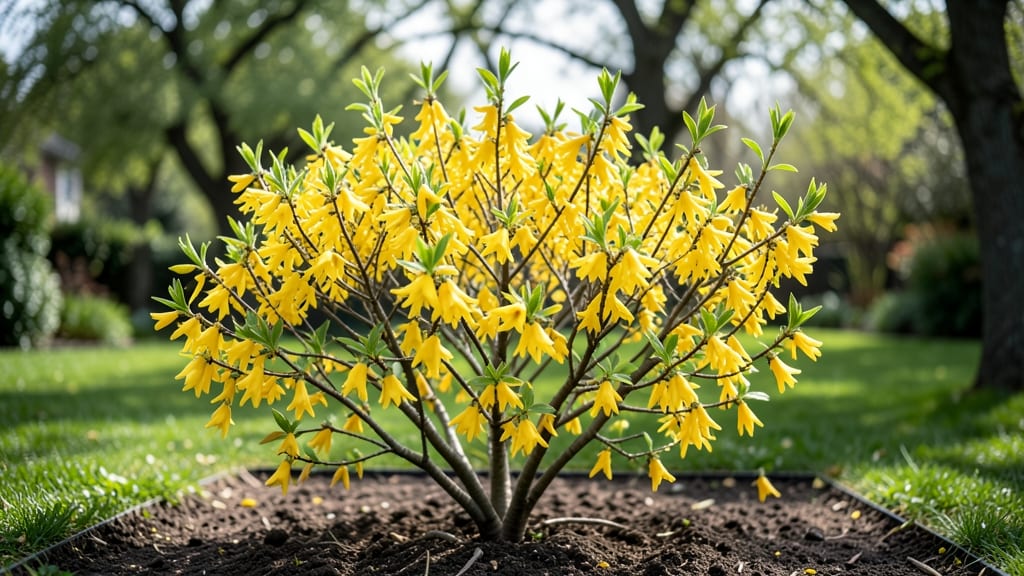
Wondering how tall do forsythia grow? This shrub typically reaches between 6 and 10 feet at maturity, but the height you end up with depends entirely on the variety you choose and how you prune it.
If you're dreaming of vibrant yellow blooms in early spring but wondering whether forsythia will dwarf your garden or blend seamlessly into its design, you're not alone. This shrub's growth habits vary dramatically—some stay compact at 3 to 5 feet, while others stretch toward the sky like small trees.
For example, Forsythia suspensa typically maxes out around 8 feet, while Forsythia × intermedia can reach 10 feet or more. The good news? Pruning can keep even the tallest varieties in check, giving you control over their size without sacrificing those cheerful flowers.
Below, I’ll break down the height ranges by variety, share pruning tips to manage growth, and help you pick the perfect forsythia for your space—whether you want a low hedge or a bold statement plant.


Forsythia height ranges by popular varieties: what to expect
Choosing the right forsythia variety is like picking the perfect frame for your garden's masterpiece—height determines placement, impact, and long-term maintenance. Some varieties stay compact enough for foundation plantings, while others grow tall enough to serve as small trees.
The key is matching the mature height to your space and design goals.
Most forsythias reach their full height within 3-5 years, with growth rates of 12-24 inches per year. Early spring's vibrant blooms are your first clue about a variety's size potential—taller varieties bloom later on longer stems.
Let's explore the spectrum from dwarf to towering, so you can select the perfect fit for your landscape.
| Variety | Mature Height | Growth Rate | Best For | Bloom Time |
|---|---|---|---|---|
| Forsythia 'Little Witch' | 3-4 ft | 6-12 in/year | Foundation plants, small gardens | Early spring |
| Forsythia 'Spring Glory' | 4-5 ft | 12-18 in/year | Container gardens, borders | Mid-spring |
| Forsythia 'Northern Gold' | 5-6 ft | 18-24 in/year | Hedges, privacy screens | Early spring |
| Forsythia 'Spectabilis' | 8-10 ft | 24-36 in/year | Tall hedges, woodland edges | Late spring |
| Forsythia 'Gold Tide' | 6-8 ft | 18-24 in/year | Specimen plants, mixed borders | Mid-spring |
| Forsythia 'Diana' | 5-7 ft | 12-18 in/year | Small trees, focal points | Early spring |
If you're working with limited vertical space, the 'Little Witch' variety is my top recommendation—it stays under 4 feet tall while still delivering abundant blooms. This makes it perfect for foundation plantings along walkways or as a container specimen on patios.
Its compact growth also means less pruning over time, which is a bonus for busy gardeners.
For mid-height drama, 'Gold Tide' and 'Northern Gold' strike the perfect balance. These varieties typically reach 6-8 feet at maturity, making them ideal for mixed borders or as specimen plants in medium-sized gardens. Their upright growth habit also creates natural vertical interest without overwhelming smaller spaces.
When you need a bold statement, nothing beats the 'Spectabilis' variety. This tallest common forsythia can reach 10 feet or more, making it perfect for woodland gardens or as a privacy screen.
Just be prepared for its aggressive growth rate—this variety can add 3 feet per year if left unchecked. I've seen it transform into a small tree over just a few seasons!
Don't overlook lesser-known varieties like 'Spring Glory', which offers a 5-foot maximum height with prolonged blooming—sometimes lasting 3-4 weeks instead of the usual 2. This makes it a great choice for gardeners who want extended seasonal interest without the maintenance of taller varieties. Its semi-upright habit
How pruning affects forsythia growth: techniques for controlling height
Pruning is the secret weapon for keeping your forsythia at your desired height while encouraging vibrant blooms every spring. Without proper pruning, even dwarf varieties can balloon into unruly giants, while standard types may lose their natural shape.
The key lies in understanding when and how to prune to guide growth rather than stunt it.
Forsythia blooms on old wood, meaning last year's growth produces this year's flowers. This critical fact changes everything about pruning timing. Cut too late, and you risk sacrificing next year's yellow blossoms.
Cut too aggressively, and you may trigger leggy growth or sparse flowering. Let's break down the step-by-step process to maintain your forsythia's ideal height while keeping it healthy and blooming beautifully.
Step 1: Identify Your Pruning Goal
Step 2: Choose the Right Season
Step 3: Use Proper Pruning Techniques
Step 4: Maintain Year-Round
For overgrown forsythia, never attempt drastic pruning all at once—this can shock the plant and reduce flowering. Instead, spread rejuvenation pruning over 2-3 years, removing 1/3 of the oldest stems each year.
Always use clean, sharp pruners to make cuts just above a bud or branch collar to promote faster healing and stronger regrowth.
Remember that forsythia responds well to regular maintenance. Even just 10 minutes every