
How To
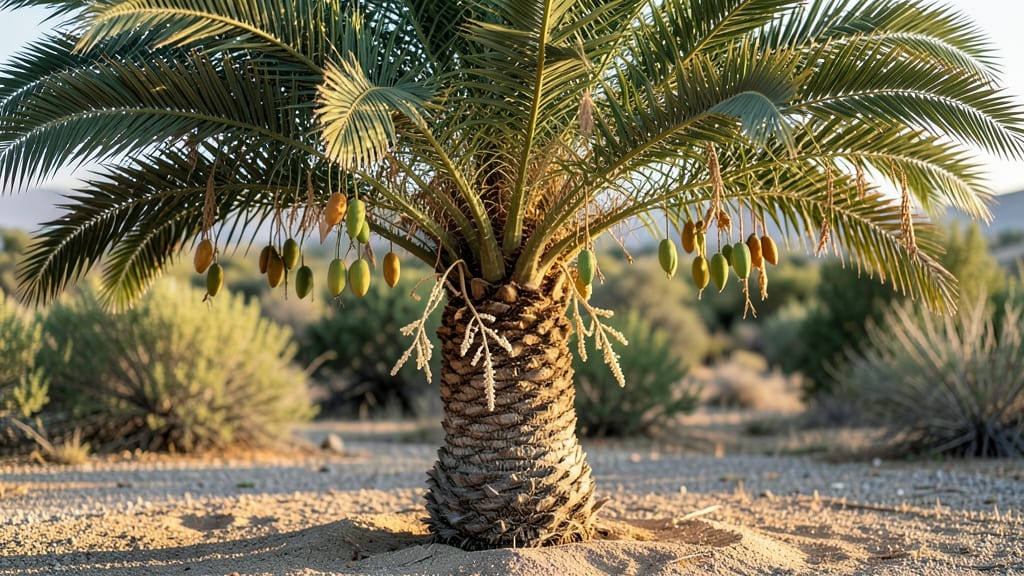
How tall do date palms grow? They reach heights between 30 and 100 feet depending on the variety, with some towering giants reaching the sky while others stay manageable for smaller yards.
Wondering whether your backyard can accommodate a majestic 🌴? The height of these iconic trees varies dramatically—from dwarf varieties you can prune to towering giants that dwarf your home.
Standard date palms like the Phoenix dactylifera can soar 50 to 100 feet in tropical climates, while Mediterranean varieties like the Canary Island date palm typically max out around 60 feet.
Even dwarf species still reach 15 to 20 feet, making them a statement piece without overwhelming your space.
Below, I break down how species, climate, and growing conditions determine your palm’s ultimate height—and whether container growing could be an option for your space.


Date palm height by variety: from dwarf to sky-skraping giants
If you're dreaming of a date palm in your landscape, the first question should be: how tall will it grow? The answer varies wildly—from dwarf varieties that stay under 15 feet to giant species that reach 100 feet or more.
Choosing the right variety isn’t just about aesthetics; it’s about whether your space can handle a 3-story tree or a manageable shrub-like palm.
Most date palms fall into three height categories: dwarf (10-20 ft), medium (20-50 ft), and tall (50-100+ ft).
The Canary Island date palm (Phoenix canariensis) is a classic example of a medium-height variety, while the Mediterranean date palm (Phoenix theophrastii) leans toward the taller end.
Even within these categories, growth rates differ—some varieties grow 2-3 feet per year, while others take decades to reach maturity.
For small spaces, dwarf varieties like the Pygmy Date Palm (Phoenix sylvestris) or Dwarf Date Palm (Phoenix roebelenii) are ideal—they top out at 10–20 feet and grow slowly, making them perfect for containers or urban gardens.
These palms also tolerate cooler temperatures, down to 20°F, so they’re great for USDA Zones 8–10.
If you’re aiming for a statement piece, the Canary Island Date Palm (Phoenix canariensis) is a popular choice, reaching 50–60 feet with a 2–3 foot annual growth rate.
It’s also one of the most cold-hardy varieties, surviving 15°F temperatures, which makes it suitable for Zones 8–11. For a true giant, the Mediterranean Date Palm (Phoenix theophrastii) or True Date Palm (Phoenix dactylifera) will dwarf your home, topping out at 80–100 feet.
Growth rates are fastest in young palms, especially in warm, sunny climates with well-draining soil. A Canary Island Date Palm might grow 3 feet per year for the first decade but slow to
Climate zones that determine date palm growth potential
Your date palm’s mature height isn’t just about the species—your USDA hardiness zone plays a starring role. Most date palms thrive in zones 8-11, but their growth potential shifts dramatically between these regions.
In zone 11, a Mediterranean date palm can soar to 80+ feet, while in zone 8, the same palm might max out at 30-40 feet due to cooler winters. Temperature extremes and humidity levels further shape how tall your palm will grow.
Cold snaps are the biggest threat. Date palms can’t tolerate below 20°F—even brief dips into the 25-30°F range can stunt growth or kill young fronds. In zone 9, where winters hover around 30-35°F, palms grow slower but still reach 50-60 feet with proper care.
Meanwhile, tropical zones (10-11) offer ideal conditions for rapid, uninhibited growth, allowing palms to reach their full genetic height potential.
Humidity also matters. High humidity in zones like 10-11 (e.g., Florida, Hawaii) encourages faster growth, while dry desert climates (e.g., Arizona’s zone 9-10) may slow height gains but improve cold tolerance.
For example, the Canary Island date palm thrives in zone 10 but struggles in zone 8 unless protected with mulch or windbreaks.
| USDA Zone | Cold Tolerance | Mature Height Range | Growth Notes |
|---|---|---|---|
| 8 | 25-30°F (brief dips) | 20-30 ft | Slow growth; needs winter protection |
| 9 | 30-35°F | 40-50 ft | Moderate growth; prune damaged fronds |
| 10 | 35-40°F | 50-70 ft | Fast growth; ideal for desert climates |
| 11 | 40°F+ | 70-100+ ft | Optimal growth; minimal winter stress |
If you’re in zone 8 and dreaming of a tall date palm, choose dwarf varieties like ‘Phoenix roebelenii’ (15-20 ft) or ‘Windmill Palm’ (20-30 ft). These tolerate cooler temps better than their towering cousins.
In zones 10-11, you can push the limits with ‘Medjool date palms’ or ‘Canary Island palms’, which reach their full 80-100 ft potential with consistent care.
Pro tip: Microclimates matter. A south-facing wall or protected courtyard can add 2-3 USDA zones’ worth of warmth, letting you grow taller palms in cooler areas. For example, a zone 8 garden with a sunny microclimate might support a 40-ft palm where a shady spot would fail.
Remember, height isn’t everything. Even in cooler zones, a well-cared-for palm will produce fruit and foliage—just at a smaller scale. Focus on soil drainage, full sun exposure, and winter protection to maximize your palm’s growth, no matter where you live. 🌴