
How To
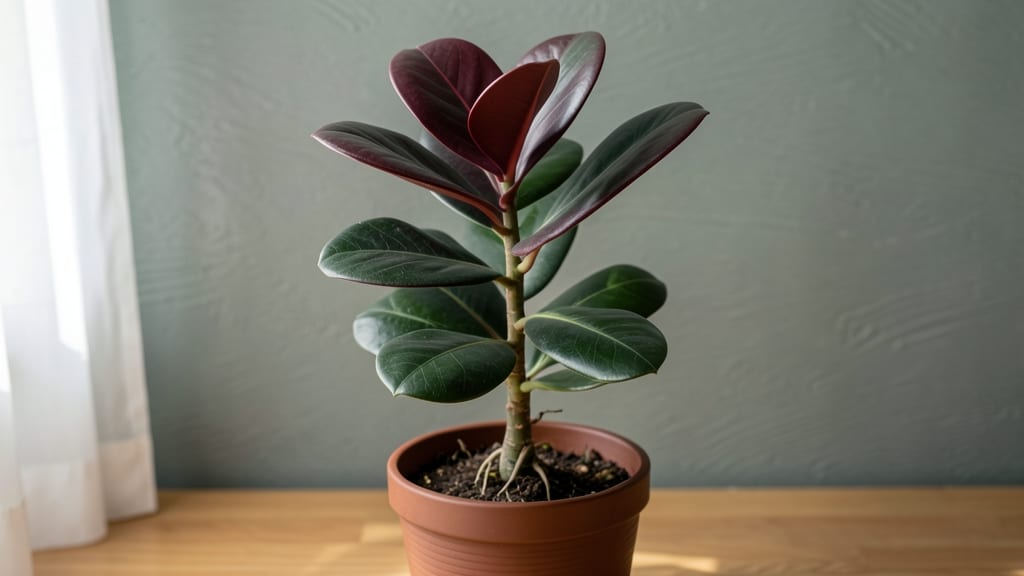
A rubber plant needs bright, indirect light for 4 to 6 hours daily to keep its leaves glossy and vibrant 🌿 — too little light turns them dull, and too much fries the edges.
Struggling to keep your rubber plant alive? The wrong lighting can turn vibrant green leaves into sad, yellowing patches—here’s exactly how much light your rubber plant needs to thrive (and where to place it for maximum growth).
Most beginners assume a sunny windowsill is perfect, but harsh afternoon rays can scorch those striking leaves faster than you’d think. The trick is finding that sweet spot where the light is bright but filtered, like an east-facing window or a few feet back from a north-facing one.
Below, I’ll break down the exact light conditions your rubber plant craves, how to spot when it’s getting too much or too little, and smart fixes for low-light rooms—so you can finally stop guessing and start growing.

Ideal light requirements for a healthy rubber plant: bright indirect light explained
Your rubber plant (Ficus elastica) thrives on bright indirect light, which mimics its natural tropical habitat. Too little light leads to leggy growth, while too much causes leaf scorch.
The key is finding that sweet spot where your plant gets 4-6 hours of filtered sunlight daily without harsh rays hitting its leaves directly.
Most homes have three light categories: low light (north-facing windows), medium light (east/west-facing), and high light (south-facing). Rubber plants prefer medium to bright indirect light, making east or north windows ideal. South-facing windows work only if you use a sheer curtain to diffuse the sun.
Here’s how to visualize the perfect light conditions for your rubber plant:
If your rubber plant is near a south-facing window, place it 3-4 feet away or use a sheer curtain to prevent leaf burn. I’ve seen brown crispy edges develop within weeks when plants get too much direct sun—trust me, it’s not pretty!
For low-light conditions, like a dim office or north-facing room, your rubber plant will survive but grow slowly. You’ll notice long, thin stems with sparse leaves—a clear sign it’s stretching toward any available light. In these cases, supplement with a grow light for 6-8 hours daily to maintain health.
Seasonal changes matter too. During winter months, when sunlight is weaker, move your rubber plant closer to the window (but still avoid direct sun). In summer, when rays are intense, rotate the pot quarter-turn weekly so all sides get even light exposure.
Pro tip: Test your plant’s light conditions by observing its leaves. Deep green, glossy leaves mean it’s happy. Yellowing or brown spots? That’s your cue to adjust its position immediately. Even a few days of improper light can stress your plant.
Remember, rubber plants are forgiving—they adapt better than many houseplants to light changes. But why let them struggle when you can give them the perfect spot? A little observation and adjustment go a long way in keeping your rubber plant thriving for years.
🌿
Signs your rubber plant isn’t getting enough (or too much) light: troubleshooting guide
Your rubber plant (Ficus elastica) might be silently screaming for help if its leaves are telling a different story than you expected. Yellowing edges, stretched stems, or pale foliage are all red flags—these aren’t just random quirks, but clear signals your plant’s light needs aren’t being met.
The good news? Most of these issues are reversible with simple adjustments.
First, let’s address the most common mistake: assuming all light is equal. A south-facing window might feel perfect, but direct afternoon sun can scorch those glossy leaves faster than you’d think.
Meanwhile, a dim corner might seem safe, but your rubber plant will stretch toward the light like a sleepy cat reaching for sunlight—leaving you with leggy growth and weak stems.
Too little light: Leaves turn pale yellow or brown spots appear. Growth slows dramatically, and stems become weak and elongated.
Too much light: Sunburnt patches (white/yellow crispy areas) or bleached leaves. Plant may wilt or drop leaves suddenly.
Perfect balance: Bright indirect light (4-6 hours daily) with no direct sun after 10 AM. Rotate plant quarter-turn weekly for even growth.
Start by checking your plant’s leaf color. Healthy rubber plants boast deep, rich green leaves with a slight sheen. If you’re seeing yellowing between veins, that’s a classic sign of too much direct sun.
Think of it like a sunburn—your plant is getting overcooked. Move it 3-4 feet back from the window or use a sheer curtain to diffuse harsh rays.
On the flip side, if your plant’s leaves are dull and small with long gaps between nodes, it’s begging for more light. This leggy growth happens when your rubber plant stretches toward any available light source, often resulting in weak stems that can’t support the foliage.
Try rotating the pot 1/4 turn weekly to encourage even growth, and consider supplementing with a grow light if natural light is truly scarce.
Don’t overlook the stem thickness—it’s another telltale sign. Healthy rubber plants develop thick, sturdy stems as they mature. If yours feels hollow or brittle, it’s likely due to light deprivation or overwatering in poor light conditions.
Prune back leggy stems to encourage bushier growth, and repot if the soil feels compacted or waterlogged.
Pro tip: Test your light conditions like a pro. Place a white piece of paper near your plant for a few hours. If the shadows are sharp and dark, you’ve got direct sun—move your plant.
If the paper stays nearly untouched, you’re in a low-light zone and may need to supplement with artificial light. A simple LED grow bulb (12-14 hours daily) can work wonders for indoor rubber plants.
Remember, rubber plants are forgiving but not indestructible. With the right light adjustments and a little patience, you’ll see those glossy leaves return in no time—proof that even the most neglected plants can bounce back with the right care. 🌿