
Plants
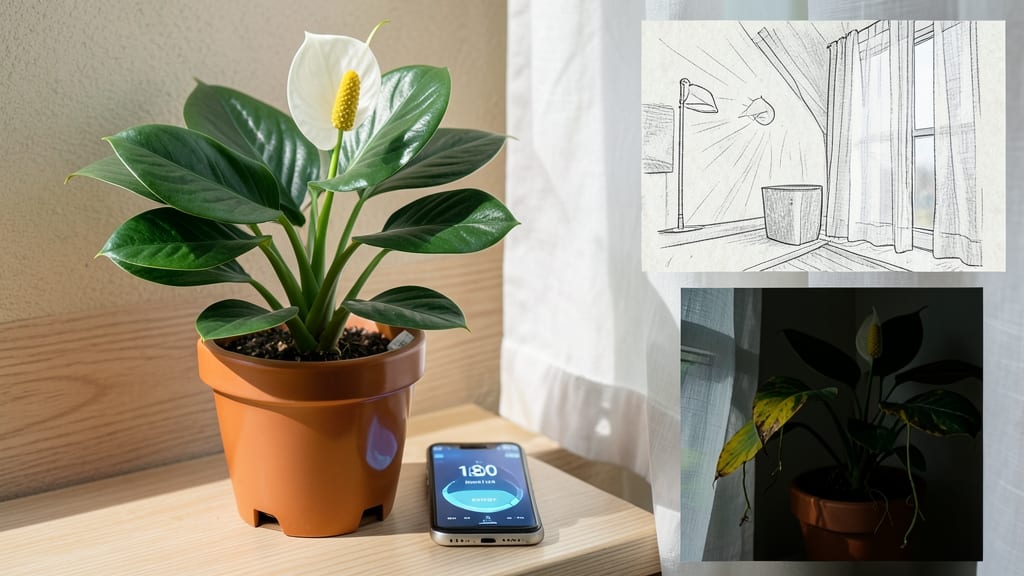
A peace lily plant needs bright indirect light for 4 to 6 hours daily to thrive, but it’s far more forgiving than most houseplants—even low light won’t kill it, though it may skip flowering.
Struggling to keep your peace lily alive? The secret might be simpler than you think—this low-maintenance plant thrives in conditions most people overlook, especially when it comes to light.
Too much sun? Yellow leaves. Too little? Droopy stems. But get it just right, and you’ll see those signature white blooms year after year.
Here’s the catch: while a peace lily 🌿 can survive in dim corners, it won’t grow as lushly or bloom as often. The ideal spot? Near a north-facing window where light is soft but steady, or under a sheer curtain on an east-facing sill.
Even bathrooms with indirect light work—just avoid harsh afternoon rays.
Below, I’ll break down exactly how to spot light stress, where to place your plant for peak health, and how seasonal changes (like shorter winter days) affect its needs—so you can keep yours happy all year.

Peace lily light requirements: ideal brightness levels for healthy growth
If you've ever wondered how much light does a peace lily plant need, you're not alone. This stunning houseplant thrives in conditions that surprise many gardeners—bright indirect light is its sweet spot, but it’s famously adaptable to low-light environments.
Understanding its light requirements is key to unlocking lush, healthy foliage and even those prized white blooms. Unlike sun-loving plants, peace lilies are masters of photosynthesis efficiency in low light, making them perfect for offices, bathrooms, or dim corners of your home.
The secret to their success lies in their natural habitat—tropical rainforests where sunlight filters through dense canopies. This means they’ve evolved to thrive under dappled shade, not harsh direct rays.
While they can tolerate low-light conditions, pushing them too far into darkness can stunt growth and reduce flowering. The goal? Mimic their native environment by providing filtered or diffused sunlight for optimal health.
⚠️ NON-NEGOTIABLE: Peace lilies cannot handle direct sunlight, which can scorch their leaves and cause irreversible damage. Their leaves may develop brown patches or crispy edges if exposed to intense midday sun. Instead, aim for spots where sunlight is gentle—like east-facing windows or a few feet back from a west-facing window. Even a north-facing window can work if it’s bright enough, but avoid south-facing windows unless you use a sheer curtain to diffuse the light.
For peak photosynthesis efficiency, place your peace lily where it receives bright indirect light for 4-6 hours daily. This balance allows the plant to produce enough energy for robust growth without overheating. Think of it like a tropical sunbathing session—gentle and prolonged, not intense and brief.
If you notice your plant leaning toward a light source, it’s a clear sign it’s craving more brightness. Simply rotate the pot quarter-turns every few days to ensure even growth.
Seasonal adjustments are also key. During winter months, when natural light is scarce, supplement with a grow light if your peace lily starts looking leggy or sparse. A simple LED grow bulb placed 12-18 inches above the plant for 6-8 hours daily can work wonders.
In summer, when days are longer, move your peace lily slightly farther from the window to prevent light stress. The goal is consistency—avoid drastic changes in light exposure, which can shock the plant.
Pro tip: Test your chosen spot with the "shadow test". Hold a piece of paper near your peace lily during peak sunlight hours. If the shadow is sharp and dark, the light is too direct. If it’s soft and faint, you’ve found the perfect indirect light zone.
This simple trick saves you from trial and error—and potential leaf damage. Remember, peace lilies are forgiving, but ideal light conditions are the foundation for a thriving plant.
Don’t overlook the humidity-light connection. Peace lilies love humidity, which works hand-in-hand with their light needs. In low-light conditions, increase humidity by misting leaves or placing the pot on a pebble tray with water.
This mimics their natural tropical environment and helps the plant absorb light more efficiently. Pairing the right light levels with humidity is like giving your peace lily a spa day—it’ll reward you with glossy leaves and stunning blooms.
If you’re still unsure about your home’s lighting, start with a north-facing window, which provides the most consistent bright indirect light without harsh rays. For south-facing windows, use a sheer curtain to filter the light.
Even a well-lit bathroom with a skylight can work, as long as the plant isn’t in direct sunlight during peak hours. The key is observation: watch your peace
Signs your peace lily isn’t getting enough (or too much) light
Your peace lily might be silently screaming for help, and the culprit is often light exposure. These plants are famously adaptable, but even they struggle when pushed beyond their bright indirect light comfort zone. The key is recognizing subtle visual cues before the damage becomes permanent.
Start by checking your plant’s leaves for discoloration. Yellowing leaves often signal too much direct sunlight, while drooping or pale foliage usually means insufficient light. Both conditions stress the plant, but the solutions couldn’t be more different—one requires shade, the other more brightness.
⚠️ callout-warning ⚠️
Peace lilies thrive in low to bright indirect light (20-50% sunlight). Place them 2-3 feet from a north-facing window or under grow lights for 10-12 hours daily. Avoid direct sun (south/west windows) or dim corners—both cause stress. Rotate the pot monthly for even growth.
💡 Pro Tip: If leaves develop brown tips, it’s often low humidity from poor light conditions.
Brown tips on leaves are another red flag—these often appear when low humidity combines with inconsistent light. Trim the damaged areas with clean scissors and increase humidity by placing the pot on a pebble tray with water. This mimics the tropical environments peace lilies naturally grow in.
If your peace lily’s leaves are small and sparse, it’s likely not receiving enough light. These plants may survive in dim conditions, but they’ll struggle to produce those iconic white blooms.
Move it closer to a window or supplement with a LED grow light for 6-8 hours daily to encourage flowering.
For overwatered-looking leaves (soft, mushy spots), the issue might be too much light combined with poor drainage. Peace lilies hate soggy roots, so always use a pot with drainage holes and let the top inch of soil dry out between waterings.
Adjusting light and watering habits simultaneously often saves struggling plants.
Finally, watch for stunted growth or leggy stems. These are classic signs your peace lily is stretching toward any available light source. Rotate the plant weekly to ensure even exposure, and consider a south-facing window with a sheer curtain for balanced indirect light.