
Plants
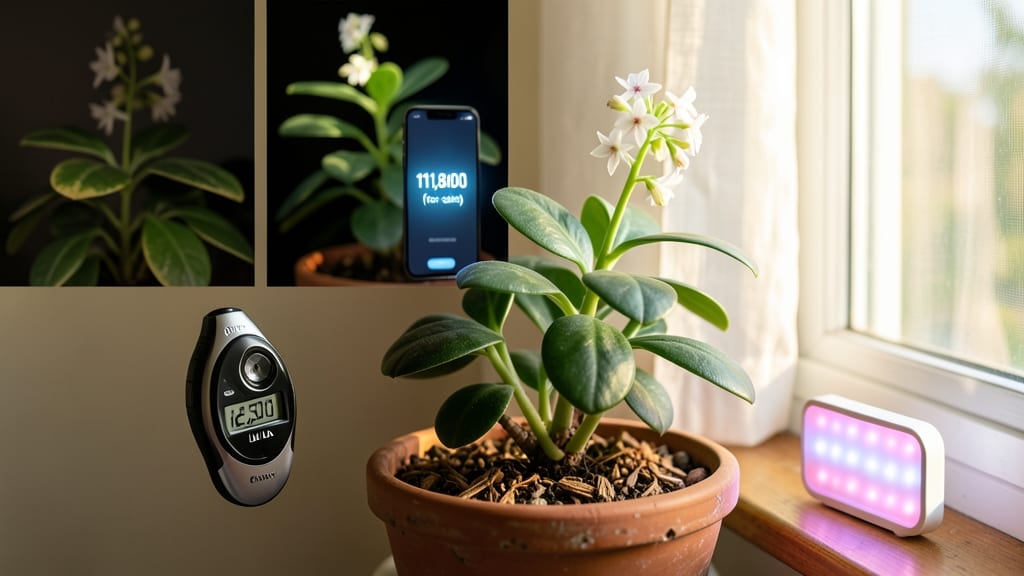
A hoya plant needs bright indirect light for strong growth, but too much sun can scorch its delicate leaves 🌿.
Picture this: your hoya stretches toward the window, leggy and sad, or its leaves turn yellow with crispy edges. That’s the light tightrope you’re walking—and getting it right is the difference between a thriving vine and a struggling houseguest.
Most hoyas thrive in east-facing windows, where morning sun is gentle but consistent. Too little light? They’ll grow weak and pale. Too much? You’ll get sunburned patches. The key is finding that sweet spot where leaves stay rich green and growth stays steady.
In this guide, I’ll break down exactly how much light hoyas need, how to tell if yours is getting it wrong, and the easiest fixes—whether you’re working with a dim apartment or a sunroom that’s too bright.

Hoya light requirements: the ideal bright indirect spectrum explained
Understanding hoya light requirements is the secret to growing these stunning, waxy-leaved plants. Hoyas thrive in bright indirect light, but their needs vary by variety—some tolerate low light, while others demand more intensity. The key is balancing light intensity and spectrum to maximize photosynthesis without burning delicate foliage.
Hoyas are native to tropical regions where they grow under forest canopies, receiving dappled sunlight. This means they’re adapted to filter light, but too little causes leggy growth, while too much leads to sunburned leaves.
The ideal light spectrum for hoyas includes a mix of blue light (for growth) and red light (for flowering), though they don’t need intense red exposure like some flowering plants.
Here’s how to match your hoya’s needs to its variety. Hoya carnosa (the popular "wax plant") is the most adaptable, tolerating low to bright indirect light. In contrast, Hoya obovata and Hoya kerrii (the "sweetheart hoya") prefer moderate to bright indirect light to maintain their vibrant variegation.
Even within a single species, younger plants need less light than mature ones.
🌿
The photosynthesis efficiency in hoyas peaks under bright indirect light (around 500-1,000 foot-candles). This range ensures they produce enough chlorophyll for energy while avoiding oxidative stress from direct UV rays.
For reference, a typical office has about 300-500 fc, while a south-facing window can reach 2,000-3,000 fc—too intense for most hoyas without filtering.
If you’re growing hoyas indoors, position them near an east-facing window for gentle morning light or a north-facing window for consistent, soft illumination. West-facing windows can work but may require a sheer curtain to diffuse the harsh afternoon sun.
Outdoor hoyas should be placed in partial shade, like under a tree canopy or on a patio with dappled sunlight.
For artificial lighting, LED grow bulbs with a 6500K color temperature (cool white) mimic natural daylight. Supplement with a red-blue spectrum bulb (like a 10,000K full-spectrum LED) for 12-14 hours daily if natural light is insufficient.
Hoyas don’t need 24/7 light, but they appreciate a consistent cycle to maintain growth.
Pro tip: Rotate your hoya’s pot quarter-turn weekly to ensure even light exposure. This prevents one-sided growth and helps leaves develop uniformly. Watch for stretching toward the light—a classic sign your plant needs more intensity. Conversely, dark green leaves with no variegation indicate it’s getting too little light.
🪴
Signs your hoya isn’t getting enough (or too much) light
Your hoya plant might be silently screaming for help if its leaves are telling a different story than you expected. Leggy growth or pale variegation? Those are classic signs your hoya isn’t getting the right light.
Hoyas thrive in bright indirect light, but too little or too much can send them into a survival mode that stunts their beauty. Let’s decode the clues your plant is giving you.
First, check for variegation loss—those stunning white or pink streaks on leaves fade or disappear when light is insufficient. Meanwhile, sunburn spots (crispy brown patches) scream "too much direct sun!"
These visual cues are your hoya’s way of saying, "I need help!" before it’s too late. Adjusting light exposure can turn a struggling plant into a lush, vibrant showstopper.
Underlit Hoya vs. Overlit Hoya
- Leggy growth (stretched stems)
- Pale leaves (loss of variegation)
- Slow growth (few new leaves)
- Weak stems (floppy appearance)
- Sunburn spots (brown patches)
- Yellowing leaves (crispy edges)
- Bleached variegation (white streaks turn green)
- Stunted growth (leaves curl inward)
If your hoya’s leaves are stretching toward the light, it’s begging for more brightness. Move it closer to a window (but not in direct sun) or supplement with a grow light.
For sunburned leaves, create shade by placing a sheer curtain between your hoya and the sun. Remember, hoyas hate extreme conditions—consistency is key!
Another red flag? New growth that’s smaller than usual. This is your hoya’s way of conserving energy due to poor light. Boost light exposure gradually to avoid shocking the plant.
Start with a few extra hours near a window, then adjust based on leaf responses. Patience pays off—your hoya will reward you with lush, healthy foliage.
Pro tip: Rotate your hoya every few weeks to ensure even light exposure. This prevents one-sided growth and keeps your plant balanced. A well-lit hoya will produce more flowering nodes (those adorable waxy blooms) and thicker, glossier leaves.
Keep an eye on those leaves—they’re your best friends when diagnosing light issues!
Don’t let your hoya suffer in silence. With these signs and solutions, you’ll have it thriving in no time. A happy hoya is a well-lit hoya—and trust me, the difference is night and day. 🌿